
24/7 Customer Support

Free returns

Same-day & Next-day Delivery

Quality Guaranteed

Unlock Your Welcome Offers: FREE Delivery | Up to 80% OFF | Free 30-day JoyPlus trial
Download the APP
Choosing dog toys is not simply a matter of picking the most colourful design or the product described as “indestructible”. A toy that suits a gentle puppy may be unsuitable for a powerful chewer, while a squeaky toy that entertains one dog may quickly become a noise nuisance in a small UK flat.
Joybuy Product Recommendation Officer guidance focuses on the practical details that marketing labels can overlook: size, materials, intended use and how the toy behaves when damaged.
No dog toy is indestructible. Terms such as “bite-resistant” or “long-lasting” describe intended use, not a guarantee against tearing, cracking or pieces coming loose. Strong chewers can damage soft fabric, rubber and even reinforced materials.
Inspect toys before and after play. Remove them immediately if you notice:
A dog’s breed does not always indicate its actual chewing strength or preferred play style. A small terrier may chew more intensely than a larger, calmer dog. Likewise, a puppy’s mouth and teeth require different consideration from an adult dog’s.
Check the product’s recommended size and dimensions. Toys that are too small may present a swallowing risk, while oversized toys can be difficult to carry, grip or retrieve.
Textured dental chew toys for dogs may help rub against teeth or massage gums during chewing, but they should not be presented as a substitute for veterinary care or an established oral hygiene routine. Avoid products that make guaranteed health claims without clear, reliable supporting information.
Start with the toy’s measurements rather than its product title. For example, the Rosewood Naturals Chill ‘n’ Chew Mat measures 33cm x 24cm, giving dogs a broad surface to chew while resting. It is a different proposition from a small ball or bone designed to be carried.
For dog toys for small breeds, look for a manageable shape that cannot be swallowed whole. For dog toys for medium and large breeds, choose dimensions and construction that match the dog’s jaw size. Avoid toys with narrow sections if your dog tends to bite through or swallow fragments.
Materials indicate how a toy is intended to be used:
Look for clear material information, manufacturer details and warnings. Products supplied in the UK should also include appropriate safety and traceability information where required by applicable product safety rules.
Different toys provide different types of engagement:
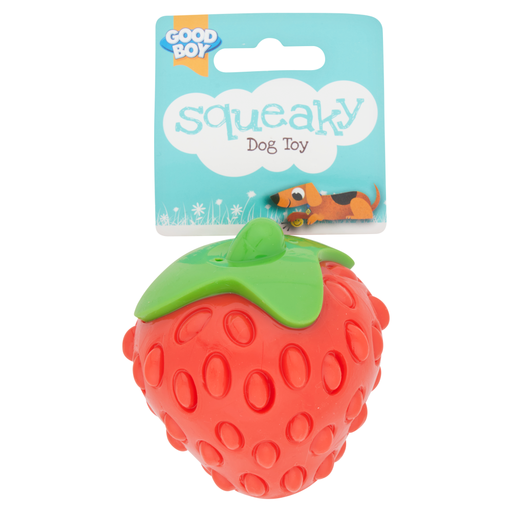
Why This Fits Their Persona: A lightweight option for owners looking to introduce sound-based play, fetch or short indoor games without choosing a large specialist toy.
Its intended uses are clearly described as fetch and play, rather than being presented as an indestructible chew toy. Supervise and replace when damaged.
Lightweight construction; built-in squeak; suitable for solo or interactive play under supervision.
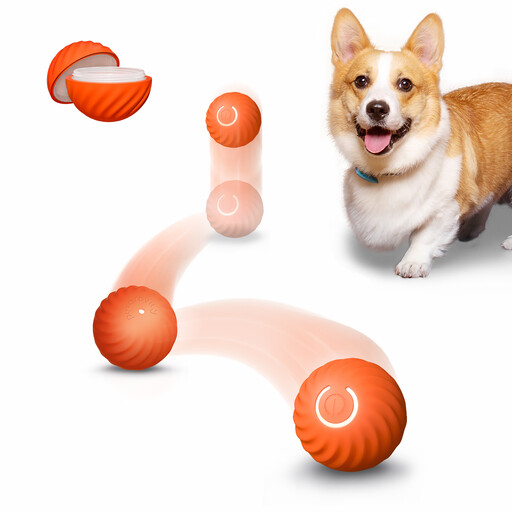
Why This Fits Their Persona: A rechargeable option for small dogs needing varied indoor activity, particularly where outdoor exercise is limited by weather or living space.
The size is specified for smaller dogs and the product uses a replaceable plush cover. It is not intended for aggressive chewers and must be supervised.
USB-C rechargeable; two play modes; 56mm ball with removable plush cover.
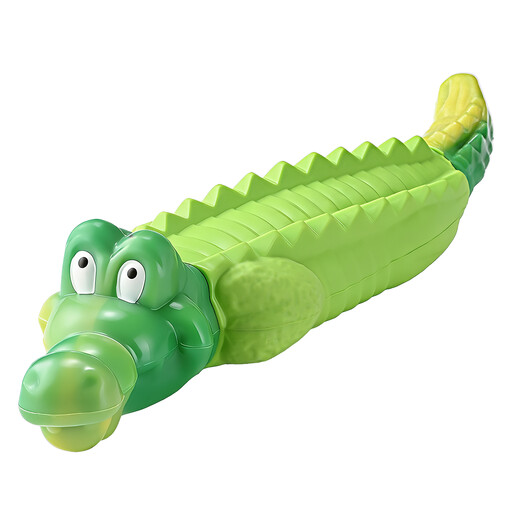
Why This Fits Their Persona: Designed for medium and large dogs that enjoy outdoor fetch, carrying and supervised chewing during active play sessions.
Its 24cm x 6cm dimensions and medium-to-large-dog positioning make the intended size clearer than a generic “one size” label. It is still not indestructible.
Natural rubber exterior; nylon core; textured crocodile shape for gripping; suitable for fetch and outdoor play.
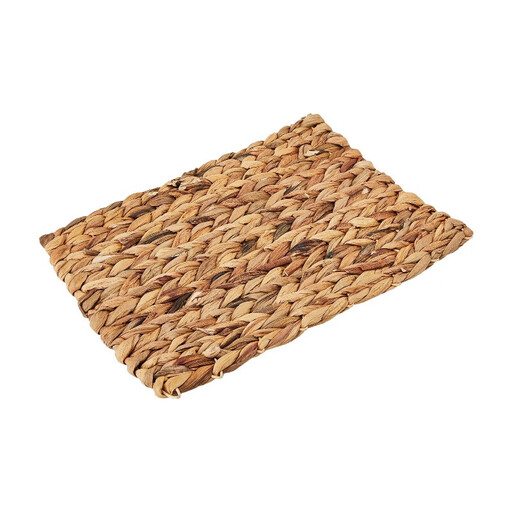
Why This Fits Their Persona: A practical choice for dogs that prefer chewing on a flat surface, including homes where a dedicated resting or chewing area is useful.
The product provides a defined 33cm x 24cm chewing surface and states that it is not intended for aggressive chewers. Initial use should be supervised.
Natural rubber, food-grade silicone and textile fabric; textured surface; washable with warm water and mild soap.
We have compiled a complete, real-time list of products that fully satisfy these strict selection criteria and UK safety regulations.
There is no universal lifespan. Replace a toy as soon as it develops tears, cracks, loose fibres, exposed mechanisms or fragments. A gentle-use soft toy may last longer than one used daily by a strong chewer, so condition matters more than a calendar date.
It is safer to supervise squeaky dog toys, particularly if your dog tries to remove the squeaker or tear through the outer material. Remove the toy if the squeaker becomes exposed or any part comes loose.
Electronic smart dog toys generally use small rechargeable batteries, so running costs depend on charging frequency and battery capacity. Charge according to the instructions, keep cables away from pets and store electronic toys safely when not in use.