
24/7 Customer Support

Free returns

Same-day & Next-day Delivery

Quality Guaranteed

Unlock Your Welcome Offers: FREE Delivery | Up to 80% OFF | Free 30-day JoyPlus trial
Download the APP
Buying dog toys can seem straightforward until a squeaker is swallowed, a chew toy becomes too small or an oversized ball is difficult for your dog to carry. Marketing descriptions often use words such as “tough”, “long-lasting” and “dental”, but these terms do not mean every toy suits every dog.
This guide explains the practical details to check before buying dog toys, from size and materials to supervision requirements. It also highlights suitable options for puppies, moderate chewers, active fetchers and dogs with stronger chewing habits.
No dog toy is indestructible. A toy may be suitable for repeated interactive play but not for unsupervised chewing. For example, tug toys for dogs commonly use fabric and stitching designed for pulling, while durable dog chew toys use harder materials such as nylon, rubber or layered construction.
Always match the product to your dog’s chewing strength. A toy labelled for aggressive chewers may still require regular inspection, particularly if your dog tries to remove and swallow fragments.
A realistic shape or attractive colour may catch your attention, but the more important question is whether your dog can grip the toy without swallowing it. Small toys can present a choking risk for larger dogs, while oversized toys may frustrate puppies and small breeds.
Check the stated dimensions and recommended dog size. Products designed for small and medium breeds should not automatically be given to large dogs, and a large rubber toy may be unsuitable for a very small mouth.
Textured dental chew toys for dogs can provide a chewing surface that rubs against teeth and gums. However, they should not be treated as a replacement for routine dental care or veterinary advice. Avoid allowing a dog to consume pieces of a non-edible toy, and replace any product that develops sharp edges, cracks or loose parts.
Look for clear material information rather than vague claims. Common options include:
For UK buyers, check the packaging or listing for the manufacturer or responsible-person details, intended species, warnings and cleaning instructions. These details help you assess whether the product is described accurately and whether it fits your dog’s play habits.
Measure your dog’s mouth and compare it with the listed dimensions. A toy should be large enough not to pass easily into the mouth, but manageable enough for carrying and playing.
Consider the activity too. A 7.3 cm Chuckit! Ultra Ball is designed for large dogs and fetch games, whereas a 15 × 8 × 3 cm chicken wing chew toy is specified for small and medium-sized dogs. Dimensions are more useful than breed labels alone.
Choose toys according to the behaviour you want to encourage:
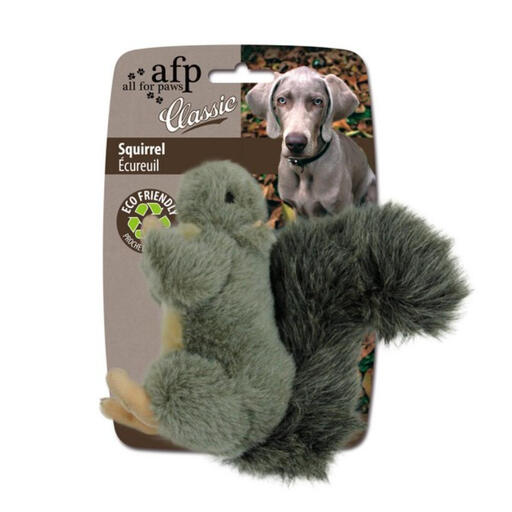
Why This Fits Their Profile: A soft toy option for households introducing a new dog to supervised indoor play, particularly small and medium-sized dogs in flats or smaller UK homes.
The stated size suitability helps avoid buying an oversized toy, while the soft construction is clearly positioned for supervised play rather than heavy chewing.
Soft, non-toxic materials are listed; suitable for interactive games such as carrying, tossing and supervised tugging.
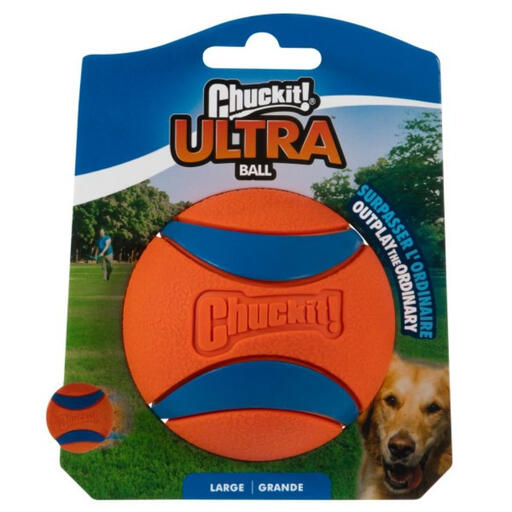
Why This Fits Their Profile: A practical choice for active owners who regularly use parks, beaches or gardens for high-energy fetch sessions.
The product description distinguishes fetch use from chewing, reducing the risk of treating a retrieving ball as an unsupervised chew toy.
7.3 cm large size; natural rubber construction, high bounce, buoyancy and bright orange-and-blue colouring for outdoor visibility.
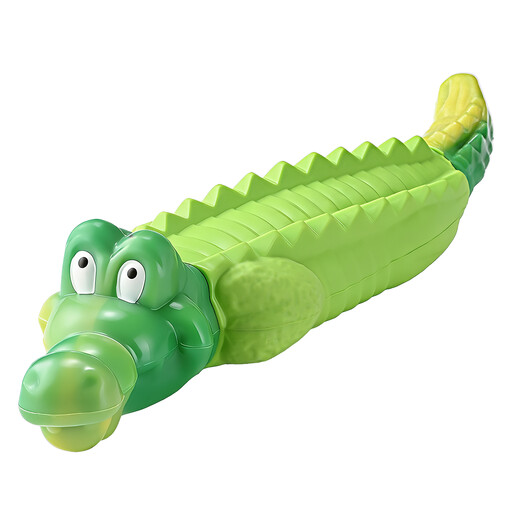
Why This Fits Their Profile: Designed for medium and large dogs needing one toy for supervised chewing, fetch training and outdoor interaction.
Its recommended dog range and 24 × 6 cm dimensions make size selection clearer than relying on a generic “large” label.
Double-layer natural rubber and nylon construction; textured crocodile shape for gripping and interactive play.
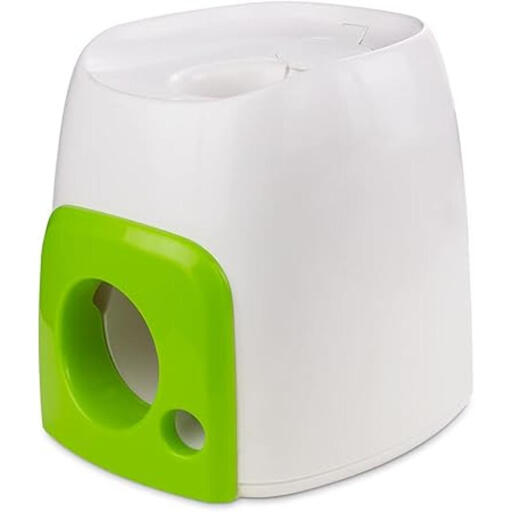
Why This Fits Their Profile: Suitable for owners seeking treat-dispensing dog toys that combine fetch practice with sniffing and problem-solving at home.
It states how the ball and hidden compartments work, so buyers can judge the toy’s interaction level before purchase rather than relying on a vague “smart toy” label.
Battery-free operation; includes a ball-release function and separate treat-hiding compartments.
We have compiled a complete, real-time list of products that fully satisfy these strict selection criteria and UK safety regulations.
Rotate several toys instead of leaving every item available all day. This allows you to remove worn products and keeps play sessions varied. Wash rubber and plastic toys according to the product instructions, dry them thoroughly and store fabric toys in a clean, dry place.
Inspect toys before and after use. Replace them when you find:
There is no fixed lifespan. Replacement depends on material, chewing strength and frequency of use. A gentle player may use a toy for much longer than a dog that bites and tears persistently. Inspecting the toy regularly is more reliable than following a calendar.
They can be suitable when the size and material match the puppy, but supervision is important. Puppies may tear soft products while teething and attempt to remove the squeaker. Stop use immediately if the toy becomes damaged or any internal component is exposed.
The toy itself normally operates without batteries, although you will need suitable treats or kibble. Use small portions that fit your dog’s daily food plan, and introduce the toy gradually so your dog learns how the dispensing mechanism works.