
24/7 Customer Support

Free returns

Same-day & Next-day Delivery

Quality Guaranteed

Unlock Your Welcome Offers: FREE Delivery | Up to 80% OFF | Free 30-day JoyPlus trial
Download the APP
Buying dog toys can look simple until a toy is destroyed within minutes, ignored after one play session or found to be the wrong size. UK dog owners also need to consider chewing strength, noise, cleaning and safe supervision rather than relying on attractive packaging or broad durability claims.
This guide explains the practical checks that can help you choose dog toys, from interactive dog toys and squeaky dog toys to puppy teething toys, comfort toys and heavy-duty chew designs.
Many toys are described as durable, but this is not a guarantee that they will withstand every dog. A soft latex toy may suit a gentle chewer but fail quickly when given to a powerful adult dog. Rope, plush and squeaky toys can also become unsuitable if stitching breaks or the internal squeaker is exposed.
Choose according to your dog’s chewing strength and behaviour, and inspect the toy before and after each use.
A toy that is too small may be difficult for a dog to hold safely. A toy that is too large may be uncomfortable or impossible to carry. Check the listed measurements and compare them with your dog’s mouth size, breed and play style. The product’s recommended dog size should be treated as a starting point, not a substitute for supervision.
Textured surfaces may provide chewing stimulation and mechanical contact with teeth, but dog toys are not a replacement for brushing or veterinary dental care. Similarly, a heartbeat or soft plush toy may offer a familiar source of comfort, but it cannot guarantee relief from separation-related distress.
Look for clear information about materials, dimensions, intended use and warnings, rather than relying on unsupported outcomes.
Different materials suit different purposes:
Avoid assuming that a hard toy is automatically safer. Excessively hard materials may be unsuitable for some dogs’ teeth, while damaged soft materials can create loose fragments.
For dog toys for small dogs, compact designs such as the approximately 10.7 × 4 cm Blinkit Cheese Bone may be easier to carry. For medium and large dogs, a larger profile can be easier to grip and less likely to be swallowed, such as the 24 × 6 cm Blinkit interactive chew design.
Always follow the product’s size guidance. A puppy’s toy may need replacing as the dog grows, even if it remains intact.
Select the toy for the activity you actually want:
Supervision is particularly important for squeakers, rope fibres, plush filling and toys marketed for aggressive chewers.
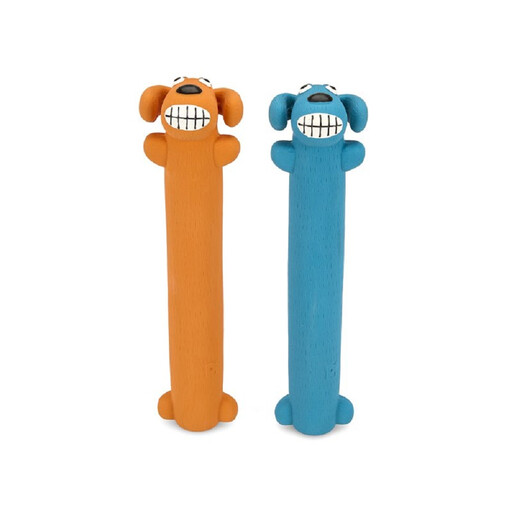
Why This Fits Their Persona: A practical choice for owners wanting one lightweight toy for fetch, carrying and supervised chewing at home or outdoors. It measures 28 cm and is supplied as one toy in either blue or orange.
The product description clearly states that it is not indestructible and requires inspection, avoiding unrealistic expectations about latex construction.
Loofah-like texture, built-in squeaker, lightweight latex construction and an easy-to-grab 28 cm shape.

Why This Fits Their Persona: Suitable for owners seeking a purpose-led chew design for puppies and moderate chewers, including small and medium breeds.
It is specifically described for puppies and non-aggressive chewers, making its suitability clearer than a generic “tough” label.
Bamboo fibre and nylon construction, salmon scent, paw-friendly shape and a textured surface for chewing.
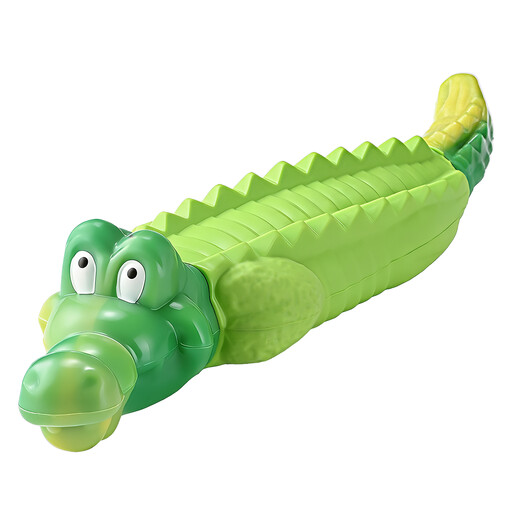
Why This Fits Their Persona: Designed for medium and large dogs needing a larger toy for supervised chewing, fetch training and outdoor play.
Its recommended size, 24 × 6 cm dimensions and natural rubber-and-nylon construction are stated clearly, rather than presenting one toy as suitable for every dog.
Double-layer construction, textured crocodile shape and suitability for fetch, tugging and outdoor interaction.
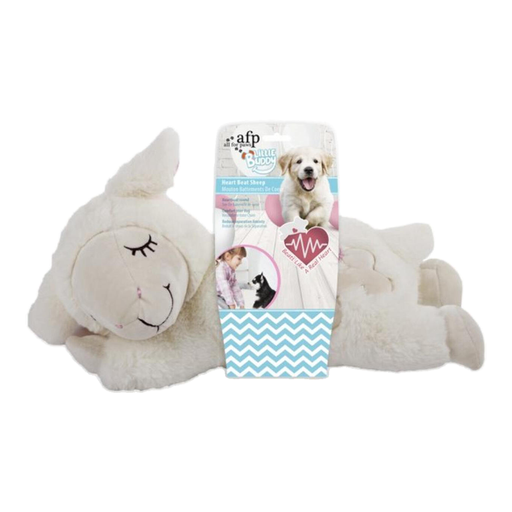
Why This Fits Their Persona: A soft puppy comfort toy for bedtime or settling into a new home, particularly where gentle cuddling is more important than chewing.
The heartbeat unit is removable, and the product warning states that it is not suitable for aggressive chewers.
Extra-soft plush material and a removable battery-operated heartbeat unit for flexible bedtime or play use.
We have compiled a complete, real-time list of products that fully satisfy these strict selection criteria and UK safety regulations.
Rotate two or three toys instead of leaving every item available all day. This can maintain interest and make it easier to spot changes in condition. Wash or wipe toys according to their material and the product instructions, then dry them fully before storage.
Remove a toy immediately if you notice cracks, torn fabric, loose rope fibres, exposed squeakers, detached parts or sharp edges. Do not allow a dog to swallow any part of a toy. If ingestion occurs, contact a veterinary professional promptly.
There is no universal lifespan. Replacement depends on material, chewing strength and frequency of use. Gentle-use plush toys may last longer than heavily chewed latex or rubber toys, while persistent chewers may wear down a toy quickly. Inspect toys regularly rather than waiting for a fixed replacement date.
They can be suitable when the size and construction match the puppy, but they should be used under supervision. If the squeaker becomes exposed or the puppy starts removing pieces, take the toy away. Puppy teething toys made from appropriately sized rubber or TPR may be more suitable for focused chewing.
No. Textured toys may provide mechanical contact during chewing, but they do not replace a suitable dental routine or veterinary advice. Choose a toy labelled for your dog’s size, supervise use and stop immediately if it becomes damaged.