
24/7 Customer Support

Free returns

Same-day & Next-day Delivery

Quality Guaranteed

Unlock Your Welcome Offers: FREE Delivery | Up to 80% OFF | Free 30-day JoyPlus trial
Download the APP
Buying dog toys can seem straightforward until a squeaker disappears, a ball is too small, or a supposedly tough toy starts shedding pieces after a few play sessions. UK dog owners also need to consider muddy parks, smaller indoor spaces and darker winter evenings when choosing toys for daily use.
The right choice depends less on colourful packaging and more on your dog’s size, chewing strength, play style and supervision needs. This guide explains the common buying traps, the specifications worth checking and a selection of dog toys matched to different households.
Many durable dog toys are designed to handle regular play, but no toy is indestructible. A strong chewer may damage plush fabric, latex or rubber more quickly than a gentle player. Products should be removed as soon as they develop cracks, tears, loose stitching or exposed internal parts.
Look for clear material information and usage warnings rather than relying only on phrases such as “tough” or “long-lasting”. A toy described as suitable for chewing may still be intended for supervised chewing, not unsupervised access throughout the day.
A large toy may be difficult for a small dog to carry, while a small ball or detachable part can create a swallowing risk for a larger dog. Check dimensions where they are provided, and consider the dog’s mouth size, bite strength and ability to pick up the toy comfortably.
This is particularly important when comparing toys for medium and large dogs with puppy toys. A puppy may need a lightweight, easy-to-grip design, whereas a large adult dog may require a sturdier construction and larger proportions.
Squeaky dog toys, crinkle toys and flashing toys can attract attention, but they are not suitable for every dog or home. Some dogs quickly remove squeakers, while others may become overstimulated by constant noise. LED and glow-in-the-dark features are useful for visibility, but batteries and electronic components require additional care.
Consider where the toy will be used. A soft indoor toy may suit a flat, while outdoor dog toys need to be easy to see, clean and retrieve from grass or mud.
Common materials include:
A useful toy should be easy for your dog to pick up without forcing the jaw into an awkward position. For fetch, choose a shape that is visible and simple to retrieve. Curved sides, textured surfaces and handles can make dog fetch toys easier to carry.
For puppies, lightweight puppy toys with soft textures may be more manageable. For larger breeds, inspect the measurements and construction rather than selecting solely by the word “large”.
Different designs encourage different behaviour:
Supervise play, especially with new toys, puppies, dogs that swallow objects and strong chewers. Inspect toys before and after use, wash them according to the product instructions and dispose of damaged items responsibly.
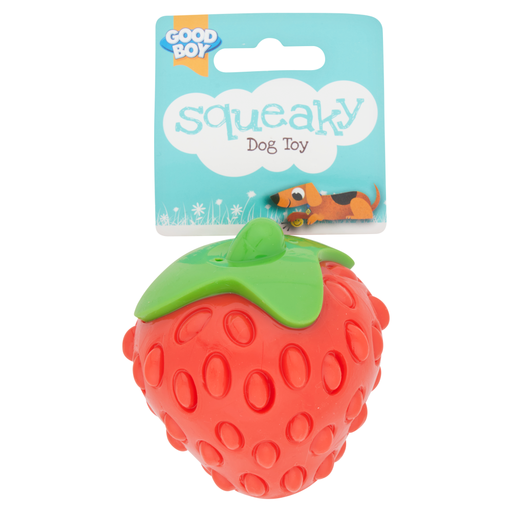
Why This Fits Their Persona: A lightweight, easy-to-carry option for owners introducing a dog to squeaky play, fetch or short indoor games.
Its purpose is clear: sound, carrying and active play, rather than an unsupported promise of unlimited durability.
Built-in squeaker; lightweight shape for throwing and carrying; suitable for supervised solo or interactive play.
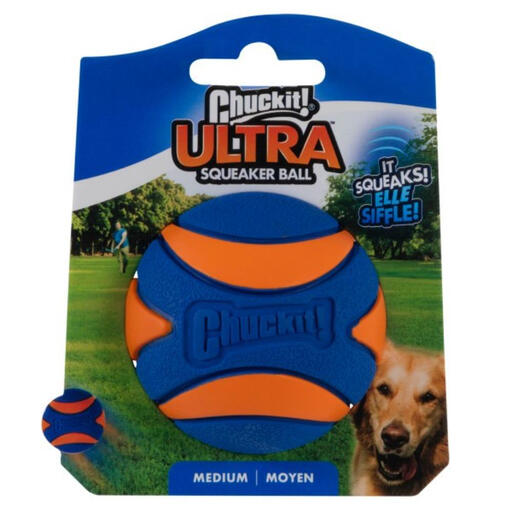
Why This Fits Their Persona: A practical choice for owners who regularly play fetch in parks, gardens or other suitable outdoor spaces.
The 6.5cm size and stated medium format make selection more transparent than choosing an unmeasured ball.
Natural rubber core; integrated squeaker; bright orange and blue colours; compatible with suitable launchers.
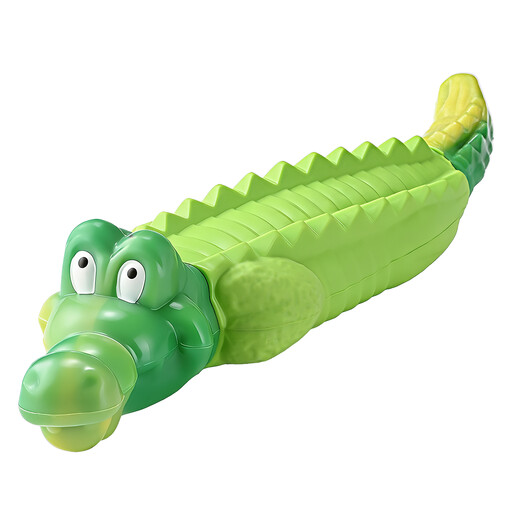
Why This Fits Their Persona: Intended for medium and large dogs that need a larger, textured toy for supervised chewing, fetch training and outdoor interaction.
Its 24 × 6cm dimensions and stated medium-to-large-dog suitability help prevent a mismatch caused by vague sizing.
Nylon core with natural rubber exterior; textured crocodile shape; designed for fetch, tug-style interaction and chewing.
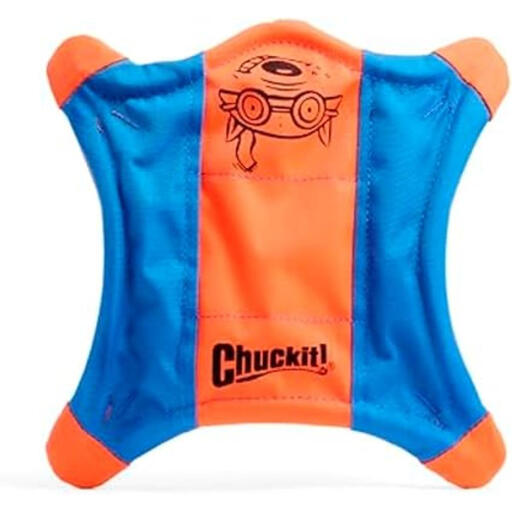
Why This Fits Their Persona: Suits dogs and owners who prefer active outdoor fetch and want a toy with added visibility after daylight fades.
The product is clearly identified as a fetch toy rather than a chew toy, with supervision advised to prevent damage.
Aerodynamic squirrel shape; curved sides for retrieval; buoyant material; glow-in-the-dark feature for low-light play.
We have compiled a complete, real-time list of products that fully satisfy these strict selection criteria and UK safety regulations.
There is no fixed lifespan because it depends on the material, frequency of use and your dog’s chewing behaviour. Inspect toys regularly and replace them immediately if you find tears, cracks, loose parts, exposed filling or a damaged squeaker.
They can be suitable when the size and construction match the puppy, but supervision is important. Puppies may chew through soft materials or try to remove the squeaker. Choose a toy that is easy to carry, avoid small detachable components and stop use if damage appears.
Look for outdoor dog toys with bright colours, reflective details, flashing LEDs or glow-in-the-dark materials. Use them only in suitable, secure areas and remember that visibility features do not replace supervision. For battery-powered toys, follow the product’s disposal instructions when the light stops working.