
24/7 Customer Support

Free returns

Same-day & Next-day Delivery

Quality Guaranteed

Unlock Your Welcome Offers: FREE Delivery | Up to 80% OFF | Free 30-day JoyPlus trial
Download the APP
Choosing dog toys can seem straightforward until a ball disappears under the sofa, a squeaker is removed within minutes or a supposedly tough toy starts shedding pieces. UK dog owners need to weigh more than colour and price: the right choice depends on your dog’s size, bite strength, preferred games and where you intend to play.
This guide explains the common buying traps, the specifications worth checking and a selection of dog toys matched to different households.
Marketing language can make a toy sound suitable for every dog, but no toy is indestructible. A soft squeaky toy may suit a gentle puppy yet fail quickly with a powerful chewer. Even durable rubber or woven designs require regular inspection.
Look for clear guidance about the intended chewing strength and always remove a toy if it cracks, splits, leaks or develops loose components.
A small ball can be difficult for a large dog to carry safely, while an oversized toy may be frustrating for a puppy or small breed. Check the toy’s diameter and compare it with your dog’s mouth and jaw size. Avoid any item that could be swallowed whole.
The same principle applies to puppy toys and small dog toys: a compact design should still be large enough to handle safely.
LED lights, squeakers, movement and charging systems can add interest, but they are not useful for every pet. A noise-sensitive dog may avoid squeaky dog toys, while a dog that loves chasing may gain more from fetch dog toys or bouncy dog balls.
Consider your dog’s actual behaviour rather than choosing the longest feature list.
For regular fetch, natural rubber or durable rubber balls can provide bounce and a firm surface. Woven or knitted covers may offer texture and grip, but they still need monitoring if your dog pulls at threads.
Softer latex can suit puppies and gentle to moderate chewers, particularly when flexibility is more important than heavy-duty resistance. However, it is not the right option for dogs that tear and ingest pieces.
Bright colours can make outdoor dog toys easier to locate in grass, sand or shallow water. Reflective or flashing features may improve visibility during low-light play, but they should not replace supervision.
For indoor use, consider weight, noise and rebound. A high-bounce ball can damage household items or become difficult to control in a smaller room. Outdoor play generally allows more space for durable dog balls and long-distance retrieving.
Interactive dog toys can support play that involves chasing, fetching, problem-solving or owner participation. Smart dog toys with random movement may offer variety, while rechargeable dog toys avoid the need for frequent disposable battery replacement.
Electronic products need extra checks. Follow the charging instructions, keep cables away from pets and stop using the item if the casing or core becomes exposed. Toys containing sealed button cell batteries should be disposed of according to local regulations when the flashing function ends.
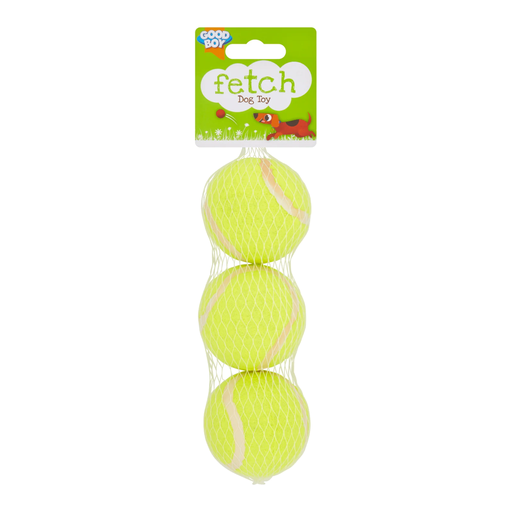
Why This Fits Their Persona: A three-pack gives new dog owners spare toys for rotating play at home or in the garden, without committing to an electronic or specialist design.
The listing clearly states that the toy is not indestructible and should be supervised, helping buyers set realistic expectations.
Three-piece pack; designed for interactive play and a range of dog sizes and play styles.
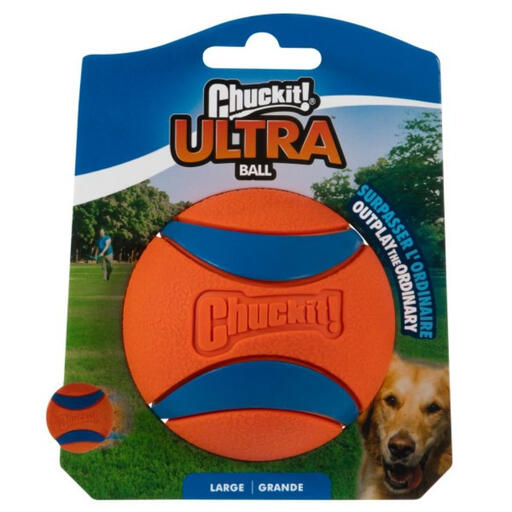
Why This Fits Their Persona: Suitable for active owners who regularly visit parks, beaches or large gardens and want one clearly specified ball for energetic retrieval sessions.
The 7.3cm size, natural rubber construction and warning that it is not a chew toy make the intended use clearer.
High bounce and buoyancy; bright orange and blue finish; compatible with launchers.
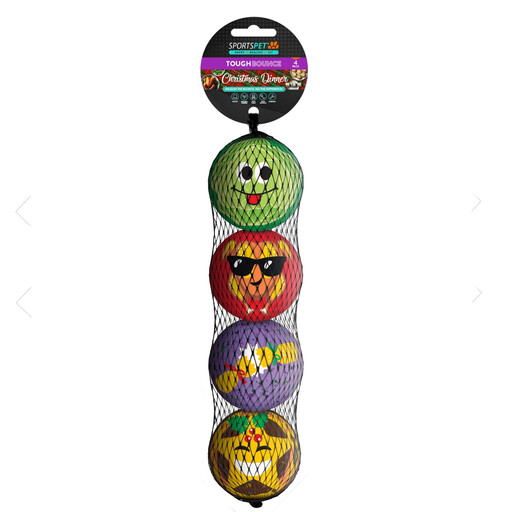
Why This Fits Their Persona: A practical match for high-energy dogs and owners who need multiple balls for repeated fetch in the garden, park or living room.
It is described as a durable rubber fetch design, while the instructions still require size checks, inspection and supervision.
Four durable rubber balls; designed for bounce, bite and fetch; suitable for indoor and outdoor play.
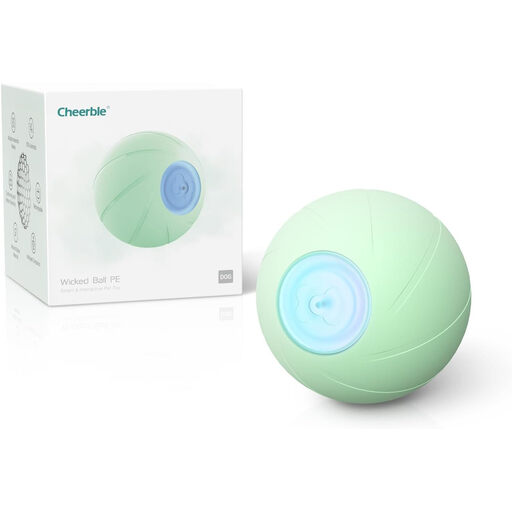
Why This Fits Their Persona: A hands-free option for medium and large dogs that need varied indoor activity when outdoor exercise is limited by rain or a busy household.
The product specifies three play modes, a rechargeable battery and a 95mm diameter, rather than leaving key operating details unclear.
Unpredictable rolling and bouncing; LED lights; USB charging; stated play time of up to 90 minutes per charge.
A toy can support dog toys for exercise and dog toys for mental stimulation, but it should complement walks, training and supervised interaction rather than replace them.
We have compiled a complete, real-time list of products that fully satisfy these strict selection criteria and UK safety regulations.
Choose a size-appropriate puppy toy with a softer, flexible material and no detachable parts. Squeaky or textured options can provide interest, but puppies should always be supervised because they may chew more intensely while exploring.
There is no fixed lifespan. A toy’s usable period depends on material, frequency of play and your dog’s chewing behaviour. Replace it immediately if it splits, leaks, exposes a squeaker or develops pieces that could be swallowed.
Rechargeable dog toys do not require regular disposable batteries, so their ongoing battery cost can be lower. However, you should account for charging time, cable storage and eventual battery performance. Keep the toy and charger away from water and pets when charging.