
24/7 Customer Support

Free returns

Same-day & Next-day Delivery

Quality Guaranteed

Unlock Your Welcome Offers: FREE Delivery | Up to 80% OFF | Free 30-day JoyPlus trial
Download the APP
As a nation of dog lovers, we want nothing more than to see our four-legged friends happy, healthy and engaged. A good collection of dog toys is essential for their well-being, providing mental stimulation, physical exercise and comfort. Yet, the market is flooded with options, and choosing the right one can feel overwhelming. Many owners find themselves with a basket of barely-used or quickly destroyed toys, a clear sign that common shopping pitfalls have struck again.
As the Joybuy Product Recommendation Officer, my role is to help you navigate this landscape. Let's look at the frequent missteps that lead to wasted money and potential safety hazards, and how you can make smarter choices for your companion.
The "Indestructible" Myth: Many toys are marketed as being for aggressive chewers or even "indestructible." This term is rarely accurate. A determined dog can destroy almost any toy, and when a toy breaks, it can create sharp edges or small, swallowable pieces that pose a serious choking or internal injury risk. Instead of seeking an impossible promise, focus on materials known for their durability relative to your dog's specific chewing strength.
The One-Size-Fits-All Fallacy: Giving a large breed a toy designed for a small dog is an obvious choking hazard. Conversely, a toy that's too large or heavy can be unengaging or even damaging to a smaller dog's jaw. The toy must be appropriate for your dog's size, age and breed. A delicate plush dog toy is a comforting friend for a gentle Corgi but will last mere seconds with a powerful Rottweiler.
Ignoring Material Safety and Purpose: Not all toys are created equal. Some are for fetching, some for cuddling and others for serious chewing. Using a fetch toy for a long chewing session can lead to rapid destruction. Furthermore, the safety of the materials is paramount. Always look for toys made from non-toxic, pet-safe materials, as your dog will inevitably have the toy in its mouth for extended periods.
To avoid these traps, focus on a few core parameters. Understanding these will empower you to select a toy that is both safe and enjoyable for your dog.
The material is the single most important factor in a toy's suitability.
Observe your dog. Are they a powerful chewer who needs an outlet, a clever problem-solver who gets bored easily or a gentle soul who loves a soft companion?
Based on these principles, we've matched a few standout products to common UK dog owner profiles.

Why This Fits Their Persona: This toy is specifically for dogs with a strong desire to chew. Its unique branch shape is more engaging than a simple block, satisfying a dog's natural instinct to chew on sticks, but in a much safer format.
It avoids the "indestructible" myth by clearly stating its materials (cowhide and nylon) and purpose as a "chew-resistant" aid, setting realistic expectations for durability under supervision.
The dual-material construction offers enhanced durability, while the textured surface also functions as a dog dental toy, helping to clean teeth during play.
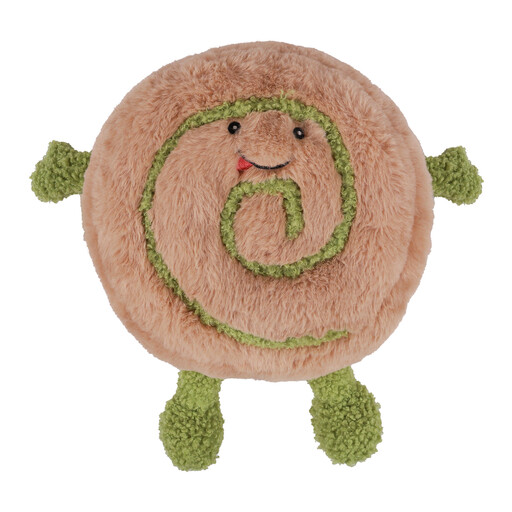
Why This Fits Their Persona: For dogs that prefer to snuggle and engage in light, gentle play rather than destructive chewing. This toy's soft plush material makes it an ideal comfort object for naptime or carrying around the house.
It directly counters the "one-size-fits-all" fallacy by being explicitly positioned for cuddles and gentle play, with a warning that it is not suitable for aggressive chewers.
The combination of incredibly soft plush, unique boucle fabric details and a hidden squeaker provides varied sensory engagement for your dog.
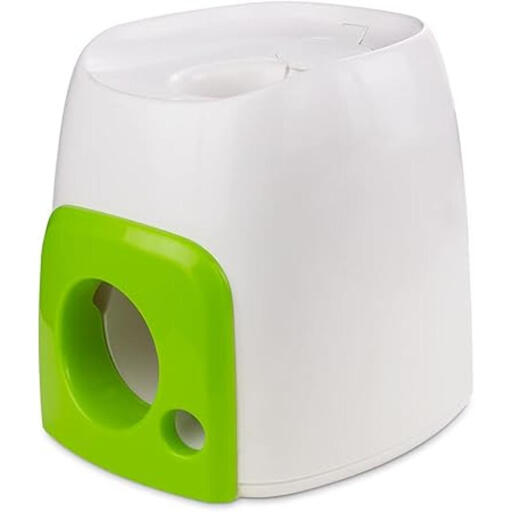
Why This Fits Their Persona: This is for the owner of a clever dog that gets bored easily. It turns a simple game of fetch into a rewarding puzzle, keeping the dog's mind active and engaged, which can help prevent boredom-related behaviours.
This toy's value is not in its chew-resistance but in its function. It addresses the pitfall of buying simple toys for intelligent dogs by providing a clear, engaging and interactive purpose.
It combines physical exercise with mental stimulation through its automatic treat-dispensing mechanism. A major plus is that it is entirely mechanical and requires no batteries.
We have compiled a complete, real-time list of products that fully satisfy these strict selection criteria and UK safety regulations.
There is no fixed timeline; it depends entirely on the toy's material and your dog's chewing habits. The most important rule is to inspect toys daily. Look for cracks, tears, loose threads or any parts that have become detached. If a toy is significantly worn or damaged, it should be replaced immediately to prevent a choking or ingestion hazard.
For most dogs, squeaky toys are not harmful and can be highly engaging. The sound often mimics the noise of prey, which taps into their natural instincts and makes playtime more exciting. However, supervision is key. Some dogs may become obsessed with "killing" the toy to get to the squeaker inside. If your dog is one of them, ensure they don't swallow the small plastic squeaker once they've extracted it.
When choosing a puppy teething toy, prioritise softer, flexible materials like rubber that won't damage their developing teeth. Many puppy-specific toys can be placed in the freezer, as the cold helps to soothe sore gums. Ensure the toy is durable enough to withstand sharp puppy teeth without breaking into small pieces and always choose a size that is too large to be swallowed.