
24/7 Customer Support

Free returns

Same-day & Next-day Delivery

Quality Guaranteed

Unlock Your Welcome Offers: FREE Delivery | Up to 80% OFF | Free 30-day JoyPlus trial
Download the APP
As a dog owner, you know that a good toy is more than just a plaything. It's a tool for training, a cure for boredom and a vital part of your dog's physical and mental wellbeing. Yet, navigating the market for dog toys can be frustrating. With so many options, it's easy to end up with a box of broken, ignored or unsafe items.
My role as a Joybuy Product Recommendation Officer is to help you sidestep the common issues and make informed choices. Many UK dog owners find themselves wasting money on toys that don't live up to their promises. Let's look at the most frequent pitfalls.
tough dog toys for aggressive chewers, but fall apart within minutes. This is not only a waste of money but also a serious safety risk if your dog ingests broken pieces.By understanding a few core principles, you can confidently select toys that are safe, engaging and offer genuine value.
Before you add any toy to your basket, take a moment to analyse its core features. Focusing on these three areas will help you find a product that truly suits your dog's needs.
The material is the single most important factor for both safety and longevity. Not all materials are created equal, and the right choice depends on your dog's chew strength.
durable dog toys. Look for products that specify they are BPA-free and food-safe, especially for dog puzzle toys that dispense treats.puppy toys and dog dental toys as it's gentler on the gums.tough dog toys for aggressive chewers feature a dual-layer construction, often combining a nylon core with a rubber exterior.squeaky dog toys.Think about what you want the toy to achieve. Is it to relieve boredom, encourage exercise or help with teething?
Interactive dog toys and dog puzzle toys are designed to challenge your dog's mind. Treat-dispensing toys require your dog to roll, nudge or chew in a specific way to get a reward, which is an excellent solution for dog toys for boredom.chew toys for dogs. These are typically made from hard nylon or dense natural rubber and are designed to withstand sustained gnawing.puppy toys made from softer, textured rubber that can be chilled in the freezer for extra relief.squeaky dog toys that engage your dog's prey drive.Always choose a toy that is appropriate for your dog's size and breed. A toy should be large enough that it cannot be swallowed whole, but small and light enough for your dog to comfortably carry and play with. This is a critical consideration for both small dog toys and large dog toys.
Based on these practical criteria, here are a few recommendations matched to specific types of dog owners in the UK.
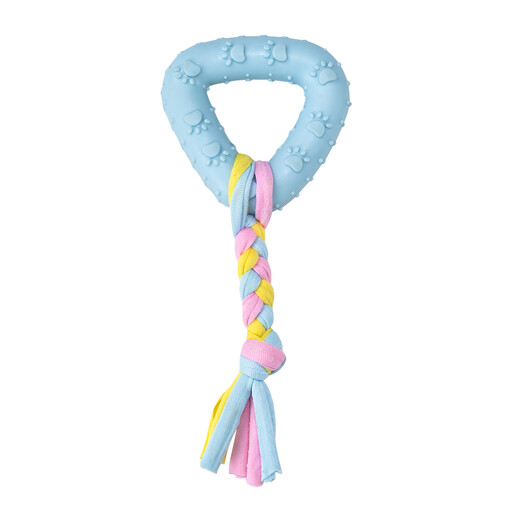
Why This Fits Their Persona: Perfect for a puppy's changing needs. The dual-texture design provides a soft rope for gentle tugging and a durable TPR ring for satisfying those teething urges, all in a size that's manageable for small paws and mouths.
It avoids the size mismatch pitfall by being specifically designed for puppies and small dogs. The use of specified BPA-free TPR and fabric avoids the material mystery.
The dual-material design offers varied textures for dental care and play. It's lightweight and easy for a puppy to carry, encouraging independent play.
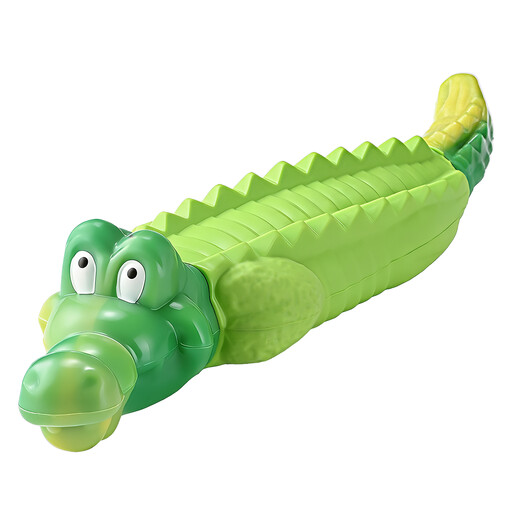
Why This Fits Their Persona: For owners of Staffies, German Shepherds or any breed with a powerful jaw. This toy is built to satisfy a strong urge to chew, helping to redirect destructive behaviour away from your furniture and onto an appropriate object.
This directly counters the "indestructible" myth by using a specified dual-layer construction (nylon core, natural rubber exterior) that provides genuine resilience, rather than just a label.
The combination of hard nylon and softer rubber satisfies different chewing pressures. Its large size and textured crocodile shape are ideal for medium to large breeds.

Why This Fits Their Persona: Ideal for owners of intelligent, food-motivated dogs like Border Collies or Poodles. This toy turns mealtime into a stimulating challenge, preventing boredom and encouraging problem-solving skills on a rainy British afternoon.
It avoids the material trap by being made from BPA-free, food-safe natural rubber. This is a verifiable safety feature, not a vague marketing claim, which is crucial for a toy that holds food.
The hollow, treat-dispensing design satisfies natural foraging instincts. Its textured surface also helps clean teeth and massage gums during play.
We have compiled a complete, real-time list of products that fully satisfy these strict selection criteria and UK safety regulations.
There is no fixed timeline, as it depends on the toy's material and your dog's chewing intensity. The most important rule is to inspect toys regularly. You should replace any toy that has cracks, loose parts or has been chewed down to a size that could be swallowed. For plush toys, discard them if the stuffing or squeaker becomes exposed.
For most dogs, squeaky toys are a safe and stimulating way to play. The sound often mimics prey, which engages their natural instincts. However, it's important to supervise play, as some dogs may become fixated on "killing" the squeaker, leading them to destroy the toy to get it out. If your dog is one of these, choose more durable toys without squeakers.
Hygiene is important. For hard rubber or nylon toys, a simple scrub with hot water and a mild, pet-safe soap is effective. You can use an old toothbrush to get into any grooves. Rinse thoroughly to remove all soap residue. For fabric or plush toys, check the label; some are machine washable, but most should be spot-cleaned with a damp cloth. Always ensure toys are completely dry before giving them back to your dog.