
24/7 Customer Support

Free returns

Same-day & Next-day Delivery

Quality Guaranteed

Unlock Your Welcome Offers: FREE Delivery | Up to 80% OFF | Free 30-day JoyPlus trial
Download the APP
Choosing dog toys can seem straightforward until a toy splits, becomes too small, or fails to hold your dog’s interest after a few days. Marketing terms such as “tough”, “dental”, and “suitable for all breeds” can hide important limitations.
The right choice depends on your dog’s size, age, chewing strength and preferred play style. A soft squeaky toy may suit a gentle puppy but be unsuitable for a powerful chewer. Equally, a hard dog chew toy can be inappropriate for a young dog or a small breed.
No dog toy is indestructible. Reinforced stitching, rubber, nylon and woven materials can improve resistance to everyday play, but determined chewing can still cause damage. A product described as suitable for aggressive chewers should not be left unattended without regular checks.
Replace any toy showing:
A bone, ball or tug toy may look appealing online but still be unsuitable in real use. A toy that is too small can create a swallowing risk, while an oversized toy may be difficult for a puppy or small dog to carry.
Always check the listed dimensions against your dog’s mouth and body size. “Dog toys for small and large breeds” should not be interpreted as one product fitting every dog equally well.
Textured surfaces and raised nubs may provide mechanical contact with teeth and gums during chewing. However, a toy is not a substitute for a suitable dental routine or veterinary advice. Some dog chew toys are also edible or partly edible, so read the materials and usage instructions carefully.
For interactive play, look for construction details rather than broad claims. Double stitching, reinforced fabric, a nylon core or a natural-rubber exterior can indicate how a toy is intended to be used.
A toy should be large enough that your dog cannot swallow it whole, but manageable enough to pick up and hold. Shapes with handles, curves, ridges or paw-friendly sections can make tugging and chewing easier.
For example, the 7.3cm Chuckit! Ultra Ball is designed for larger dogs and outdoor fetch, while the 10.7 × 4cm cheese bone is listed for small dogs. Check the product page and packaging before purchase, particularly for puppies.
Match the toy to what your dog actually enjoys:
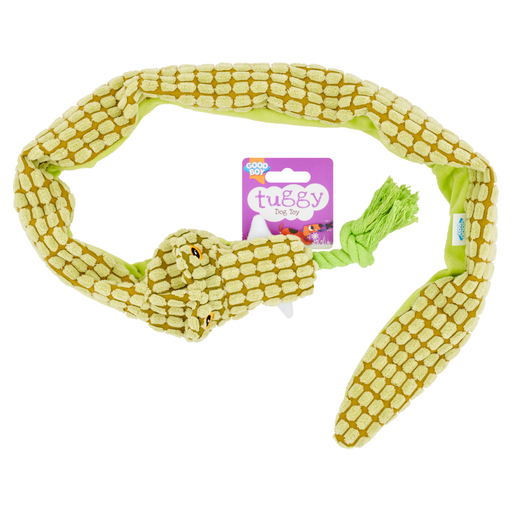
Why This Fits Their Persona: A practical starting point for owners who want supervised tugging and exercise without buying a specialist toy. Its lightweight format is convenient for indoor play or a garden session.
The product information clearly states that it is not a chew toy, helping prevent the common mistake of using a fabric tug toy as an unsupervised chew.
Durable synthetic fabric, reinforced stitching and an easy-grip design for owner-led tugging.
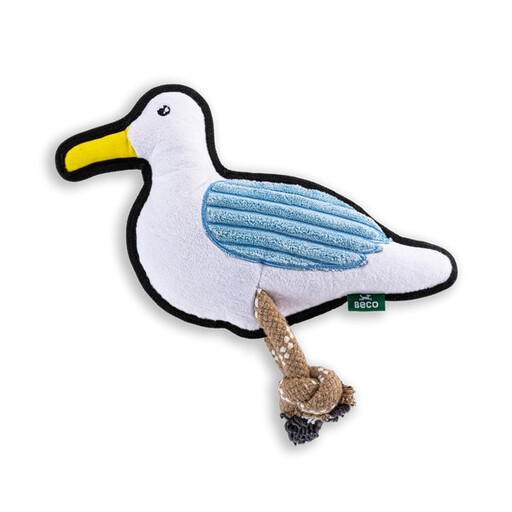
Why This Fits Their Persona: A suitable option for owners who value recycled materials alongside energetic play, including trips to a UK park, beach or dog-friendly swimming spot.
Its product details specify double stitching and a squeaker, while the safety guidance still requires supervision rather than promising indestructibility.
Made from recycled materials, with an internal squeaker and a floating design for water play.
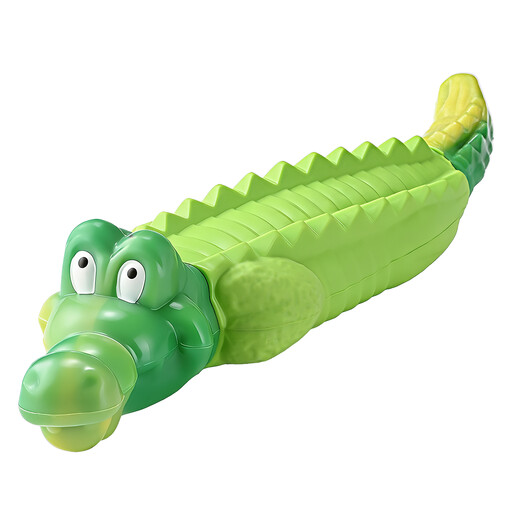
Why This Fits Their Persona: Designed for medium and large dogs that need a substantial toy for fetch training, outdoor play and supervised chewing.
The 24 × 6cm dimensions and medium-to-large-breed guidance make the intended size clearer than a generic “all dogs” label.
Double-layer natural rubber and nylon construction, with a textured crocodile shape for grip.

Why This Fits Their Persona: Intended for puppies and moderate chewers, making it a considered option for owners introducing a daily chew routine at home.
It is specifically positioned for puppies and non-aggressive chewers, rather than being presented as a universal solution for powerful dogs.
Bamboo fibre and nylon construction, with a textured surface and salmon scent to encourage interest.
We have compiled a complete, real-time list of products that fully satisfy these strict selection criteria and UK safety regulations.
Rotate two or three toys rather than leaving every item available at once. This can maintain interest and gives you time to clean and inspect each product. Rinse washable rubber toys after outdoor use and dry fabric toys thoroughly before storage.
Use tug toys for controlled interaction rather than pulling sharply or allowing children to handle them. For squeaky dog toys, remove the toy if the squeaker becomes exposed. If a dog attempts to swallow fragments, stop play immediately and seek veterinary advice if ingestion is suspected.
There is no fixed lifespan. Replacement depends on material, frequency of use and chewing behaviour. Inspect toys before and after play, and replace them when stitching loosens, surfaces crack or pieces detach.
Not automatically. Puppies need appropriately sized toys, and their chewing habits can change during teething. Choose products specifically listed for puppies or moderate chewers, supervise initial use and remove the toy if it becomes damaged.
Fetch balls, floating toys and washable rubber or woven designs can suit gardens, parks and beaches. Choose bright colours for visibility, check for dirt or damage after use, and dry toys properly after wet weather or water play.