
24/7 Customer Support

Free returns

Same-day & Next-day Delivery

Quality Guaranteed

Unlock Your Welcome Offers: FREE Delivery | Up to 80% OFF | Free 30-day JoyPlus trial
Download the APP
As a nation of dog lovers, we want nothing more than to see our four-legged friends happy, healthy and entertained. Yet, the simple act of buying a dog toy can often feel like a gamble. We’ve all been there: you bring home a new toy, full of hope, only for it to be shredded in minutes or completely ignored.
I'm Joy, your Product Recommendation Officer at Joybuy. My role is to help you navigate the crowded market of dog toys and make choices that are right for your dog and your wallet. Before you spend another pound, let's look at the common pitfalls that lead to disappointment.
To avoid these traps, you need to become familiar with a few core parameters. Analysing these details will empower you to see past the marketing hype and choose a toy that is both safe and suitable.
The material of a toy dictates its durability, safety and suitability for your dog's chewing style.
A toy that is too small is a choking hazard, while one that is too large can be difficult and frustrating for your dog to play with. Always check the product's dimensions and recommended weight range. The shape also plays a role; some shapes are better for fetching, while others are designed for easy gripping during a chew session.
Understanding your dog's personality is key. Are they a thinker, an athlete or a cuddler?
Based on these practical criteria, here are a few recommendations matched to different types of dog owners across the UK.
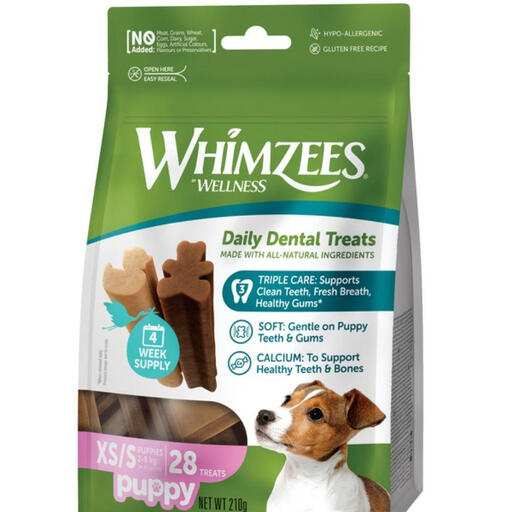
Why This Fits Their Persona: Perfect for UK households with a new puppy. These chews are specifically formulated for the needs of a growing dog, helping to soothe teething discomfort while establishing good chewing habits from a young age.
It avoids the "one-size-fits-all" trap. Its softer texture is designed for sensitive puppy gums, unlike hard adult chews that could cause damage. The simple, digestible ingredient list avoids hidden nasties.
Calcium-enriched to support developing teeth and bones. The texture helps with dental cleaning as your puppy chews.
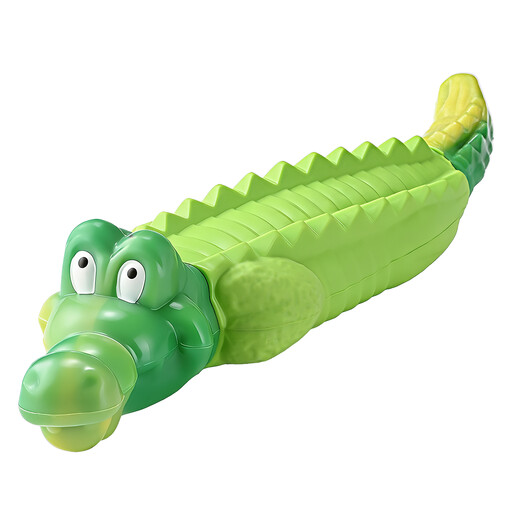
Why This Fits Their Persona: For owners of medium-to-large breeds like Labradors, German Shepherds or Staffies who can destroy conventional toys in minutes. This toy is built with their powerful jaws in mind.
It directly counters the "indestructible myth" with a transparently durable design. The double-layered construction (hard nylon core, softer natural rubber exterior) provides a robust structure that is genuinely resistant to strong bites.
The dual-material design satisfies the need to chew without being overly harsh on teeth and gums. Its textured crocodile shape is also easy for dogs to grip.
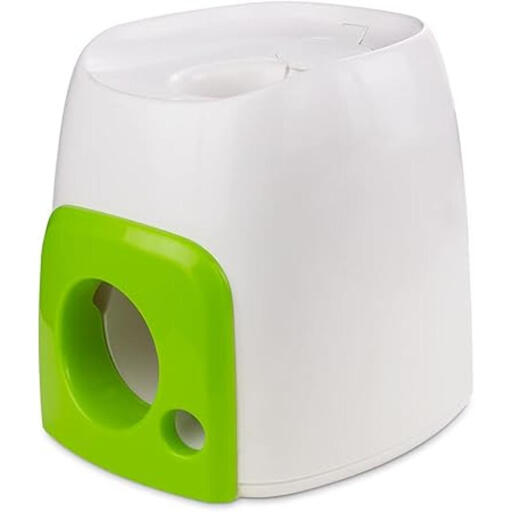
Why This Fits Their Persona: An excellent choice for owners who work from home or have busy schedules. This toy keeps intelligent, active dogs mentally stimulated and entertained, helping to prevent boredom-related behaviours.
It solves the "play style mismatch" by combining two highly motivating activities: fetch and food rewards. This multi-faceted engagement keeps dogs interested for longer than a simple, single-function toy.
It encourages independent play once your dog learns the mechanism. Plus, it's battery-free, so there are no ongoing costs or hassles.
We have compiled a complete, real-time list of products that fully satisfy these strict selection criteria and UK safety regulations.
There is no fixed timeline, as it depends on the toy's material and your dog's chewing habits. The most important rule is to inspect toys regularly. You should replace any toy that has cracks, sharp edges or has been chewed down to a size that could be swallowed. For plush toys, replace them if the stuffing becomes exposed.
For most dogs, squeaky toys are a fantastic source of stimulation that taps into their natural prey drive. However, it's crucial to supervise play. Some dogs may become fixated on "killing" the squeaker, leading them to tear the toy apart to get to it. If your dog is a destroyer, opt for more durable toys or only allow supervised play with squeakers.
For hard toys made of rubber or nylon, a simple wash with warm water and a pet-safe soap is effective. You can use a brush to scrub away any grime. For fabric or plush toys, check the label; many can be machine washed on a gentle cycle. Always ensure toys are thoroughly rinsed and completely dry before giving them back to your dog.