
24/7 Customer Support

Free returns

Same-day & Next-day Delivery

Quality Guaranteed

Unlock Your Welcome Offers: FREE Delivery | Up to 80% OFF | Free 30-day JoyPlus trial
Download the APP
Choosing suitable dog toys is not simply a matter of picking the most colourful design or the product labelled “durable”. A toy that suits a small puppy may be unsafe for a powerful adult dog, while a squeaker that keeps one pet engaged may irritate another household.
The right choice depends on your dog’s size, chewing strength, age and preferred play style. It should also be inspected regularly, as no dog toy is indestructible.
Marketing language can make a toy sound suitable for every dog, but durability is relative. A soft fabric tug toy may last well with a gentle player and be damaged quickly by a determined chewer. Even rubber, nylon and rope products can develop cracks, loose threads or detached components.
Look for clear information about:
A toy that is too small may present a swallowing risk, particularly for medium and large dogs. Conversely, an oversized toy can be difficult for a puppy or small dog to grip and carry.
Dimensions matter more than breed labels alone. Compare the listed measurements with your dog’s mouth and jaw size, and choose a design that cannot be swallowed whole.
Squeaky dog toys can encourage chase and active play, but some dogs focus on extracting the internal squeaker rather than playing safely. Toys with textured surfaces may be useful as part of a chewing routine, but they should not be presented as a replacement for brushing, professional dental care or veterinary advice.
If your dog attempts to tear off and swallow fragments, remove the toy immediately.
For gentle players, fabric, polyester and soft rubber may be suitable for supervised indoor play. For regular chewing, consider products made with natural rubber, TPR, nylon or reinforced stitching. A double-layer construction, such as a nylon core with a rubber exterior, may offer more resistance than a single thin layer.
However, harder does not automatically mean safer. Watch for sharp edges, exposed internal parts and cracking. Products containing cowhide, collagen or other edible components require additional supervision because the chew becomes smaller over time.
Use the product dimensions as a practical starting point:
Do not allow a small dog to use a toy designed for large breeds, or give a large, strong chewer a lightweight toy intended for puppies.
Match the toy to the way your dog plays:
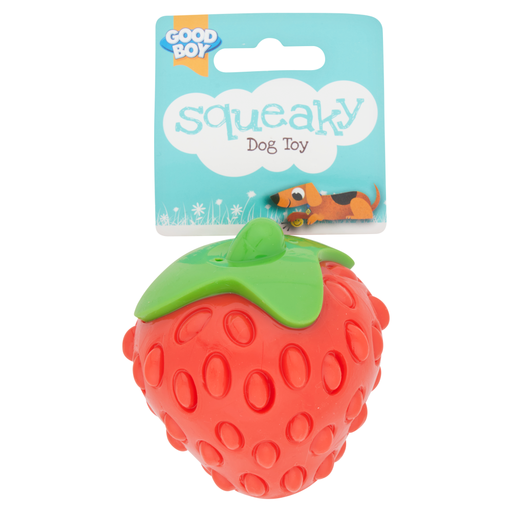
Why This Fits Their Persona: A lightweight option for owners introducing a dog to squeaky play, indoor games or short fetch sessions in a UK home.
Its intended uses and supervision guidance are clear, helping buyers avoid treating a squeaky toy as an unsupervised chew product.
Lightweight design; suitable for fetch or solo play with supervision; made with rubber, fabric and a squeaker mechanism.
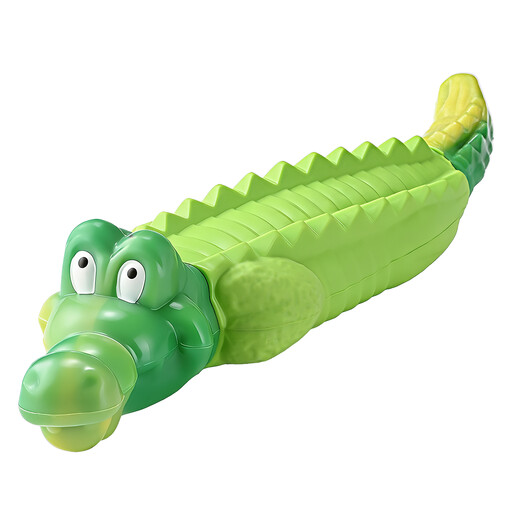
Why This Fits Their Persona: Designed for owners seeking a more substantial option for medium and large dogs during supervised indoor or outdoor play.
The 24 × 6 cm size and medium-to-large-dog guidance make it easier to avoid selecting an undersized toy.
Nylon core with natural rubber exterior; textured crocodile shape; usable for chewing, tugging and fetch.

Why This Fits Their Persona: A medium-sized chewing option for dogs with a strong interest in gnawing, provided the owner remains present and checks the toy frequently.
The listed 17.7 × 7.3 × 3.3 cm dimensions and medium-dog recommendation help prevent indiscriminate use across unsuitable sizes.
Cowhide and nylon construction; branch-shaped grip; textured chewing surface for supervised play.
We have compiled a complete, real-time list of products that fully satisfy these strict selection criteria and UK safety regulations.
There is no fixed lifespan. A toy’s condition depends on the material, frequency of use and your dog’s chewing behaviour. A gentle dog may use one for months, while a strong chewer may damage it quickly. Replace any toy showing cracks, exposed filling, detached parts or significant wear.
They can be used under supervision if the size is appropriate and the squeaker is securely enclosed. Puppies that bite through fabric or try to remove the squeaker should use a different supervised toy. Puppy teething toys should never be small enough to swallow.
No. Textured chew products may form part of a daily routine, but they do not replace brushing or professional veterinary advice. Choose a suitable size, monitor chewing and remove the product if pieces break away.