
24/7 Customer Support

Free returns

Same-day & Next-day Delivery

Quality Guaranteed

Unlock Your Welcome Offers: FREE Delivery | Up to 80% OFF | Free 30-day JoyPlus trial
Download the APP
Training rewards can make the difference between a focused dog and one that loses interest after a few repetitions. Yet choosing suitable dog training treats is not simply a matter of picking the packet with the most appealing picture. Size, texture, ingredients, storage and carrying convenience all affect how useful a reward will be during a training session.
For UK dog owners, the main challenge is finding treats that are motivating without disrupting a balanced diet. The following guide explains the common buying traps, the specifications worth checking and which options may suit different routines.
A large biscuit may look good value, but it can provide more food than needed for a single reward. During lead training, recall practice or puppy classes, you may give several treats in a short period. Oversized rewards can make portion control difficult and may interrupt the flow of training while your dog chews.
Small oven-baked pieces or soft dog training treats that can be broken into smaller portions are generally easier to use for repeated rewards. Always consider your dog’s size and chewing ability.
Terms such as natural dog treats and grain-free dog treats can be useful search filters, but they do not automatically indicate that a product suits every dog. A grain-free recipe may still contain concentrated ingredients, while a treat with cereals may be suitable for dogs that tolerate them.
Read the full ingredients list, analytical constituents and feeding guidance. If your dog has a diagnosed allergy or digestive condition, ask a veterinary professional before changing its diet.
Most training rewards are labelled complementary dog food. This means they are intended to supplement a complete daily diet rather than replace it. Treat calories should be included in your dog’s overall intake, and the main meal may need adjusting according to the label and your dog’s size, activity and body condition.
For puppy training, look for pieces suitable for small mouths and check the minimum age on the packaging. Puppy training treats should be easy to chew, and small dogs may benefit from treats that can be divided without crumbling excessively.
Soft-bite products can be practical for fast reward delivery, while firmer biscuits may be easier to carry without becoming sticky. Neither texture is universally suitable; the right choice depends on your dog’s preferences and the training environment.
Check the order of ingredients, named meat percentages and the analytical constituents. Protein, fat, fibre, moisture and ash values provide a clearer comparison than front-of-pack imagery alone.
For example, chicken dog treats may use chicken meal, chicken liver or chicken fat in different proportions. If you are looking for a recipe without cereals, verify that the ingredient list uses alternatives such as sweet potato, chickpea flour or pea flour. Also check for preservatives, antioxidants and nutritional additives if your dog has specific dietary requirements.
A resealable pouch helps maintain freshness after opening, particularly with softer treats. For outdoor sessions, a dog treat pouch should be easy to open with one hand, comfortable to carry and separated from keys, waste bags or other accessories.
A waterproof or wipe-clean design can be useful during rainy UK walks, but check the stated load limit and care instructions. A pouch is a training accessory, not a substitute for safe food storage at home.
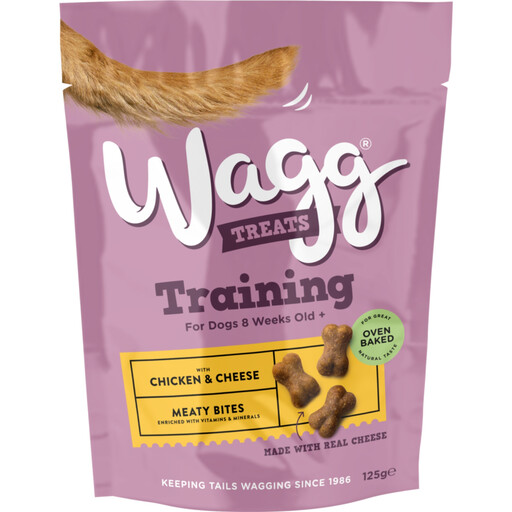
Why This Fits Their Persona: A straightforward option for new dog owners who want a familiar biscuit-style reward for everyday obedience practice and short walks.
The 125g packs make the quantity clear, while the feeding guidance identifies the product as a complementary treat rather than a complete meal.
Oven-baked bone-shaped pieces; listed with no added sugar or artificial colours and flavours; suitable from 8 weeks according to the product details.
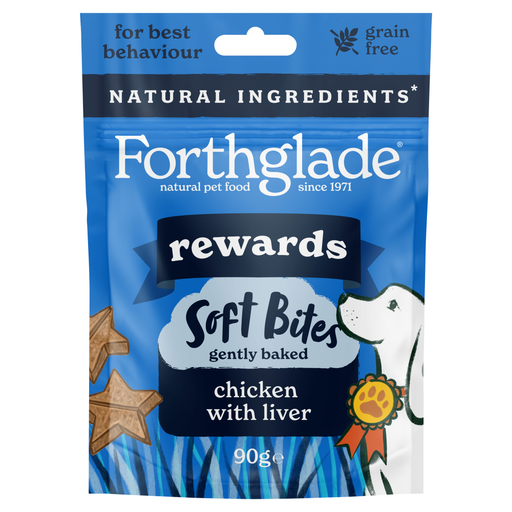
Why This Fits Their Persona: Suits owners prioritising a named-meat recipe, a soft texture and a resealable pack for structured daily training.
The listed composition and analytical values allow closer comparison, rather than relying only on broad “natural” wording. The treats can be split for portion control.
Contains 34% listed chicken ingredients; soft-bite format; grain-free recipe; suitable from 2 months according to the product details.
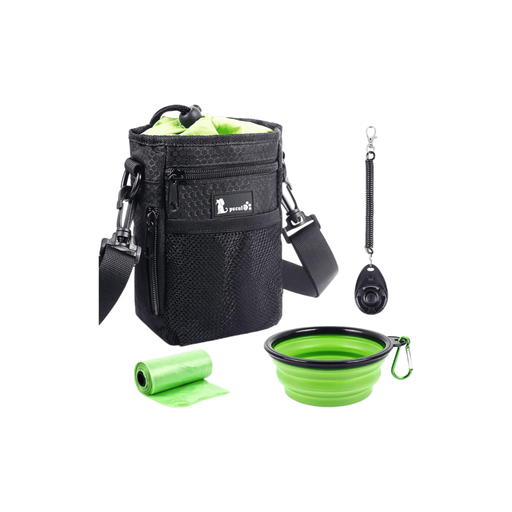
Why This Fits Their Persona: Designed for active owners, trainers and walkers who need rewards, waste-bag access and small essentials during longer outdoor sessions.
Its separate compartments help keep treats apart from other items, while the stated 2.5kg maximum load clarifies how much it is designed to carry.
Water-resistant fabric; waist, shoulder and carabiner carrying options; includes waste bags, clicker and collapsible bowl.
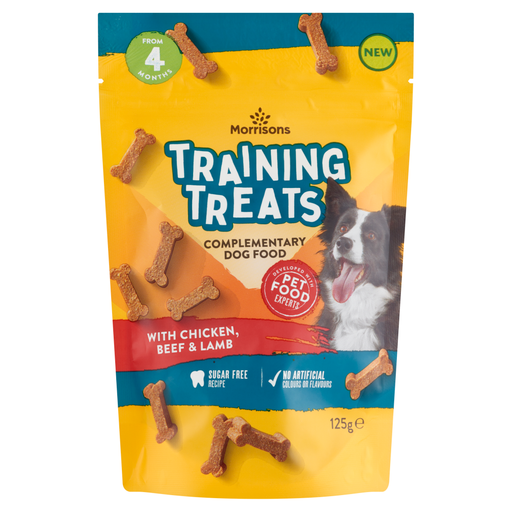
Why This Fits Their Persona: A practical choice when different dogs respond to different flavours, or when owners want variety for walks and home practice.
The recipe identifies chicken, beef and lamb percentages, so buyers can see the named meat content instead of assuming that flavour wording describes the whole formula.
Lists 12% chicken, 6% beef and 4% lamb; sugar-free recipe; no artificial colours or flavours; suitable from 4 months according to the product details.
We have compiled a complete, real-time list of products that fully satisfy these strict selection criteria and UK safety regulations.
There is no single amount suitable for every dog. Follow the product label, then consider your dog’s body size, activity and total daily food intake. For frequent training, use small pieces and reduce the main meal if appropriate. If your dog is overweight or has dietary restrictions, seek tailored guidance from a veterinary professional.
Some are, but check the stated minimum age and choose a piece size your puppy can manage. The Forthglade product listed above is described as suitable from 2 months, while the Wagg option is described as suitable from 8 weeks. Break larger pieces where necessary and supervise feeding to reduce choking risks.
Not necessarily, but a pouch can improve timing and convenience by keeping rewards accessible during walks or classes. Look for a secure closure, washable or wipe-clean material and a carrying method that suits your routine. Owners who also need waste bags and training accessories may prefer a multi-compartment pouch such as the Pecute model.