
24/7 Customer Support

Free returns

Same-day & Next-day Delivery

Quality Guaranteed

Unlock Your Welcome Offers: FREE Delivery | Up to 80% OFF | Free 30-day JoyPlus trial
Download the APP
As a Joybuy Product Recommendation Officer, I see how challenging it can be for UK dog owners to find the right training treats. The shelves are packed with options, all claiming to be the key to a well-behaved companion. Yet, many of these products are designed more to catch your eye than to genuinely support your dog's training and health.
Before you spend another pound, let's look at the common pitfalls that lead to wasted money and ineffective training sessions.
grain free dog treats are essential for dogs with specific sensitivities, the label isn't a universal stamp of quality. Some recipes simply swap grains for other high-starch fillers like potato or pea flour, which may not be ideal for every dog and doesn't automatically make the treat healthier.To ensure you're buying effective healthy dog rewards and not just expensive snacks, focus on these three non-negotiable factors.
The ingredients list is your most powerful tool. In the UK, ingredients must be listed in descending order of weight. Look for treats where a clearly named meat source (e.g., "Chicken," "Duck," "Lamb") is the first ingredient. This indicates a higher-quality, protein-led product. Be cautious of lists that start with "Cereals" or the ambiguous "Meat and Animal Derivatives," as the quality and source of these ingredients can vary significantly. Simple, short ingredient lists are often a sign of more natural dog treats.
For training purposes, the physical form of the treat is critical. The ideal choice is often soft dog treats for training.
A treat that's right for a large adult dog may be unsuitable for a young puppy. Always check the packaging for age recommendations.
puppy treats UK standard is vital for their early development.Based on these practical criteria, here are some recommendations matched to different owner needs and priorities.
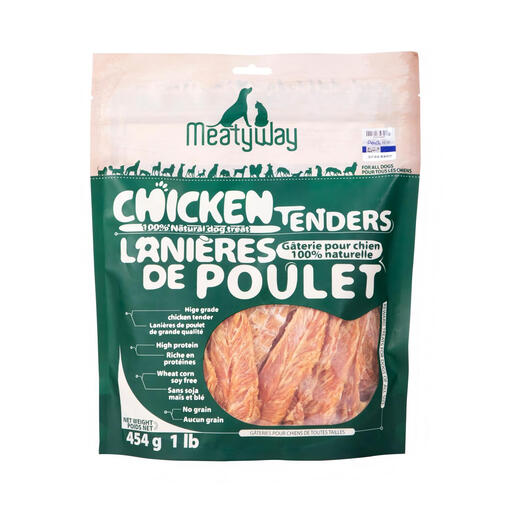
Why This Fits Their Persona: Ideal for the health-conscious owner who scrutinises labels and prioritises single-source protein. This treat's minimal, recognisable ingredient list offers peace of mind.
It directly counters the "healthy illusion" by using 100% real chicken as the first ingredient, with no grains, additives or ambiguous fillers.
High protein content (min. 30%) and a soft, easy-to-break texture make it a highly motivating and versatile training reward.
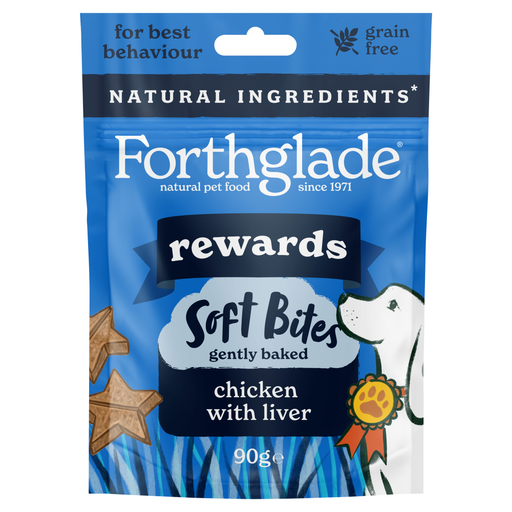
Why This Fits Their Persona: Perfect for new puppy owners who need a safe, effective and appropriately sized reward. Its suitability from just 2 months of age makes it a go-to for early-stage training.
It avoids the "wrong tool for the job" pitfall. The soft-bite texture is gentle on puppy teeth and can be easily broken, preventing choking risks and allowing for frequent rewarding.
A grain-free recipe with high chicken content (34%) makes it both highly palatable for motivation and gentle on a young puppy's digestive system.
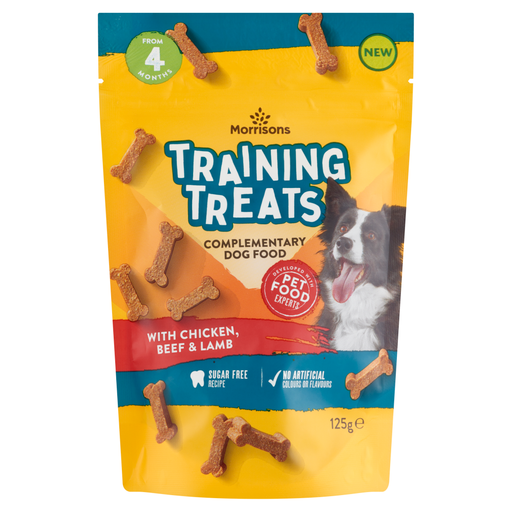
Why This Fits Their Persona: A sensible, affordable choice for owners who get through a lot of treats with daily training. It provides a cost-effective solution without resorting to low-quality, sugary options.
This treat avoids the hidden sugar trap common in lower-priced options. Its sugar-free recipe, with no artificial colours or flavours, makes it a more responsible choice in its category.
Developed with pet food experts, it offers a reliable and palatable reward for consistent, everyday training without a premium price tag.
We have compiled a complete, real-time list of products that fully satisfy these strict selection criteria and UK safety regulations.
A good rule of thumb followed by many vets and nutritionists is the 10% rule. Treats should not make up more than 10% of your dog's total daily calorie intake. Check the feeding guide on the packaging and remember to reduce their main meal portion accordingly to maintain a healthy weight.
Not necessarily. Grain-free recipes are vital for dogs with a diagnosed grain allergy or sensitivity. For other dogs, high-quality whole grains can be a useful source of nutrients. The key is to focus on the overall quality of the ingredients. A treat with a named meat source as the primary ingredient is generally a better indicator of quality than whether it is grain-free or not.
This depends entirely on the specific product. Many puppy training treats are suitable from 8 weeks of age, while others are designed for puppies 4 months and older. Always read the product's age recommendation on the packaging before giving any treat to a young dog.