
24/7 Customer Support

Free returns

Same-day & Next-day Delivery

Quality Guaranteed

Unlock Your Welcome Offers: FREE Delivery | Up to 80% OFF | Free 30-day JoyPlus trial
Download the APP
Effective dog training relies on clear communication and positive reinforcement. Finding the right reward is a key part of this process, but the sheer volume of dog training treats on the market can be overwhelming. Many dog owners in the UK find it challenging to sift through marketing claims to find a treat that is not only motivating for their dog but also aligns with a healthy diet.
This guide is designed to provide practical advice on what to look for in a quality dog reward treat. We will outline key features to consider and present a selection of recommended products to help you make an informed choice for your canine companion.
Before you buy, focusing on a few key criteria can help you select a treat that supports both your training goals and your dog's well-being.
The composition of a treat is its most important feature. Look for products with a clear, understandable ingredients list. High-quality natural dog treats often feature meat, poultry or fish as the primary ingredient. Be mindful of treats with "added sugars" or a long list of artificial colours and flavours. For dogs with specific dietary needs or sensitivities, a simple, limited-ingredient recipe is often a sensible choice.
During a training session, you may be rewarding your dog frequently. Therefore, the ideal dog reward treats are small and easy to swallow, allowing the training to flow without long chewing breaks. A lower calorie count is also beneficial, as it helps prevent weight gain. For this reason, many owners opt for low fat dog treats. The texture is also important; soft treats are excellent for puppies and senior dogs, while crunchier options can offer some dental benefits.
A growing puppy has different nutritional needs than an adult dog. Puppy training treats are often formulated with added nutrients like calcium to support bone development. Always check the packaging for age suitability, as some treats are designed for dogs over a certain age (e.g., from 8 weeks or 4 months).
Here are four distinct options that cater to different needs, from puppy-specific formulas to all-natural jerky.
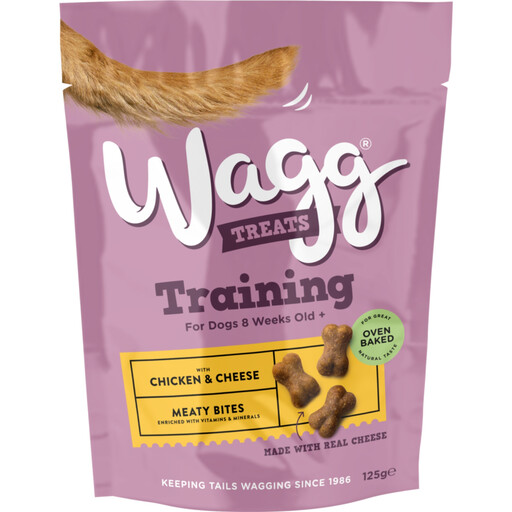
Why It Stands Out: These oven-baked, bone-shaped treats are a popular choice across the UK. Made with chicken and cheese, they are formulated to be suitable for dogs from just 8 weeks old, making them a versatile option for many households.
Pros:
Who is it for: Dog owners looking for a widely available and affordable training treat that is suitable for both puppies (from 8 weeks) and adult dogs.
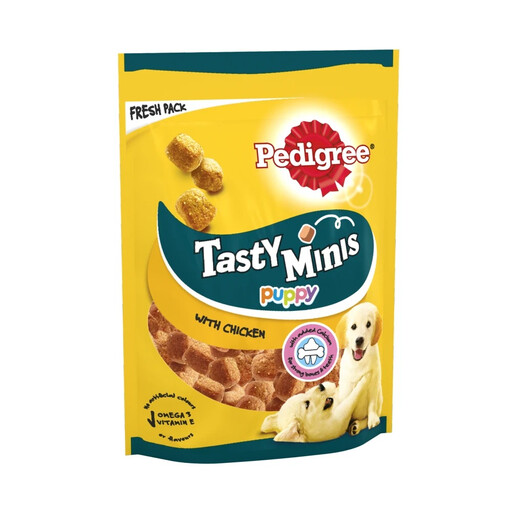
Why It Stands Out: Specifically designed for the needs of a growing dog, these soft, chewy cubes are ideal puppy training treats. The formula is enriched with nutrients to support development, including calcium and Omega 3 fatty acids.
Pros:
Who is it for: New puppy parents with dogs aged between 4 and 18 months who want a treat tailored to support healthy growth.
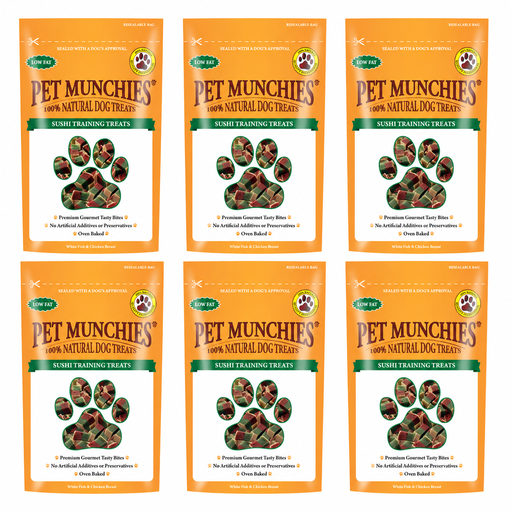
Why It Stands Out: These unique sushi-style treats are made from a blend of white fish and chicken breast. Their very low fat content and small size make them an excellent choice for frequent rewarding without adding excessive calories to your dog's diet.
Pros:
Who is it for: Owners of dogs of all sizes who are looking for a high-value, low-calorie reward. They are particularly good for dogs who are motivated by fish-based chicken dog treats.
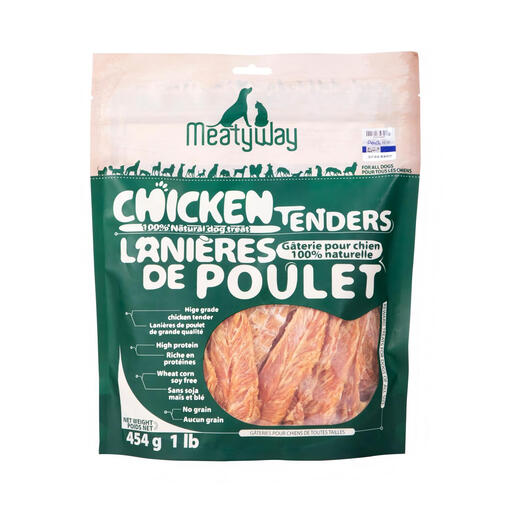
Why It Stands Out: For those who prioritise simplicity and purity, these jerky tenders are made with just one main ingredient: 100% real chicken. This grain-free, high-protein snack is soft, easy to tear into smaller pieces for training and highly digestible.
Pros:
Who is it for: Dog owners seeking a high-protein, minimal-ingredient treat, especially for dogs with grain sensitivities or those on a limited-ingredient diet.
The recommendations above cover a range of needs, but every dog is an individual. If you are searching for more specialised options, such as single-protein or exotic meat treats, you may find what you need in our broader collection.
Explore our full range of carnivore dog treats to discover more choices.
A widely accepted guideline is the 10% rule: treats should make up no more than 10% of your dog's total daily calorie intake. To manage this, check the feeding guide on the treat packaging, use small-sized treats and remember to reduce your dog's main meal portion slightly to account for the extra calories from rewards.
A good training treat is first and foremost highly motivating for your dog. Functionally, it should be small, low in calories and quick to eat. From a health perspective, look for healthy dog treats with quality ingredients, such as real meat or fish, and an absence of added sugar or artificial additives.
While you can, it is often less practical. Standard biscuits are typically larger and more calorific than treats designed for training. This means you can give fewer repetitions before reaching your dog's daily limit, and the time spent crunching a large biscuit can break the flow of a training session. Training-specific treats are portioned for this purpose.