
24/7 Customer Support

Free returns

Same-day & Next-day Delivery

Quality Guaranteed

Unlock Your Welcome Offers: FREE Delivery | Up to 80% OFF | Free 30-day JoyPlus trial
Download the APP
Choosing dog treats can seem straightforward until you compare ingredients, age guidance, textures and feeding limits. A colourful packet may promise dental care, calm behaviour or “natural” ingredients, yet the practical details often determine whether a product suits your dog.
This guide explains the main buying traps for UK dog owners, the specifications worth checking and a selection of dog treats matched to different routines.
Most dog treats are complementary pet food, meaning they are intended to supplement—not replace—a nutritionally complete main meal. Treats should usually remain a small part of your dog’s daily intake. Several products in this guide advise keeping treats to around 10% of daily calories.
If your dog is gaining weight, reduce the main meal slightly and account for every chew, training reward and table scrap. A treat labelled “natural” or “functional” still contributes calories.
Marketing wording can hide important differences. Check the composition rather than relying on the front of the packet. For example, Wagg Tasty Bones lists chicken meal at 18% and chicken liver digest at 5%, while some chicken-flavoured products may contain cereals, fats and flavourings alongside animal ingredients.
Under UK feed-labelling requirements, ingredient descriptions such as “with chicken” should be supported by the relevant declared percentage. Comparing the ingredients list and analytical constituents gives a clearer picture than the product name alone.
Hard dental chews are not automatically suitable for puppies, small breeds or dogs with dental and digestive concerns. Conversely, very soft bites may be swallowed quickly and provide little chewing time.
For puppies and small dogs, look for breakable puppy treats or soft bite dog treats that can be divided into smaller portions. Dental chews for dogs should be appropriately sized, offered with fresh water and given under supervision.
Always match the treat to the stated age and size range. Some puppy treats are suitable from eight weeks, while others are intended for dogs aged two months or older. The Rosewood Magic Bone Chicken Treats are specifically listed for adult dogs aged over nine months and weighing 7–12kg.
A treat that is too large can create a choking risk, while one that is too small may be swallowed without chewing. Follow the packet instructions and supervise your dog, particularly with long-lasting chews.
For sensitive dogs, compare:
Natural dog treats are not automatically appropriate for every sensitive stomach. A simple ingredient list can make it easier to identify potential problem ingredients, but owners should seek veterinary advice about diagnosed allergies or medical diets.
Select the format according to how you plan to use it:
Some products are functional in design, but no treat should be presented as a replacement for brushing, professional dental care or a balanced diet.
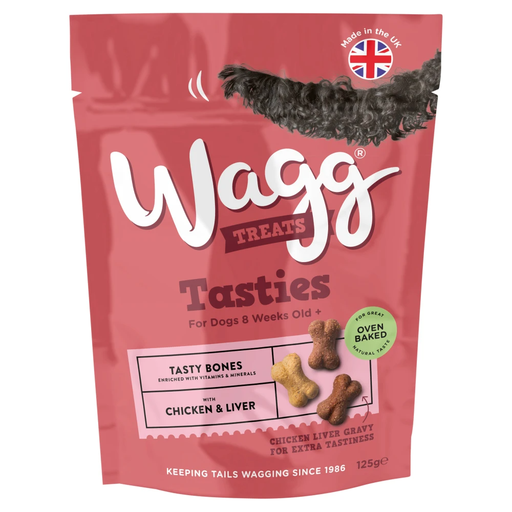
Why This Fits Their Persona: A practical everyday option for owners wanting a clearly age-labelled treat for puppies from eight weeks and adult dogs.
The pack gives an age indication and lists wheat, chicken meal and chicken liver digest, helping buyers avoid guessing from “chicken” wording alone.
125g pack; 7.6% crude fat; includes declared vitamins and minerals.
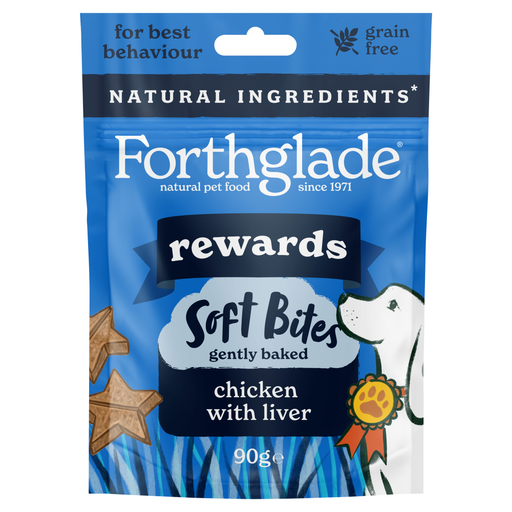
Why This Fits Their Persona: Designed for owners who prefer a soft, breakable reward for regular training, walks and daily routines.
Its listing identifies a grain-free recipe and gives a 10% daily calorie limit, rather than treating “natural” as a reason to ignore portions.
34% chicken content as listed; soft texture; suitable from two months; resealable pouch.
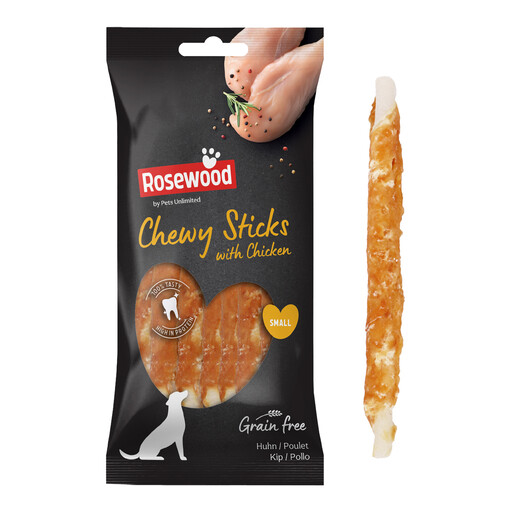
Why This Fits Their Persona: Suits owners looking for a measured chew as part of an adult dog’s daily routine, particularly for dogs within the stated weight range.
The product specifies one chew per day, dogs over nine months and a 7–12kg weight range, reducing the risk of choosing an unsuitable size.
Seven 105g chicken-flavoured chews; 5.5% crude fat; chewy format with chamomile extract listed.
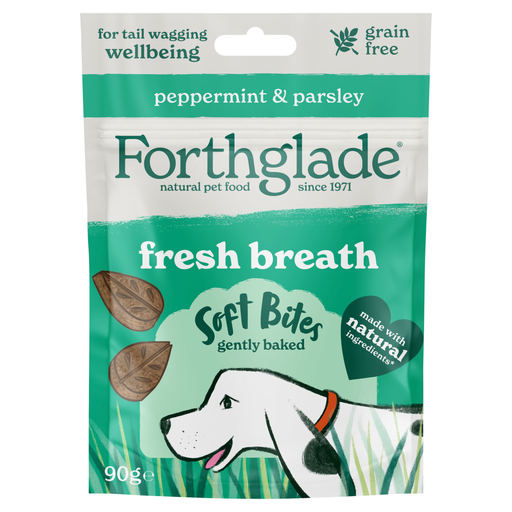
Why This Fits Their Persona: A convenient option for owners wanting a soft daily reward with parsley and peppermint oil listed in the composition.
The product clearly states dried parsley at 1.5% and peppermint oil at 0.4%, so buyers can assess the listed ingredients rather than relying only on “fresh breath” wording.
Suitable from two months; 90g resealable pouch; 13% fat content and soft-bite texture are stated.
Wild bird food balls are not dog treats and should never be offered to pets. Peckish Extra Goodness Balls contain wheat flour, peanuts, black sunflower seeds and beef tallow. They are intended for bird feeders, bird tables or suitable ground-feeding areas.
If you are buying garden bird food, place it where birds can feed safely away from dogs, keep fresh water nearby and wash your hands after handling. The six-pack contains 420g, and the listing advises using it within three months of opening.
We have compiled a complete, real-time list of products that fully satisfy these strict selection criteria and UK safety regulations.
Use the feeding guide on the packet and keep treats within the recommended proportion of daily calories. A common guide is no more than 10% of daily calorie intake, with the main meal adjusted if necessary. Puppies, small breeds and dogs on restricted diets may need smaller portions.
Some are, but check the minimum age and break the treat into small pieces. The Forthglade soft bite products are listed for dogs aged two months and older, while Wagg Tasty Bones are listed from eight weeks. Always supervise puppies while eating.
No. A chew may provide mechanical chewing action, but it does not replace a regular dental routine or professional advice. Choose the correct size, follow the daily limit and contact a vet if your dog has persistent bad breath, discomfort or difficulty eating.