
24/7 Customer Support

Free returns

Same-day & Next-day Delivery

Quality Guaranteed

Unlock Your Welcome Offers: FREE Delivery | Up to 80% OFF | Free 30-day JoyPlus trial
Download the APP
Choosing dog treats can seem straightforward until you compare ingredients, feeding instructions, age ranges and claims about dental or digestive support. The right snack depends on your dog’s size, life stage, diet and the reason you are offering it.
This guide from the Joybuy Product Recommendation Officer cuts through common marketing pitfalls so UK dog owners can choose more confidently, whether they need puppy treats, dog training treats, dental chews for dogs or occasional rewards.
Most biscuits, chews and soft rewards are complementary pet food, not a replacement for a complete and balanced dog food. Even products containing vitamins, minerals or added nutrients should be counted as part of your dog’s daily intake.
Check the feeding guide and reduce the main meal where necessary. This is particularly important with calorie-dense options such as crunchy dog biscuits and soft meat-flavoured chews.
A dental chew designed for a medium adult dog may be unsuitable for a small breed, a puppy or a dog that swallows food quickly. Age restrictions also matter. Several dental products listed here are not suitable for puppies under four months, while puppy-specific chews have different textures and feeding guidance.
Always check:
Dental chews may help reduce plaque or tartar through their shape and abrasive texture, but they do not replace regular tooth brushing or veterinary dental care. For example, the manufacturer’s own research for certain PEDIGREE DENTASTIX products reports a reduction in tartar build-up when fed daily. This should be understood as a product-specific claim under stated usage conditions, rather than a guarantee for every dog.
Similarly, dog calming treats, dog multivitamins, dog probiotics and digestive supplements for dogs should not be used to manage an underlying health problem without veterinary guidance.
Read beyond the flavour description. Compare protein, fat, fibre, moisture and energy where available. A low-fat dog treat may suit owners monitoring calorie intake, but “low fat” does not automatically mean suitable for every dog.
Check for ingredients your dog must avoid, including dairy, gluten, specific meats or shellfish-derived ingredients. Pet Bakery Cheeky Cheese Paws, for example, contains flour, margarine and 10% cheese, so owners of dogs with known dairy or gluten sensitivities should seek veterinary advice before feeding.
For supplements, check the active ingredients and serving size rather than relying on broad phrases such as “8-in-1” or “multifit”. PawLuxe Dog Probiotics provides a stated blend of bacterial strains, prebiotics and postbiotic ingredients, while YuMOVE Digestive Care lists Enterococcus faecium, MOS, scFOS and beta-glucans.
Choose the texture according to the job:
A crunchy biscuit can offer a satisfying texture, but it should not be described as a complete dental-care routine. Dental products require the correct size and supervision.
Follow the pack instructions rather than estimating portions. Reseal biscuits and chews after opening, store them in a cool, dry place and observe any “use within” guidance. Fresh water should always be available.
For products containing supplements or botanical ingredients, check age restrictions and recommended daily quantities. Stop feeding and contact a vet if your dog shows signs of an adverse reaction or digestive upset.
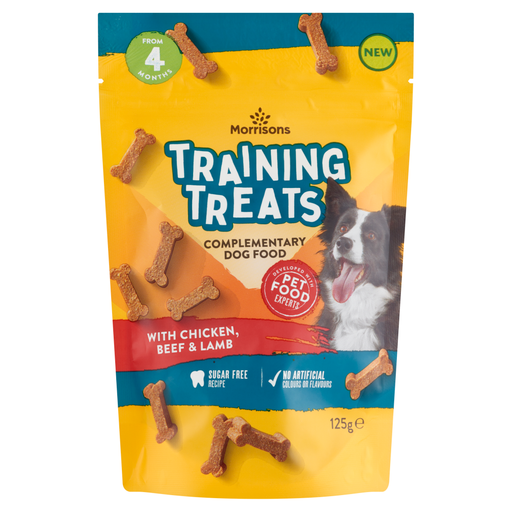
Why This Fits Their Persona: A practical 125g option for owners starting reward-based training at home or on UK walks.
The listing provides a feeding purpose, ingredient breakdown and a sugar-free recipe, making portion planning clearer than relying on vague reward claims.
Contains chicken, beef and lamb; listed analytical values include 25% protein and 10% fat.
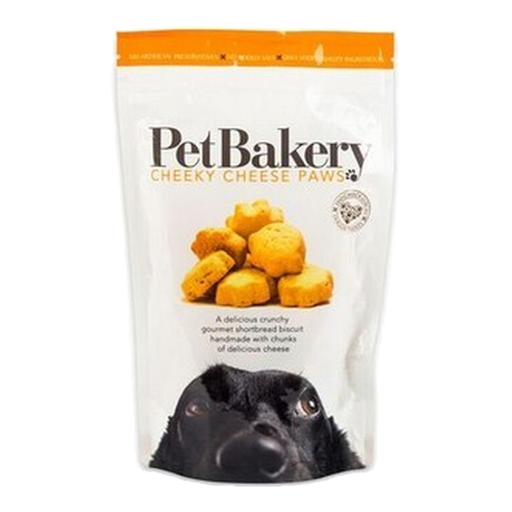
Why This Fits Their Persona: Suits owners looking for a handmade-style biscuit for occasional bonding, gifting or a visible daily reward.
The ingredient list and nutrition panel make the cheese content and calorie-relevant fat figure visible, rather than hiding composition behind flavour-led packaging.
Shortbread-style crunchy biscuits; listing states 10% cheese and no artificial colours, sweeteners or preservatives.

Why This Fits Their Persona: Designed for medium dogs weighing 10–25kg, this larger pack suits owners following a daily dental-chew routine.
The stated 10–25kg size range helps avoid buying a chew that is too large or small. Supervision remains necessary, and the product is not a substitute for veterinary dental care.
X-shaped dental sticks; listed fat content is 1.3%, with no added sugar.
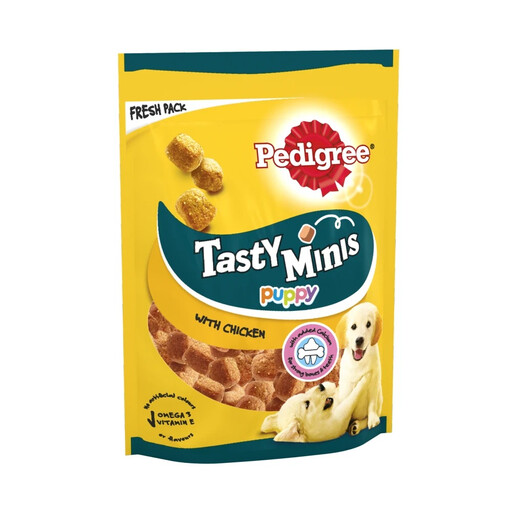
Why This Fits Their Persona: Bite-sized soft cubes are suited to puppy rewards, provided the puppy is within the stated 4–18-month age range.
The age range is stated clearly, helping avoid unsuitable adult treats. Portions still need to be deducted from the puppy’s main food.
Soft, chewy, bite-sized format; listing includes calcium, omega-3 fatty acids and dietary fibre.
We have compiled a complete, real-time list of products that fully satisfy these strict selection criteria and UK safety regulations.
There is no single portion for every dog. Follow the pack’s feeding guide, then account for your dog’s weight, activity level, age and main diet. High-calorie treats should replace part of a meal rather than being added on top.
No. Dental chews may provide mechanical cleaning as a dog chews, but they do not replace brushing, routine mouth checks or veterinary dental care. Choose the correct size, supervise chewing and stop if the chew causes difficulty.
Not necessarily. Products have different age restrictions, ingredients and serving amounts. Dogs with allergies, ongoing medication, digestive symptoms or diagnosed conditions should be assessed by a vet before receiving dog calming treats, dog multivitamins, dog probiotics or other digestive supplements for dogs.