
24/7 Customer Support

Free returns

Same-day & Next-day Delivery

Quality Guaranteed

Unlock Your Welcome Offers: FREE Delivery | Up to 80% OFF | Free 30-day JoyPlus trial
Download the APP
Choosing dog treats can look straightforward until you compare ingredient lists, textures, pack sizes and feeding instructions. A colourful packet or “natural” wording does not always tell you whether a treat suits your dog’s age, size or purpose.
The most common buying mistakes are usually these:
Different formats suit different routines:
Check the statutory description. Products labelled complementary dog food should be fed alongside a complete and balanced diet. The feeding guide should also explain whether the product is intended for puppies, adult dogs or specific size categories.
Ingredients are generally listed in descending order by weight. Compare the actual composition rather than relying on front-of-pack phrases such as “meaty”, “natural” or “grain-free dog treats”.
Useful figures to compare include:
For example, Good Boy Chicken with Rice Sticks lists chicken breast and rice in its composition, with analytical constituents of 32% crude protein and 1.5% fat. By contrast, the Good Boy Large Chewy Braid listing gives 71% crude protein and 3% fat. These are different formats for different treating habits, not figures that should be compared without considering portion size and texture.
Puppy treats are not automatically suitable for every puppy. Several chews in this range state that they are not suitable for puppies under four months, while Webbox Tasty Sticks are listed for puppies from three months.
Before adding a product to your basket, check:
Treats should generally remain a limited part of the daily diet. Some product guidance recommends keeping treats to no more than 10% of daily calorie intake. Reduce the main meal when necessary and provide fresh drinking water.
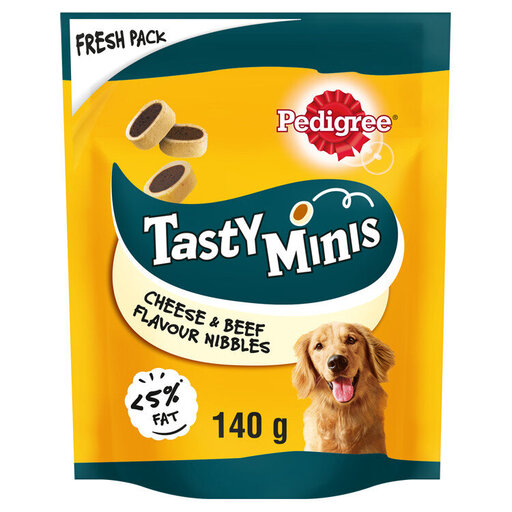
Why This Fits Their Persona: Bite-sized nibbles are practical for everyday rewards, particularly when you want a familiar format without buying a large chew.
The 140g pack and small pieces make portion control more straightforward than large, single-format chews.
140g pack; cheese powder listed at 4%; no artificial colours or flavours stated in the product information.
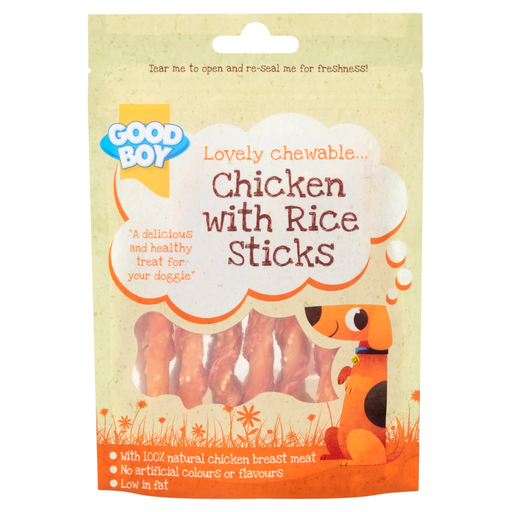
Why This Fits Their Persona: A defined chicken-and-rice composition suits owners who prefer to see the main ingredients clearly listed.
The product information identifies chicken breast at 77% and rice at 7%, rather than relying only on a flavour description.
70g pack; 32% crude protein; 1.5% fat; no artificial colours or flavours stated.
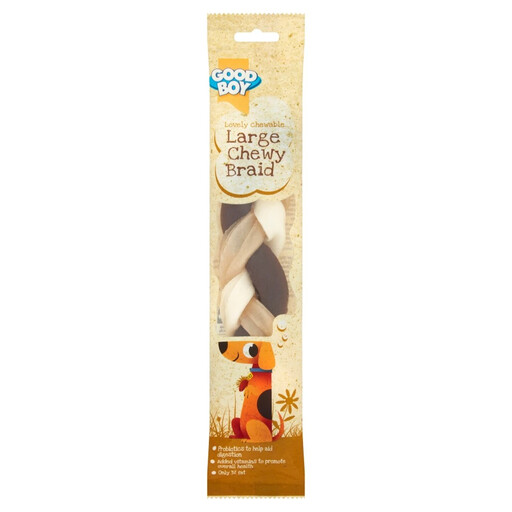
Why This Fits Their Persona: The larger braid format is intended for adult dogs and suits owners looking for a more substantial chew between meals.
Its adult-dog guidance and large format make the intended use clearer than an unspecified chew.
90g format; 71% crude protein; 3% fat; supervision and fresh-water guidance included.
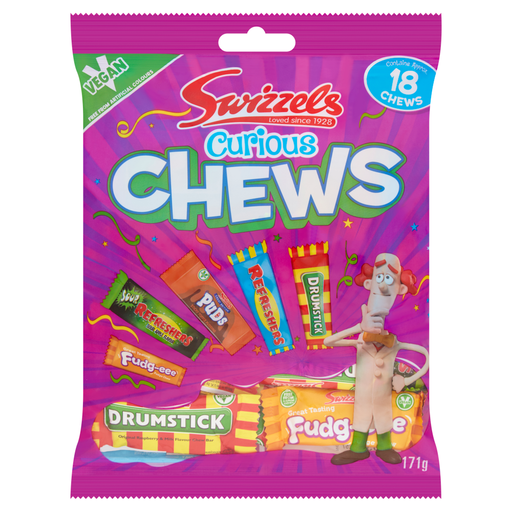
Why This Fits Their Persona: A 171g assortment of soft, fruity sweets is suited to parties, film nights and sharing among human shoppers.
The clear confectionery positioning helps prevent the common mistake of treating human chewy sweets as dog treats.
171g quantity; lemon, strawberry and blackcurrant flavours listed; made in the United Kingdom.
We have compiled a complete, real-time list of products that fully satisfy these strict selection criteria and UK safety regulations.
There is no single amount for every dog. Follow the product’s feeding guide and account for your dog’s weight, age, activity and main diet. As a practical starting point, keep treats within the stated daily calorie guidance and reduce meal portions when required. Treats should complement, not replace, complete food.
Only when the packaging confirms the minimum age. Some products are suitable from eight weeks, while several chews state that they are not suitable for puppies under four months. Choose a size and texture your puppy can manage, and supervise every feeding session.
No. Dental chews may provide a chewing action that can help mechanically clean some accessible surfaces, but they do not replace an appropriate home-care routine or veterinary advice. Select the correct size, follow the feeding instructions and remove any damaged or excessively small pieces.