
24/7 Customer Support

Free returns

Same-day & Next-day Delivery

Quality Guaranteed

Unlock Your Welcome Offers: FREE Delivery | Up to 80% OFF | Free 30-day JoyPlus trial
Download the APP
Buying dog treats can seem straightforward until you compare ingredients, textures, feeding guidance and age restrictions. A colourful packet may promise a tasty reward, but that does not automatically make it suitable for your dog’s size, life stage or daily routine.
As the Joybuy Product Recommendation Officer, I focus on practical details that help UK dog owners avoid marketing distractions and choose treats with a clear purpose.
Most dog treats are complementary pet food, meaning they should be given alongside a complete, balanced diet rather than replacing meals. Some packs provide useful feeding guidance, but even treats containing vitamins or minerals still need to be portioned carefully.
The practical rule is to follow the packet instructions and reduce your dog’s main meal where necessary. Treats should generally remain a small part of daily calorie intake.
Terms such as natural dog treats, grain-free dog treats and “with chicken” can sound reassuring, but they do not describe the entire recipe. Check the composition list and analytical constituents instead.
For example, the Forthglade Functional Natural Training Soft Bite Treat lists chicken at 34%, while other chicken dog treats may contain a much smaller proportion. A “with” statement also does not necessarily mean the named ingredient is the main component.
Grain-free recipes are not automatically suitable for every dog, either. If your dog has an allergy, intolerance or specific dietary requirement, read the complete label and seek veterinary advice where appropriate.
A hard, large chew may be unsuitable for a young puppy or small breed. Conversely, tiny soft bites may disappear quickly when you want a longer chewing session.
Think about the purpose first:
Age guidance is non-negotiable. Some adult dog treats are not suitable for puppies under four months, while certain puppy treats are designed for specific growth stages. The Pedigree Tasty Minis Puppy Chewy Cubes, for example, are listed for puppies aged four to 18 months.
Size also matters. Small dog treats can be easier to portion, while larger chews may be intended for medium or large breeds. Never assume that “bite-sized” means safe for every dog.
Compare protein, fat, fibre, moisture and energy information where it is available. A low-fat dog treat may be useful for owners monitoring overall intake, but “low fat” does not mean unlimited.
Look for ingredients your dog already tolerates. Options in this range include chicken, beef, lamb, banana, honey and plant-based recipes. If you are seeking grain-free dog treats, confirm that cereals are absent from the full ingredient list rather than relying on front-of-pack wording.
Soft treats that can be broken into smaller pieces are practical for repeated rewards. Resealable packaging can help maintain freshness, particularly for smaller 90g pouches that may otherwise take time to finish.
For chewy products, supervise your dog and remove damaged pieces. Always provide fresh drinking water, store treats in a cool, dry place and follow the product’s opening and best-before guidance.
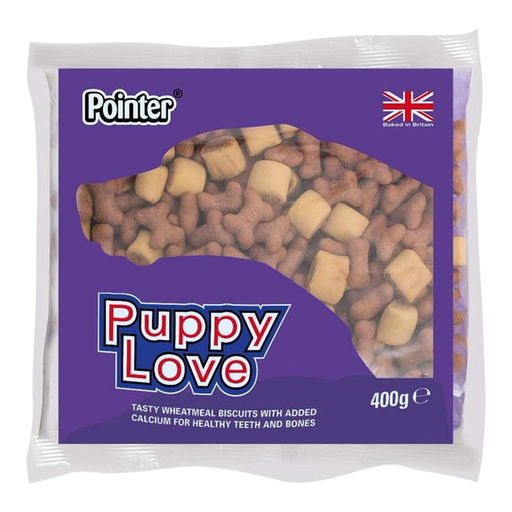
Why This Fits Their Persona: A 400g bag offers a practical starting option for puppy owners who want bite-sized rewards for everyday training and occasional snacking.
The product is clearly described as a complementary puppy treat, with feeding and supervision guidance rather than implying it can replace balanced food.
Naturally oven-baked in Britain; mixed bite-sized wheatmeal biscuits with added calcium, vitamins and minerals.
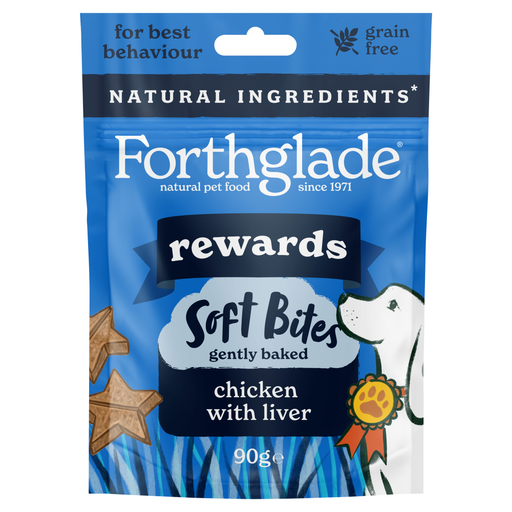
Why This Fits Their Persona: Suitable from two months, this soft-bite option suits owners who prioritise a grain-free recipe and clearly stated chicken content for regular rewards.
The 34% chicken figure and grain-free composition are stated directly, making comparison easier than relying on vague front-of-pack language.
Soft pieces can be split for portion control; resealable 90g pouch; made in England and listed for dogs aged two months and over.
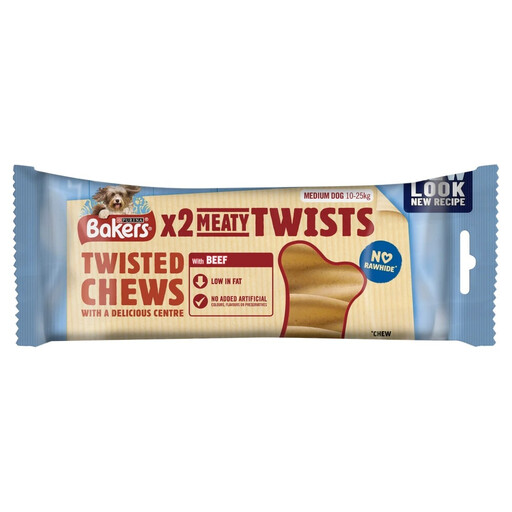
Why This Fits Their Persona: A medium-dog chew with a twisted outer layer and meaty centre suits owners looking for a longer-lasting reward rather than a quick training crumb.
Its intended use and medium-dog positioning are clear, while the label states that it contains no rawhide and provides a feeding guide.
Beef flavour; 180g pack; listed fat content of 3.5%; tough, chewy outer texture with a centre.
We have compiled a complete, real-time list of products that fully satisfy these strict selection criteria and UK safety regulations.
There is no single amount for every dog. Check the packet’s feeding guide, consider your dog’s weight, age and activity level, and reduce the main meal if needed. Treats should not replace complete dog food and should be limited to a modest share of daily calories.
Look for small, soft puppy treats that can be broken into smaller pieces. Products such as soft chicken bites or puppy biscuits may be easier to portion during repeated training sessions. Confirm the minimum age on the packaging, supervise feeding and avoid treats that are too large or hard for a young dog.
No. Dental dog chews can provide a chewing activity, but they should not be treated as a guaranteed replacement for routine oral care. Choose the correct size, follow the daily limit and supervise your dog. If you notice persistent mouth discomfort or other concerns, speak to a vet.