
24/7 Customer Support

Free returns

Same-day & Next-day Delivery

Quality Guaranteed

Unlock Your Welcome Offers: FREE Delivery | Up to 80% OFF | Free 30-day JoyPlus trial
Download the APP
Choosing dog treats is not simply a matter of picking the most appealing packet. UK shelves are filled with biscuits, soft bites, meaty sticks and dental snacks, each aimed at a slightly different need. The right option depends on your dog’s age, size, activity level, chewing habits and daily diet.
Treats can support training and bonding, but they can also add unnecessary calories or create feeding problems when labels are overlooked. This guide explains the main buying pitfalls, the specifications worth checking and suitable options for different households.
Words such as “natural”, “premium” and “tasty” describe positioning rather than a complete nutritional profile. A product can sound wholesome while still containing cereals, oils, sugars or a relatively high fat content.
Check the composition and analytical constituents instead. Protein, fat, fibre, ash and moisture provide a clearer comparison between products. Ingredients are generally listed in descending order by pre-processing weight, so the first few entries deserve particular attention.
Crunchy biscuits, soft dog treats and chewy dog treats behave differently in daily use. Hard biscuits may suit an adult dog that enjoys chewing, while soft, breakable pieces are more practical for repeated training or smaller mouths.
For puppies, look for a clear minimum age. Some puppy treats are suitable from two or three months, while others are intended only for adult dogs. Always supervise feeding, particularly with small dogs and treats that could be swallowed quickly.
A large dog treat multipack may appear economical, but a treat that is too large for your dog can make portion control difficult. Conversely, small training treats may be convenient but offer less product per pack.
Treats should be fed as complementary dog food, not as a replacement for a complete meal. As a practical guide, many manufacturers recommend keeping treats within 10% of daily calorie intake, while adjusting the main meal accordingly. Compare pack weight, treat size and feeding guidance rather than relying only on the front-of-pack price.
Look for specific ingredient percentages where a product highlights a flavour. For example, Pedigree Tasty Bites Chewy Cubes Chicken lists chicken at 4% within meat and animal derivatives. This is more informative than simply seeing “chicken flavour” on the front.
If your dog has a known sensitivity, avoid assuming that “grain-free” automatically means suitable. Check the complete ingredient list for alternative ingredients such as chickpea, pea or vegetable derivatives, and introduce any new treat gradually.
A product marked for adult dogs may not be appropriate for a young puppy. Similarly, a treat designed for medium and large breeds may be too substantial for a toy breed.
Check the recommended daily quantity and calorie information where supplied. Webbox Tasty Sticks, for example, lists one stick per day and is described as suitable for puppies from three months and medium to large dogs. Forthglade’s soft bites are listed for dogs aged two months and above, with instructions to break them for puppies or small breeds.

Why This Fits Their Persona: The 650g pack is practical for households wanting a familiar everyday biscuit for an adult dog, with feeding guidance for dogs weighing 7kg, 15kg and 30kg.
The listing provides analytical values and a daily guide, helping owners avoid guessing portions from biscuit size alone.
Oven-baked crunchy texture; listed fat content is 4.5%; enriched with vitamins and minerals.
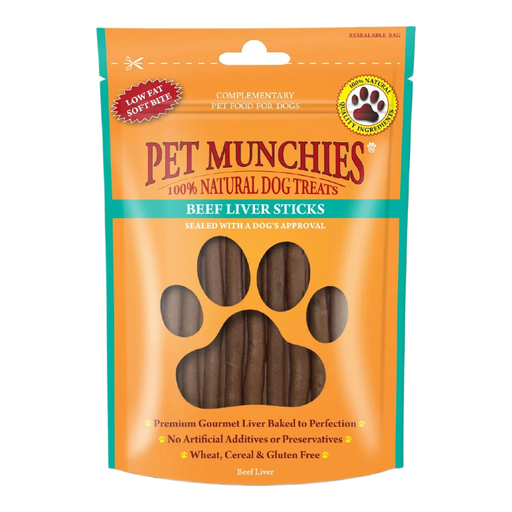
Why This Fits Their Persona: Owners seeking natural dog treats with a strong beef flavour may prefer a soft stick that can be offered whole or divided during rewards.
The ingredient list specifies 76.5% beef liver, while the pack is grain and gluten free and lists no artificial flavours or colours.
Soft texture; 49% crude protein and 4% fat listed per 100g; suitable for puppies from four months.
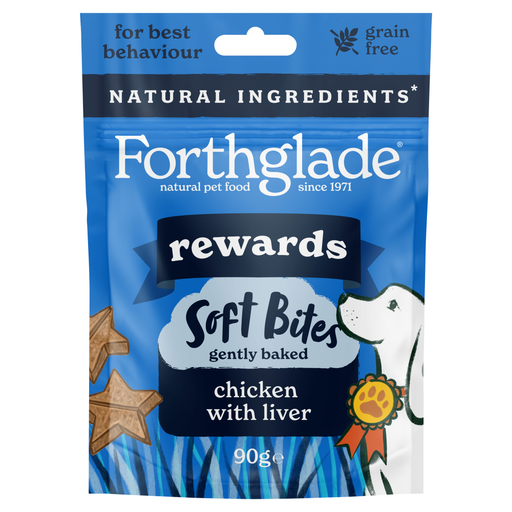
Why This Fits Their Persona: A useful match for owners doing regular recall, puppy or obedience work, where a small, soft reward is needed repeatedly.
The soft bites can be split for portion control, and the listing gives a 10% daily calorie limit rather than encouraging unrestricted feeding.
34% chicken; grain-free recipe; suitable from two months; resealable pouch for use outdoors.
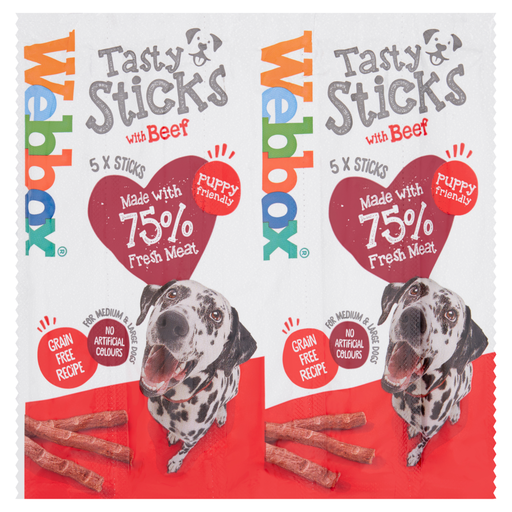
Why This Fits Their Persona: The soft, chewy format suits owners rewarding a puppy or larger dog during short training sessions and bonding routines.
The product is labelled for puppies from three months and states one stick per day, giving clearer boundaries than an unspecified chew.
Soft and chewy texture; listed as grain-free; contains 6% beef within the stated meat content.
We have compiled a complete, real-time list of products that fully satisfy these strict selection criteria and UK safety regulations.
There is no single suitable number for every dog. Follow the product’s feeding guide, consider your dog’s weight and activity level, and keep treats within around 10% of daily calories unless your veterinary professional advises otherwise.
Some are, but the minimum age varies. Forthglade’s product is listed for dogs aged two months and above, while Webbox Tasty Sticks are listed for puppies from three months. Break larger pieces into smaller portions and supervise feeding.
Crunchy treats may provide mechanical abrasion while being chewed, and some products describe this as helping reduce tartar build-up. However, results depend on chewing behaviour and the individual dog. Dental biscuits should complement regular dental care rather than replace brushing or professional guidance.