
24/7 Customer Support

Free returns

Same-day & Next-day Delivery

Quality Guaranteed

Unlock Your Welcome Offers: FREE Delivery | Up to 80% OFF | Free 30-day JoyPlus trial
Download the APP
Choosing dog treats can seem straightforward until you compare ingredient lists, feeding guidance and size recommendations. A colourful packet may promise a tasty reward, but the product may be unsuitable for a puppy, too large for a small breed or difficult to portion during training.
This guide helps UK dog owners compare dog treats by purpose, ingredients, texture, size and practical use.
Most biscuits, soft bites, dental chews and dog chew sticks are complementary pet food. They should sit alongside a complete, balanced diet rather than replace it. A useful rule is to keep treats to no more than 10% of your dog’s daily calorie intake, unless your vet advises otherwise.
Always check the feeding instructions and reduce the main meal where necessary. This is especially important with calorie-dense chews.
Grain-free dog treats can suit owners who specifically wish to avoid cereals, but “grain-free” does not automatically mean lower calorie, more nutritious or suitable for every sensitive dog. Likewise, natural dog treats may still contain ingredients your pet cannot tolerate.
Read the full composition, not just the front-of-pack wording. Look for clearly declared ingredients, analytical constituents and any allergens such as chicken, beef, dairy or peanuts.
A chew labelled for “small dogs” may still be unsuitable for a very small dog or an enthusiastic chewer. Puppies, toy breeds and older dogs can have different chewing abilities. Select a product according to your dog’s weight, age, bite strength and feeding behaviour, and supervise chewing.
For repeated commands, choose small training treats for dogs that can be delivered quickly. Soft dog treats are particularly practical because they can often be broken into smaller portions. A resealable pouch is useful for walks, puppy classes and days out.
For chewing, look at the product’s intended size and texture. Dental dog chews and dog chew sticks are designed for longer chewing sessions, but they are not a substitute for brushing or professional dental care. Remove any chew that becomes small enough to swallow whole.
For relaxed evening routines, some products are sold as calming dog treats and contain botanicals such as camomile, valerian or lemon balm. These should be viewed as complementary snacks, not as treatment for anxiety or behavioural problems.
Check the minimum age carefully. Some puppy treats are suitable from eight weeks, while others are labelled from two, three, four or nine months. A puppy’s treat should be easy to chew and small enough to portion safely.
For adult dogs, compare the stated weight range. Treats for small dogs often need to be softer and easier to split, while treats for medium and large dogs may be larger or more durable. Never assume that a larger chew is appropriate simply because your dog enjoys strong chewing.
If you are comparing low-fat dog treats, check the analytical constituents rather than relying on the product title. For example, the listed fat content differs considerably between soft training bites, filled dental chews and meaty sticks.
Also note whether a named flavour is a major ingredient or simply a flavouring. A product described as chicken dog treats may contain a specified percentage of chicken, while another may use meat derivatives and flavourings. Peanut butter dog treats require extra care if your dog has a known peanut sensitivity.
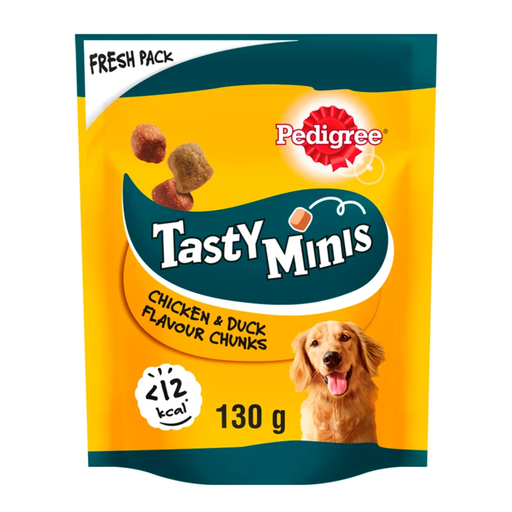
Why This Fits Their Persona: Bite-sized cubes are a straightforward option for everyday rewards, short training sessions and bonding moments with dogs of different sizes.
The pack provides stated analytical information and feeding guidance, helping owners avoid guessing portion sizes.
Chicken is declared at 4% in the meat and animal derivatives; the cubes are suitable for dogs of all sizes according to the listing.
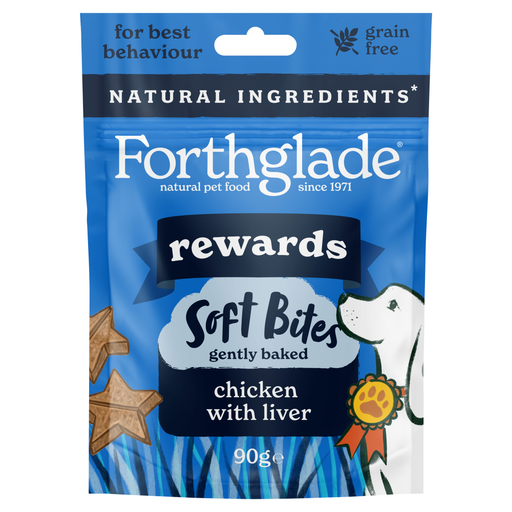
Why This Fits Their Persona: A soft, breakable format suits owners who want clearly portioned rewards for puppy classes, recall practice or daily obedience work.
The ingredient list identifies chicken at 34% and the product is labelled grain-free, rather than relying only on broad front-of-pack language.
Suitable from two months; soft pieces can be divided for smaller dogs and puppies. Treats should remain within 10% of daily calories.
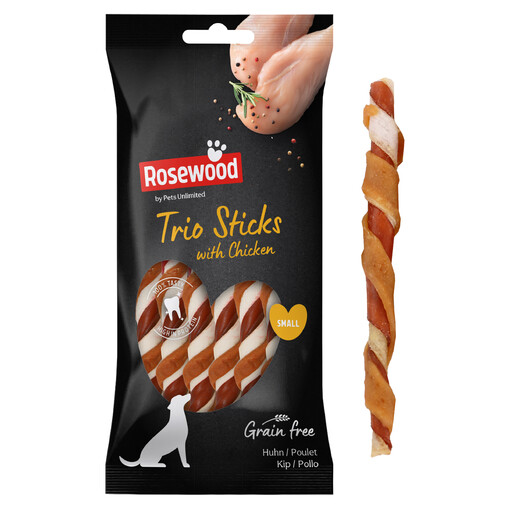
Why This Fits Their Persona: Medium and large dogs that enjoy extended chewing may suit a pack of three large chew sticks for supervised play and boredom relief.
It is clearly described as a non-food chew toy, so owners are less likely to confuse it with edible dog treats or dental food.
The pack contains three large sticks with a shape intended for gripping. Replace the toy if it cracks or releases small fragments.

Why This Fits Their Persona: Owners seeking a rawhide-free chew format may prefer a textured twist for dogs aged four months and over.
The product states that it is rawhide-free and provides a defined age recommendation, while also highlighting the peanut content for allergy checking.
The textured design is intended for chewing; each piece is listed at 85 kcal, making portion awareness particularly important.
We have compiled a complete, real-time list of products that fully satisfy these strict selection criteria and UK safety regulations.
There is no single number for every dog. Use the product’s feeding guide, consider your dog’s weight and activity level, and keep treats to around 10% of daily calories. Reduce the main meal if treats are given regularly.
Some are, but check the minimum age on the packaging. Products such as soft training bites may be suitable from two months, while other chews have a higher age requirement. Break treats into manageable pieces and supervise every feeding session.
No. A chew may provide a textured surface for chewing, but it does not replace regular dental care or veterinary advice. Select an appropriate size, supervise your dog and remove damaged or swallowable pieces.