
24/7 Customer Support

Free returns

Same-day & Next-day Delivery

Quality Guaranteed

Unlock Your Welcome Offers: FREE Delivery | Up to 80% OFF | Free 30-day JoyPlus trial
Download the APP
Choosing dog treats can look simple until you compare ingredients, textures, feeding instructions and age ranges. A small bag may be ideal for training, while a long-lasting chew could be unsuitable for a puppy or a dog that gulps food.
As the Joybuy Product Recommendation Officer, my role is to filter out vague marketing language and focus on practical details that matter in a UK household. Whether you need training treats for dogs, puppy rewards, dental chews for dogs or everyday snacks, check these points before buying.
The term natural dog treats does not automatically mean low-calorie, hypoallergenic or appropriate for puppies. Always check the complete ingredient list and analytical constituents. Some recipes labelled natural may still contain ingredients your dog cannot tolerate, while grain-free dog treats are not necessarily suitable for every sensitive stomach.
Textured chews can encourage chewing and may help remove some surface debris, but they should not be treated as a substitute for brushing or veterinary dental advice. Size is equally important: a chew intended for a 7–12kg dog may not suit a much smaller or larger breed.
Most dog treats are complementary pet food, not a balanced main meal. Feeding too many can contribute to unwanted weight gain, even when the individual treat appears small. A useful rule is to keep treats to around 10% of daily calorie intake, adjusting your dog’s main meals accordingly.
Also check whether the product is a treat or a complete food. For example, Webbox Chub Roll Lamb Flavour is described as complete wet dog food for adult dogs aged 1–7 years, so it should be assessed as part of the feeding routine rather than as a small training reward.
Age guidance should be treated as a safety requirement, not a suggestion. Some products are suitable from 2 months, while others are intended for dogs aged 4 months or above. Dental products can have narrower requirements; Dentalife Small Dog Treat Dental Chews are specified for small dogs weighing 7–12kg.
For puppies, choose a softer texture and a size that can be broken into manageable pieces. Puppy treats such as Pointer Puppy Love Baked Dog Treats and Pedigree Tasty Minis Puppy Chicken Chewy Cubes are designed around young dogs, but feeding should still be moderated alongside complete puppy food.
Match texture to how your dog eats. Soft dog treats are easy to break into small portions, making them useful for recall practice, puppy training and reward-heavy sessions. Firm dog chew treats can provide a longer chewing activity, but they require supervision.
Rawhide-based products, including the Good Boy Duck Twister, should only be offered when you are comfortable supervising your dog closely. Remove the treat if it becomes small enough to swallow whole or if large pieces begin to break away.
Compare protein, fat and fibre rather than relying only on front-of-pack wording. Good Boy Duck Twister lists 57.6% duck breast and 2% fat, while Morrisons Training Treats with Chicken, Beef & Lamb lists 25% crude protein and 10% crude fat.
For low-fat dog treats, look for the stated fat content and serving guidance. For dogs with diagnosed allergies, digestive problems or weight concerns, ask your vet for advice before changing treats. Flavour variety, such as chicken dog treats, duck dog treats or lamb dog food, is useful only if the ingredients suit your dog.
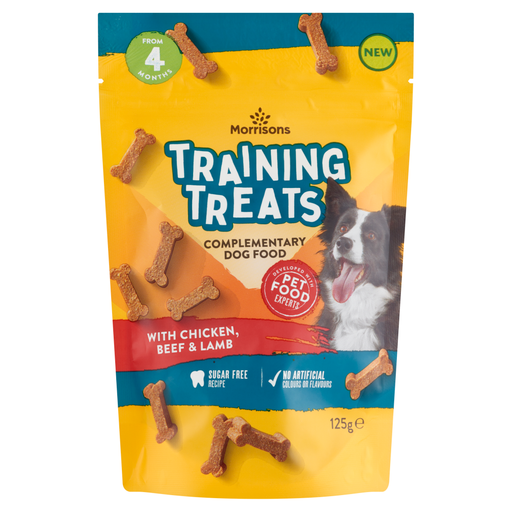
Why This Fits Their Persona: A practical multi-flavour option for new owners who want one pack for everyday rewards, basic training and bonding.
The pack clearly identifies itself as complementary food, uses a sugar-free recipe and provides feeding guidance.
Chicken, beef and lamb flavours; no artificial colours or flavours; 10% crude fat.
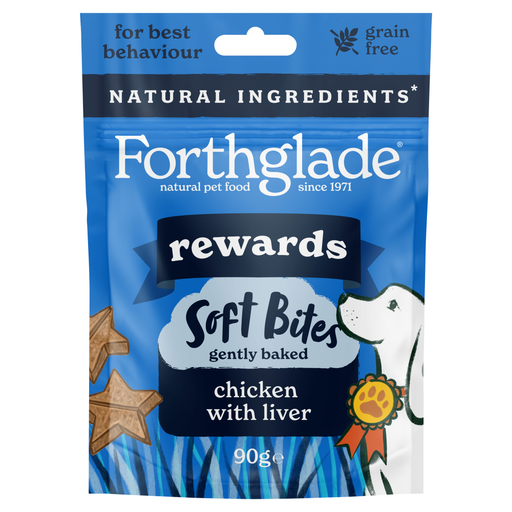
Why This Fits Their Persona: Useful for owners prioritising a grain-free recipe, a soft texture and a resealable pouch for regular training.
The 90g pouch contains a stated 34% chicken recipe and the bites can be split for portion control.
28% crude protein; grain-free composition; soft-bite format for puppies aged 2 months and above.

Why This Fits Their Persona: A multipack format for small-dog households wanting a planned daily dental chew routine.
It states the intended dog weight of 7–12kg and gives a one-chew-daily direction, reducing guesswork.
30 sticks; porous chewy texture; 2.4% fat content and no added sugar.
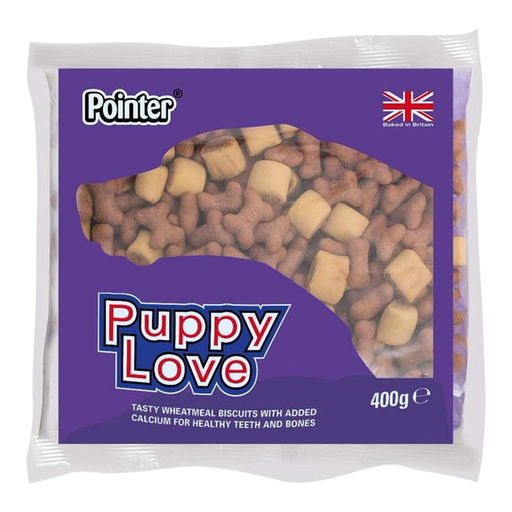
Why This Fits Their Persona: Bite-sized biscuits suit puppy training, short reward sessions and owners who prefer a larger 400g bag.
The product is identified for puppies and clearly states that it is complementary, so it should not replace complete puppy food.
400g mixed assortment; bite-sized wheatmeal biscuits; added calcium and stated vitamins and minerals.
We have compiled a complete, real-time list of products that fully satisfy these strict selection criteria and UK safety regulations.
For fresh breath dog treats, remember that breath odour can have several causes. A chew may complement a dental routine, but ongoing problems should be discussed with a vet.
Small, soft treats that can be divided into several portions are usually practical for training. Forthglade Functional Natural Training Soft Bite Treat is designed for dogs aged 2 months and above, while Morrisons Training Treats offer chicken, beef and lamb flavour variety for dogs from 4 months. Count every piece towards the daily treat allowance.
Only use a dental chew when its age and weight guidance matches your puppy. Some products are intended for dogs over 9 months, while Pedigree Puppy Denta Tubos are specified for puppies aged 4–12 months and have a softer texture. Supervision is essential, and dental chews should not replace regular oral care.
Shelf life varies by product and packaging. Resealable soft-bite treats should be closed securely and used within the period stated on the label; several Forthglade pouches specify use within 28 days of opening. Dry biscuits and chews should remain in a cool, dry place. Always follow the packaging instructions rather than relying on the pack size alone.