
24/7 Customer Support

Free returns

Same-day & Next-day Delivery

Quality Guaranteed

Unlock Your Welcome Offers: FREE Delivery | Up to 80% OFF | Free 30-day JoyPlus trial
Download the APP
Choosing dog treats can look simple until you compare ingredients, feeding quantities, dog size and the claims on the packaging. A low-priced bag may not suit your dog’s weight, while a functional chew may contain more calories than expected. The right choice depends on how you plan to use it: training, daily dental care, occasional rewards or nutritional support.
By Joybuy Product Recommendation Officer
Dental chews are usually made for specific weight ranges. A chew for a large dog may be too substantial for a small dog, while a small dental stick may be swallowed quickly by a larger dog without much chewing. Always check the stated weight and age range before buying.
For example, Dentastix for dogs are available for different sizes, including small dogs weighing 5–10kg and medium dogs weighing 10–25kg. Dentalife products also specify the intended dog size.
Dental sticks and dental chews for dogs can support a daily routine through chewing action, ridges or abrasive textures. However, they should not be treated as a replacement for tooth brushing or veterinary dental care. Claims such as tartar reduction or gum support should be understood in the context of the product’s feeding instructions and intended use.
Supervise your dog while chewing, particularly if they eat quickly or try to swallow large pieces.
Even healthy dog treats contribute to daily calorie intake. Dog biscuits, soft chews and functional supplements can vary considerably in fat and energy content. Follow the pack’s feeding guide and reduce the main meal where necessary.
Terms such as “low fat”, “no added sugar” or “natural” do not automatically mean a treat is suitable for every dog. Dogs with allergies, medical conditions or specific dietary needs should be assessed with help from a vet.
The most important specification is suitability for your dog’s weight and life stage. Puppies need products designed for developing teeth and gums. Adult dental sticks may be unsuitable for puppies under four months.
For puppies, softer puppy dental chews such as Pedigree Puppy Denta Tubos are labelled for puppies aged 4–12 months, with feeding guidance based on breed size. For adult dogs, check whether the product is intended for small, medium or large breeds.
Consider texture as well. Porous or ridged dental chews are designed to create contact with teeth during chewing, while crunchy dog biscuits may be more appropriate as occasional rewards.
Read the composition and analytical constituents rather than relying only on front-of-pack wording. Useful figures include:
A low-fat product may still be energy-dense if fed too frequently. Functional products such as dog supplements, dog joint chews and dog digestive supplements should also be fed according to their stated dosage.
A larger pack may offer convenience for daily use, but only if your dog can consume it within the recommended period after opening. Some dental chews specify that opened sachets should be used within 14 days. Resealable packaging can help preserve texture and freshness.
For multi-dog households, calculate the number of daily portions rather than comparing pack weight alone. A 28-stick pack fed once daily provides a different usage period from a 56-stick pack, depending on the number and size of dogs.
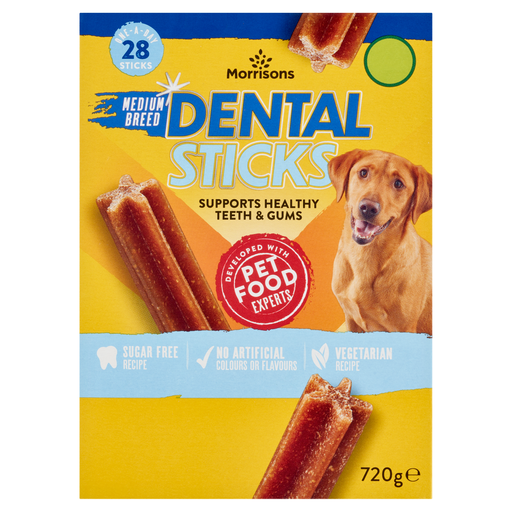
Why This Fits Their Persona: A practical one-a-day option for owners starting a regular dental routine with a medium-sized dog aged over four months.
The pack states the intended age, daily quantity and need for supervision, reducing uncertainty around portioning.
Vegetarian recipe, no added sugar, no artificial colours or flavours and 2% crude fat.
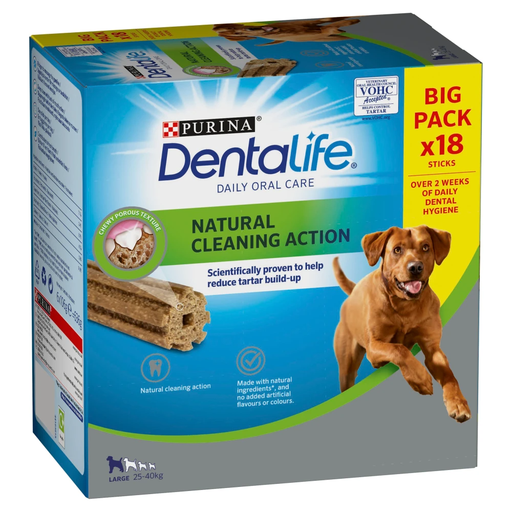
Why This Fits Their Persona: Suitable for owners wanting a clearly sized daily chew for a large dog weighing 25–40kg.
The pack gives a defined large-dog weight range and one-stick-per-day instruction, rather than leaving portion size to guesswork.
Porous, ridged texture; 2.4% fat content; includes calcium and vitamin D3.

Why This Fits Their Persona: A larger supply for owners maintaining a daily dental chew routine for a medium dog.
The product is labelled specifically for 10–25kg dogs and provides one stick daily, helping prevent unsuitable sizing and overfeeding.
56-stick pack, X-shaped design, 1.3% fat content and no added sugar.
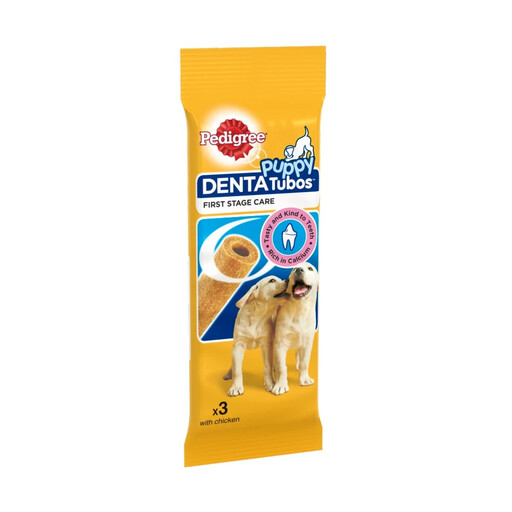
Why This Fits Their Persona: Designed for owners introducing dental chews during the 4–12-month puppy stage.
Its stated puppy age range and softer texture help avoid giving an adult chew to a young dog.
Low-fat recipe, no added sugar and feeding guidance for small, medium and large-breed puppies.
We have compiled a complete, real-time list of products that fully satisfy these strict selection criteria and UK safety regulations.
For occasional rewards, Pedigree Biscrok Gravy Bones and Bonio Dog Biscuits offer crunchy textures and clear feeding guidance by dog size. These may work well during training or walks, but remember to adjust the main meal.
For dogs needing additional nutritional support, options include dog calming treats, multivitamin chews, dog joint chews and digestive products containing probiotics or prebiotic ingredients. These should be selected according to the label and should not be used to self-treat a health problem. A vet can advise if your dog has persistent itching, digestive upset, mobility changes or unusual behaviour.
Use the product’s feeding guide and consider your dog’s size, activity level and main diet. Treats should remain a limited part of daily food intake. Reduce meal portions when necessary, particularly with biscuits, soft chews and calorie-containing supplements.
Some are, but not all. Check the minimum age and weight carefully. Products such as puppy dental chews may have softer textures and specific guidance for developing teeth. Do not give adult dental sticks to puppies unless the packaging confirms suitability.
No. Dental chews can complement a home-care routine, but they do not replace brushing, regular checks or veterinary dental treatment. Choose the correct size, provide fresh water and supervise your dog throughout chewing.