
24/7 Customer Support

Free returns

Same-day & Next-day Delivery

Quality Guaranteed

Unlock Your Welcome Offers: FREE Delivery | Up to 80% OFF | Free 30-day JoyPlus trial
Download the APP
Choosing dog treats can seem straightforward until you compare ingredients, sizes, textures and feeding guidance. A colourful pouch may promise a “natural” reward, while a large multipack looks economical but may not suit your dog’s size or daily calorie needs.
The most common buying pitfalls are:
Start with the product’s suitability statement. Several products in this category are intended for dogs aged four months and over, while the Forthglade Functional Natural Training Soft Bite Treat is listed for dogs aged two months and over. Puppies still developing their teeth may need soft, small puppy treats rather than firm biscuits or rawhide chews.
For small dog treats, check whether the pieces can be broken into smaller portions. Medium dog treats and large dog treats should be sized to encourage controlled chewing, not rapid swallowing. Always supervise your dog, particularly with chewy dog treats, dental sticks and rawhide products.
Different textures suit different routines:
A treat marketed for dental support should still be checked for feeding frequency, age restrictions and supervision requirements. For example, some dental dog treats specify one stick per day, rather than unrestricted access.
Dog treats are usually complementary pet food, not a complete meal. Follow the feeding guide and reduce the main meal when necessary. Products vary considerably: one puppy treat listed in this range provides 342 kcal per 100g, while the labelled energy value for one dental chew product is 299 kcal per 100g.
Look for information such as:
“Healthy dog treats” is not a universal category. A suitable choice depends on your dog’s age, weight, activity, dental condition and dietary requirements. If your dog has a diagnosed sensitivity or specific nutritional need, discuss treat selection with your vet.
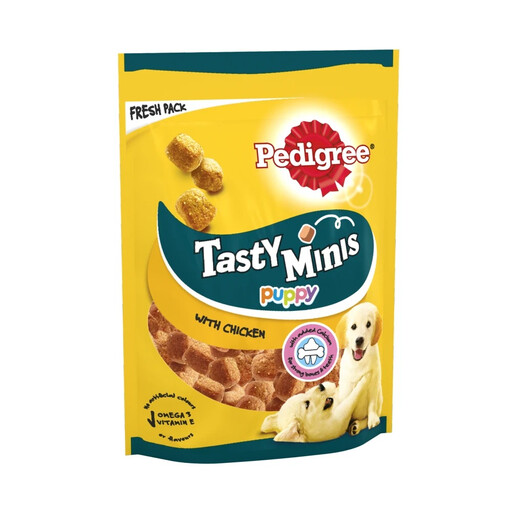
Why This Fits Their Persona: A practical option for new puppy owners who need small, soft rewards for early training, recall practice and household routines.
The product is labelled for puppies aged 4 to 18 months and provides bite-sized, soft, chewy cubes rather than an adult-only hard chew.
Contains added calcium, Omega 3 and dietary fibre; the 125g pack is manageable for regular reward use.
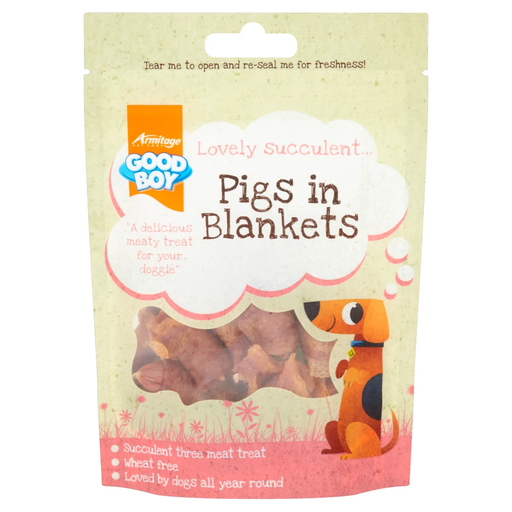
Why This Fits Their Persona: Suits adult-dog owners seeking a meaty reward with a wheat-free recipe for walks, bonding or occasional training.
The composition lists chicken breast, duck breast and pork, while the product information states no artificial colours, flavours or preservatives.
Chewy texture and three-meat flavour profile; wheat-free recipe. Suitable for adult dogs, but not puppies under 4 months.

Why This Fits Their Persona: Designed for owners who want a convenient daily dental chew routine for an adult medium dog weighing 10–25kg.
The pack specifies the dog-weight range and one-stick-daily guidance, helping prevent unsuitable sizing or uncontrolled feeding.
X-shaped design and textured surface; 56-stick multipack for a consistent daily routine. Supervision remains necessary.

Why This Fits Their Persona: Intended for large-breed dogs that enjoy a more substantial chew during supervised downtime at home.
Its 25cm knotted design is specified for large dogs, rather than leaving owners to guess from a generic “long-lasting chew” description.
Made from cowhide and designed for extended chewing; replace it when small pieces or worn sections could be swallowed.
We have compiled a complete, real-time list of products that fully satisfy these strict selection criteria and UK safety regulations.
Use the product’s feeding guide and account for your dog’s size, weight and activity level. Treats should remain a limited part of the daily diet; reduce the main meal if needed. For training, small or breakable treats make portion control easier.
No. Dental chews may support mechanical cleaning and fresh-breath routines, but they do not replace brushing, regular checks or veterinary dental care. Choose the correct size, provide water and supervise chewing.
Choose puppy treats labelled for the correct age, with a soft texture and small size. Break larger pieces where appropriate, supervise feeding and avoid products that are specifically restricted to adult dogs.