
24/7 Customer Support

Free returns

Same-day & Next-day Delivery

Quality Guaranteed

Unlock Your Welcome Offers: FREE Delivery | Up to 80% OFF | Free 30-day JoyPlus trial
Download the APP
As a dog owner, you know that a well-chosen treat can be a fantastic tool for training, a sign of affection or simply a way to bring a little joy to your companion's day. However, the UK market for dog treats is vast and navigating it can be confusing. With so many options, it's easy to fall into common traps that result in wasted money and treats that aren't quite right for your dog.
My role as a Joybuy Product Recommendation Officer is to help you see past the marketing clutter. This guide will highlight the key pitfalls to watch for and provide a clear framework for selecting treats that genuinely suit your dog's needs and your budget.
Before you add anything to your basket, be aware of these frequent issues:
To make an informed choice, focus on these three practical parameters. They will help you decode the packaging and find a quality product.
The ingredients list is your most powerful tool. In the UK, ingredients must be listed in descending order of weight.
This section on the packaging provides a breakdown of the nutritional content. The key figures to check are:
Not all treats serve the same function. Consider why you are buying them:
Based on these practical criteria, here are a few recommendations matched to different types of dog owners across the UK.
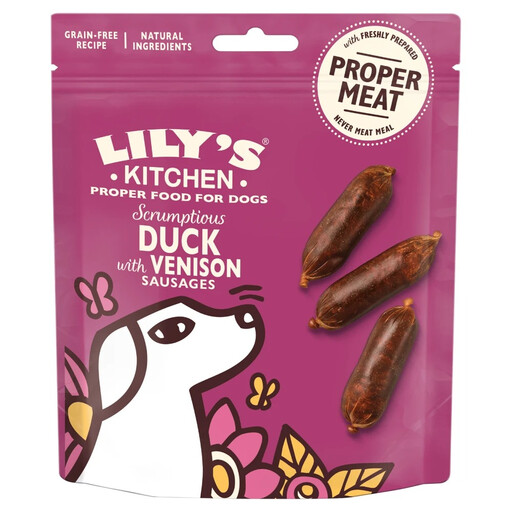
Why This Fits Their Persona: For the owner who prioritises ingredients above all else. These treats are made with a high percentage of proper, named meat and are crafted with natural ingredients, aligning with a desire for wholesome, high-quality nutrition for their dog.
It directly counters the "meaty illusion" pitfall. The composition clearly states Duck (70%) and Venison (4%) as primary ingredients, not vague derivatives. It's also a grain-free recipe.
High real meat content (74% total) for a protein-rich reward. Made with natural ingredients and a grain-free recipe suitable for many dogs.
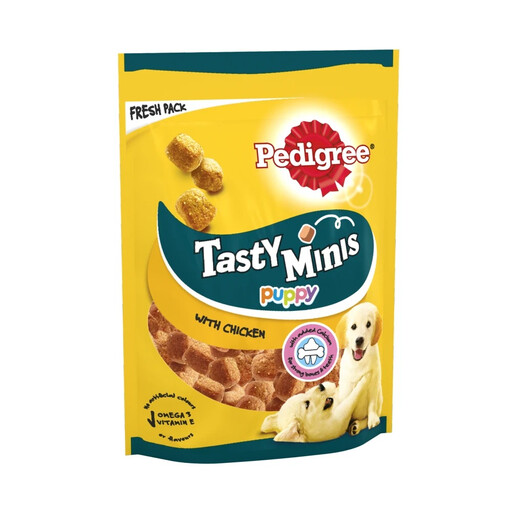
Why This Fits Their Persona: Perfect for owners navigating the early stages of dog ownership. These treats are specifically designed for puppies, taking the guesswork out of what's safe and beneficial for a young, growing dog during crucial training and development phases.
This avoids the "one-size-fits-all" mistake. It is explicitly formulated for puppies (4-18 months) and enriched with calcium to support developing teeth and bones, which adult treats lack.
Soft, bite-sized cubes are ideal for puppy training. Contains added calcium and Omega 3 to support healthy growth and development.
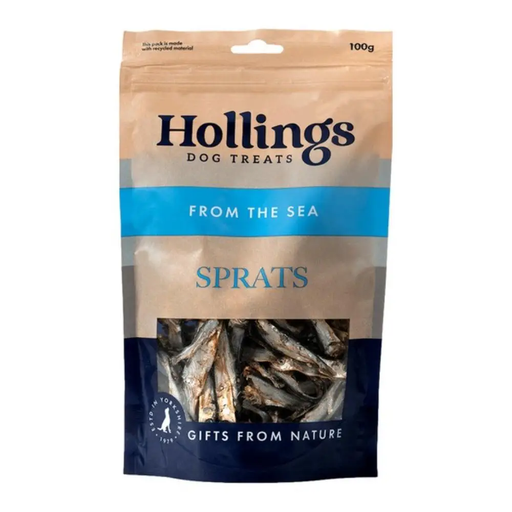
Why This Fits Their Persona: Ideal for the owner who wants simplicity and purity in their dog's diet. This is a single-ingredient treat, perfect for dogs with sensitivities or for owners who want to avoid processed foods, additives and complex ingredient lists.
It avoids both the "meaty illusion" and "hidden extras" pitfalls. The only ingredient is 100% fish (sprats). There are no added sugars, fats, cereals or artificial additives of any kind.
A pure, single-ingredient treat that is naturally high in protein (79%) and very low in fat (3%). Gently dried to preserve nutrients.
We have compiled a complete, real-time list of products that fully satisfy these strict selection criteria and UK safety regulations.
A widely accepted guideline is the 10% rule: treats should make up no more than 10% of your dog's total daily calorie intake. If you are using a lot of treats for a training session, it's important to reduce the portion size of their main meal accordingly to prevent weight gain. Always check the feeding guide on the packaging for specific recommendations.
Not necessarily. Grain-free dog treats are primarily beneficial for dogs that have a diagnosed grain allergy or sensitivity. For the majority of dogs, grains are a source of carbohydrates and are perfectly healthy as part of a balanced diet. If you suspect your dog has a food sensitivity, it is always best to consult your vet.
This is an important distinction in UK pet food labelling. 'Complete' means the food contains all the necessary nutrients (in the right proportions) to be fed as a dog's sole diet. Most main meals (wet or dry kibble) are complete. 'Complementary' means the product is designed to be fed in addition to a complete diet. Almost all dog treats, dog biscuits and dog chews fall into this category and should not be used to replace a proper meal.