
24/7 Customer Support

Free returns

Same-day & Next-day Delivery

Quality Guaranteed

Unlock Your Welcome Offers: FREE Delivery | Up to 80% OFF | Free 30-day JoyPlus trial
Download the APP
As a nation of dog lovers, we want to give our companions the very best. Yet, the aisle for dog treats can be a confusing place. With packaging covered in appealing claims, it's easy to make a choice that isn't quite right for your pet's health or your wallet. As your Joybuy Product Recommendation Officer, my role is to help you see past the marketing clutter and make informed decisions.
Many well-meaning owners fall into a few common traps. Let's look at the main ones to avoid:
By understanding what to look for, you can confidently choose treats that are both enjoyable for your dog and genuinely beneficial.
Instead of being swayed by front-of-pack claims, turn the packet over and focus on these key details. This is where you'll find the real story.
A high-quality treat will have a clear and transparent ingredients list. Look for a specific, named protein source as the first ingredient, such as "chicken breast meat," "duck" or "pork," rather than ambiguous terms.
What to look for:
This is the simplest way to find genuinely healthy dog treats that align with your dog's dietary needs.
Different treats serve different purposes. Understanding your goal will help you narrow down the options significantly.
This section on the packaging is your guide to the treat's nutritional profile. For health-conscious owners, two figures are particularly important:
For puppy treats, you should also look for added calcium to support bone development and ensure the texture is suitable for developing teeth. Always check the packaging for the recommended minimum age, which is typically four months.
To help you apply this knowledge, here are a few recommendations matched to common UK dog owner profiles.

Why This Fits Their Persona: This owner reads every label and prioritises clean, simple ingredients. They want a treat that serves as a healthy reward without compromising their dog's lean diet.
It directly counters the "natural" label trap with a clear primary ingredient: 100% natural chicken breast meat. It also avoids the hidden calorie issue with an exceptionally low fat content of 1.5%.
High in protein (32%) to support muscle health. The rawhide-free recipe is often preferred for dogs with sensitive digestion. Free from artificial colours, flavours or preservatives.

Why This Fits Their Persona: This owner wants a simple, daily routine to support their dog's oral hygiene between vet visits. They are looking for a functional treat with a specific purpose.
It addresses the "ineffective dental chew" trap with a purpose-built design. The unique X-shape and abrasive texture are specifically engineered to clean along the gumline as the dog chews.
According to the brand's research, daily feeding can reduce tartar build-up. It's also a low-fat (1.3%) option with no added sugar, making it a healthy daily habit.
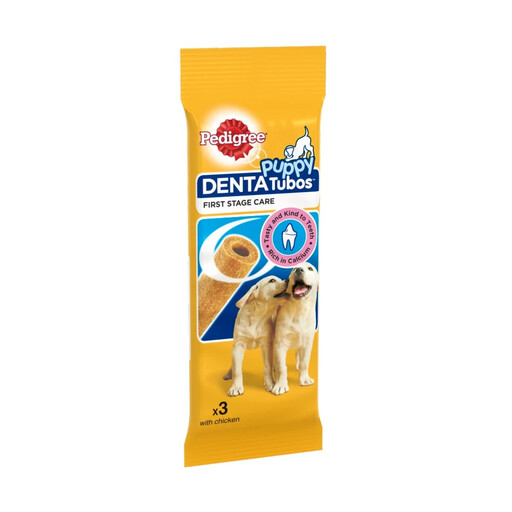
Why This Fits Their Persona: This owner is navigating the challenges of a teething puppy. They need a safe, age-appropriate chew that supports healthy development without being too harsh on young teeth and gums.
It avoids the trap of giving an adult chew to a puppy. These are specifically formulated for puppies from 4 months, with a softer texture that is gentle on developing teeth and gums.
They are rich in calcium to support healthy bone and tooth growth. The formula is also low in fat and contains no added sugar, establishing good dietary habits from a young age.
We have compiled a complete, real-time list of products that fully satisfy these strict selection criteria and UK safety regulations.
A widely accepted guideline is the 10% rule. Treats should not make up more than 10% of your dog's total daily calorie intake. To maintain a healthy weight, you should adjust the portion size of their main meals accordingly when you give them treats.
No, they are not a replacement. Dental chews are a helpful supplement to a good oral care routine. The most effective way to maintain your dog's dental health is through regular tooth brushing and professional veterinary cleanings. Dental treats can help manage plaque and tartar between brushings.
Most commercial puppy treats are suitable for puppies from four months of age, as their digestive systems and teeth are more developed by then. However, it is essential to always check the product's packaging for the specific age recommendation before feeding.