
24/7 Customer Support

Free returns

Same-day & Next-day Delivery

Quality Guaranteed

Unlock Your Welcome Offers: FREE Delivery | Up to 80% OFF | Free 30-day JoyPlus trial
Download the APP
Choosing dog treats can look straightforward until you compare pack sizes, ingredients, textures and feeding guidance. A small bag may suit occasional rewards, while a larger multipack can offer better value for a multi-dog household. However, the cheapest-looking option is not always the most suitable for your dog’s age, size or intended use.
This guide explains what to check before buying dog treats in the UK, including training treats for dogs, puppy treats, adult dog treats, chewy dog treats and low-fat dog treats.
A large bag or multipack may appear economical, but check the total net weight, number of individual pieces and how quickly the treats need to be used after opening. Six 140g packs provide 840g in total, while five 170g packs provide 850g. Comparing the price per 100g gives a clearer view than comparing the front-of-pack size alone.
Words such as “tasty”, “chewy” and “natural” describe appeal, texture or positioning rather than a complete nutritional assessment. Look for the statutory description “complementary pet food for dogs” and read the composition and analytical constituents.
Ingredient percentages also matter. For example, a product labelled “with chicken” should be checked against the percentage shown in its composition. Pedigree Tasty Bites Chewy Cubes Chicken lists chicken at 4%, whereas a lower percentage may not support the same “with” wording under UK pet food labelling conventions.
Hard dog biscuits can be unsuitable for puppies or dogs that prefer softer food. Conversely, soft dog treats may be consumed quickly and provide less chewing engagement. Large or shaped dog chews also require supervision, especially for dogs that swallow food rapidly.
Puppy treats should be suitable for the stated age range and appropriately sized. The Pedigree Tasty Minis Puppy Dog Treats Chicken Chewy Cubes are listed for puppies aged 4 to 18 months and are not suitable for puppies under four months.
Adult dog treats are generally formulated for mature dogs, but suitability still depends on weight and feeding behaviour. Some chews are specifically intended for small or small-to-medium dogs weighing around 5–14kg. Do not assume that a “mini” product is suitable for every small breed without checking the label.
For frequent rewards, choose bite-sized pieces that can be given quickly without interrupting a training session. Soft treats that can be broken into smaller portions may help with portion control for puppies and small dogs.
For occasional chewing, consider chewy dog treats with clear size guidance. A product such as Pedigree JUMBONE Mini combines a chewy outer layer with a softer centre and is listed for small adult dogs. Supervise your dog and remove any remaining piece if it becomes small enough to swallow whole.
Low-fat dog treats can be useful when you are managing the overall calorie contribution of rewards, but “low-fat” does not mean unlimited. The supplied product information lists Pedigree Tasty Minis Cheese & Beef Nibbles at 3% crude fat for the multipack version and Misfits Wonky Chomp Liver at 2.5%.
Treats should generally remain within 10% of your dog’s daily calorie intake, with the main meal adjusted accordingly. Where energy information is provided, use it alongside your dog’s size, activity level and normal food allowance. Fresh drinking water should always be available.
Ingredients are listed in descending order by pre-processing weight. Check whether the recipe suits your preferences, including cereals, meat and animal derivatives, vegetable ingredients, oils, fats and additives.
For dogs with known food sensitivities, avoid relying on flavour names alone. “Chicken flavour” or “beef flavour” does not necessarily mean that the named ingredient is present in a high proportion. Read the full composition and contact a vet if your dog has a diagnosed dietary issue.
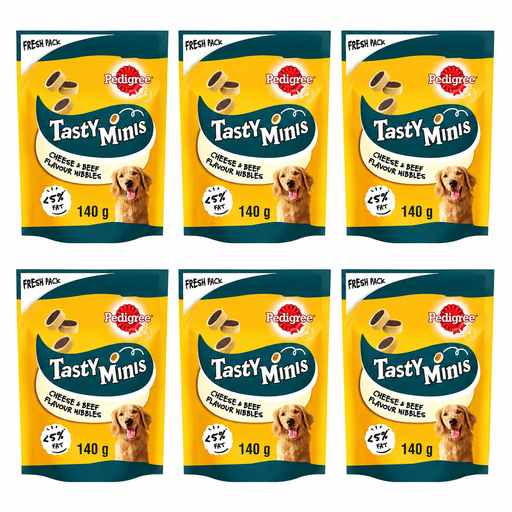
Why This Fits Their Persona: A practical option for UK households that use small rewards regularly for walks, recall practice or everyday bonding.
The six-pack format makes the 840g total weight clear, reducing confusion over bundle value. The pieces are bite-sized for measured rewarding.
Six 140g packs; 3% crude fat listed; crunchy shell with a centre; no artificial colours stated.
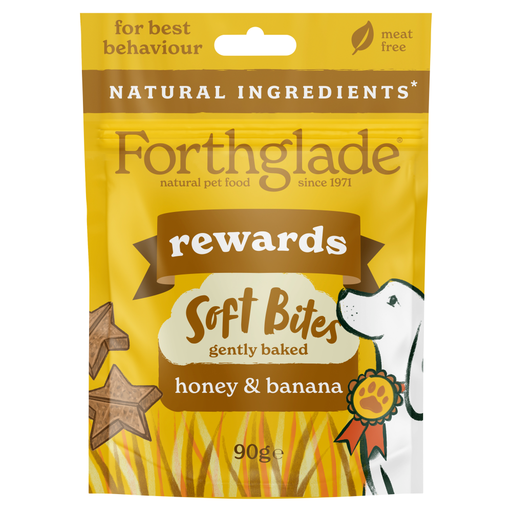
Why This Fits Their Persona: Suitable for shoppers seeking a meat-free, grain-free soft treat for training, including use with puppies aged two months and over.
The composition states key percentages, including sweet potato at 37%, banana at 4% and honey at 1%, rather than relying only on front-of-pack flavour wording.
Soft bites can be split for smaller portions; recyclable resealable pouch; no artificial colours, flavours or preservatives stated.
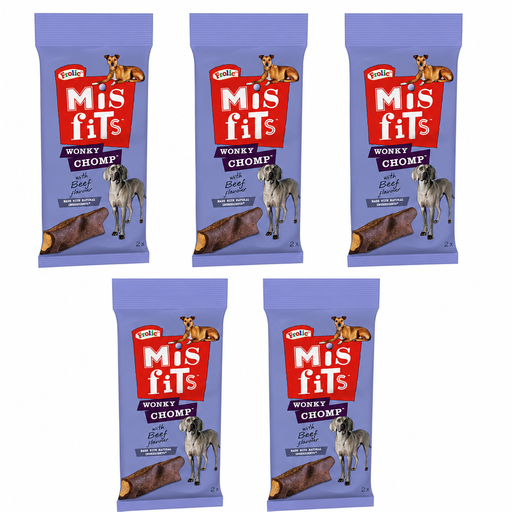
Why This Fits Their Persona: A larger multipack for owners who reward regularly or have medium and large dogs that prefer a more substantial chewy texture.
The bundle clearly states five 170g packs and 850g total weight. The feeding guidance also highlights supervision and avoiding overfeeding.
Five-pack format; 2.5% crude fat listed; chewy Wonky Chomp shape; liver included in the composition.
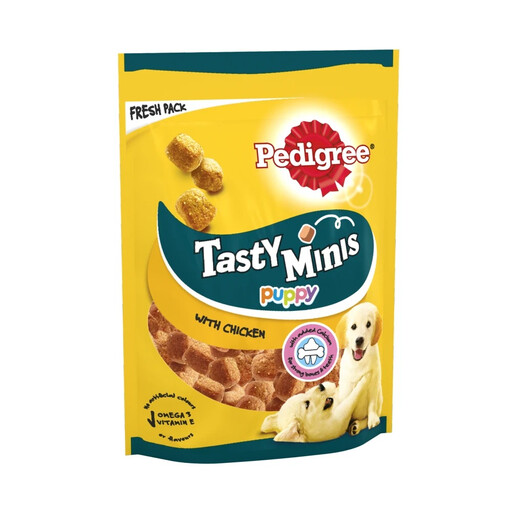
Why This Fits Their Persona: Designed for owners teaching basic cues, recall and calm behaviour during the puppy stage.
The stated age range helps prevent accidentally choosing an adult-only product. Bite-sized, soft and chewy pieces are suited to short training rewards.
Listed for puppies aged 4–18 months; chicken stated at 13%; 342 kcal per 100g; soft chewy cube format.
We have compiled a complete, real-time list of products that fully satisfy these strict selection criteria and UK safety regulations.
Use the product’s feeding guide and keep treats to no more than around 10% of daily calorie intake unless your veterinary professional advises otherwise. Reduce the main meal when treats are added, particularly with calorie-dense biscuits or chews.
Some are, but age guidance is essential. Check the pack for a minimum age, size recommendations and supervision instructions. Break larger soft treats into smaller portions where appropriate, and do not give products labelled for adult dogs to very young puppies.
Reseal the packaging and store it in a cool, dry place away from direct sunlight. Some products specify a period for use after opening, such as 14 days or four weeks. Follow the product label, and always provide fresh drinking water.