
24/7 Customer Support

Free returns

Same-day & Next-day Delivery

Quality Guaranteed

Unlock Your Welcome Offers: FREE Delivery | Up to 80% OFF | Free 30-day JoyPlus trial
Download the APP
As a nation of dog lovers, we enjoy rewarding our four-legged companions. However, the sheer variety of dog treats on the market can be overwhelming. From colourful biscuits to natural chews, it’s easy to make a choice based on appealing packaging or marketing claims, only to find the product is unsuitable or offers poor value. As your Joybuy Product Recommendation Officer, my role is to help you navigate this crowded space and make informed choices for your dog.
Before you add another bag of treats to your basket, let’s look at some common pitfalls that UK dog owners encounter and how to avoid them.
To ensure you’re buying a treat that is both safe and suitable, focus on these core parameters.
The ingredients list is the most reliable source of information. In the UK, ingredients must be listed in descending order of weight.
Different treats serve different functions. Understanding the main categories helps you choose the right one for any situation.
Always check the packaging for age recommendations. Many treats, especially harder chews, are not suitable for puppy treats under 4 months old, while others are fine for puppies over 8 weeks. The size of the treat should also match the size of your dog to prevent any risk of choking.
Here are a few recommendations from our catalogue, matched to specific needs and how they address the common pitfalls.
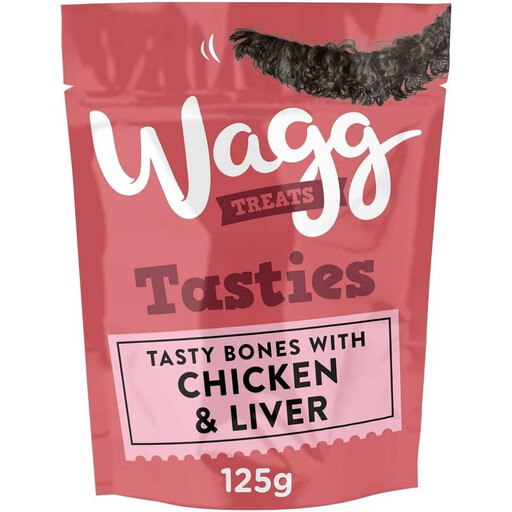
Why This Fits Their Persona: This multi-pack offers excellent value for daily rewards or training. It's a practical choice for owners who get through a lot of treats but still want a reliable, UK-made product.
It avoids the age-suitability trap by being clearly labelled for dogs from 8 weeks and up, making it a versatile option for multi-dog households with both puppies and adults.
The pack of 7 provides great economy. The treats are enriched with vitamins and minerals and contain named protein sources like chicken and liver meal.
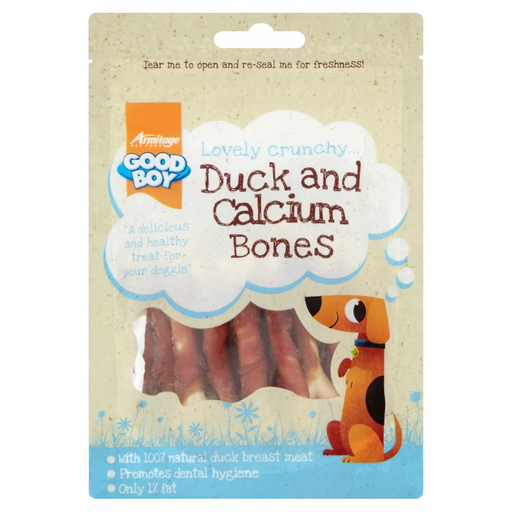
Why This Fits Their Persona: For owners who scrutinise labels, this treat's composition is a standout. It's ideal for those wanting to provide a high-protein, low-fat reward with added benefits.
It cuts through the "natural" marketing hype with a clear, high-quality ingredients list. Made with 55% duck breast, it provides transparency that health-focused buyers value.
It is exceptionally low in fat (only 1%) and is enriched with calcium to help support strong bones. It is also wheat-free and contains no artificial colours or flavours.

Why This Fits Their Persona: Owners of large breeds or enthusiastic chewers need a durable solution. This large, knotted rawhide bone is designed specifically to provide a long-lasting challenge, keeping dogs occupied and satisfying their instinct to chew.
This product directly addresses the "one-size-fits-all" trap. Its 25cm (10") size is explicitly designed for large dogs, ensuring it is a suitable and satisfying chew rather than a quickly devoured snack.
Made from 100% natural beef leather, it acts as a mechanical aid for dental hygiene by helping to scrape away plaque during chewing. The knotted design adds texture and extends chewing time.
We have compiled a complete, real-time list of products that fully satisfy these strict selection criteria and UK safety regulations.
A widely accepted guideline is the 10% rule: treats should make up no more than 10% of your dog's total daily calorie intake. Always check the feeding guide on the packaging for specific recommendations based on your dog's size and weight and remember to reduce their main meal portion accordingly to prevent unwanted weight gain.
Rawhide bones can be a great option for satisfying a dog's chewing instinct. However, supervision is essential. As the dog chews, the rawhide softens. It's important to remove and discard any small pieces that could be swallowed and become a choking hazard. If a dog swallows large, un-chewed chunks, it can potentially cause digestive blockage. Always provide fresh water and supervise your dog with any long-lasting chew.
While both are types of treats, their primary purpose differs. Dog biscuits, like gravy bones, are typically oven-baked and serve as a crunchy, tasty reward. Their main function is enjoyment. In contrast, dental chews for dogs are specifically engineered with a unique texture, shape and sometimes active ingredients. Their primary function is to help control plaque and tartar build-up through the mechanical action of chewing.