
24/7 Customer Support

Free returns

Same-day & Next-day Delivery

Quality Guaranteed

Unlock Your Welcome Offers: FREE Delivery | Up to 80% OFF | Free 30-day JoyPlus trial
Download the APP
As a nation of dog lovers, we enjoy rewarding our four-legged friends. Yet, the sheer variety of dog treats on the shelves can be overwhelming. Packaging claims can be confusing, and it's easy to choose a product that isn't quite right for your companion's needs. As your Joybuy Product Recommendation Officer, my role is to help you navigate the market and make informed choices for your dog.
Before you add that next bag of treats to your basket, let's look at a few common pitfalls that many UK dog owners encounter.
To avoid these traps, focus on a few key details on the packaging. Understanding these will empower you to choose treats that align with your dog's health and your own standards.
The ingredients are listed by weight, so the first few items make up the bulk of the treat. For a high-quality product, especially if you're looking for chicken dog treats, you should see a specific protein source listed first.
This section provides a breakdown of the nutritional content. Two of the most important figures to check are:
Not all treats serve the same purpose. Consider why you are giving the treat:
To help you find a starting point, here are a few options from our catalogue, matched to different owner and dog profiles.
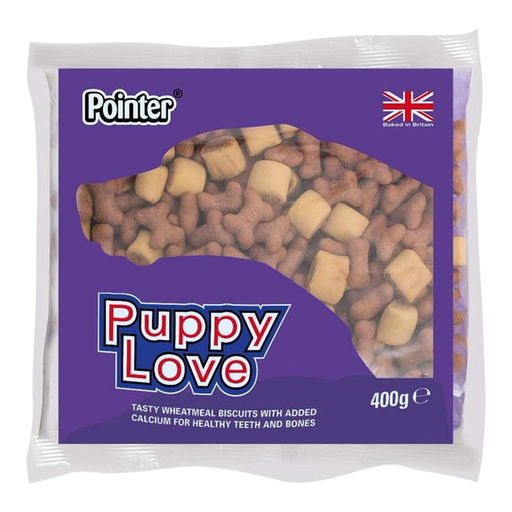
Why This Fits Their Persona: Perfect for UK households with a new puppy. These small, oven-baked biscuits are ideal for training and rewarding good behaviour without being too rich for a young dog's digestive system.
These are specifically formulated as puppy treats and are bite-sized, which helps manage portion control and avoid the "unseen calories" trap during repetitive training sessions.
Enriched with added calcium to support the development of healthy teeth and strong bones in growing puppies.
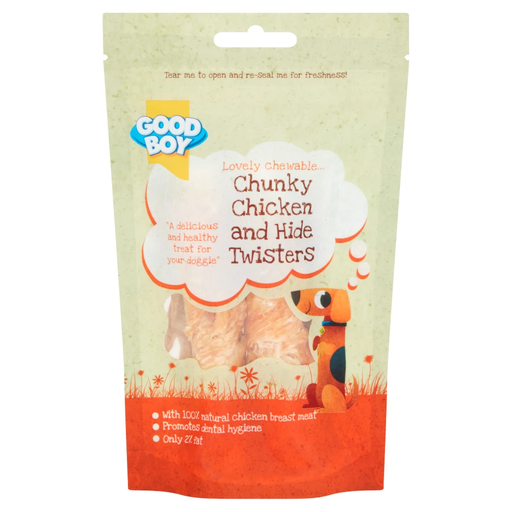
Why This Fits Their Persona: For the owner who scrutinises every label. This treat is for those who prioritise high-protein, low-fat options and want to give their dog a reward that is both delicious and made with simple, clear ingredients.
It directly counters the "healthy illusion" trap. The composition clearly states 78% Chicken Breast, leaving no room for ambiguity about the primary ingredient.
This is a high-protein (47%) and low fat dog treat (6.0%), making it an excellent choice for maintaining a lean body condition. The twisted shape also encourages chewing for dental health.
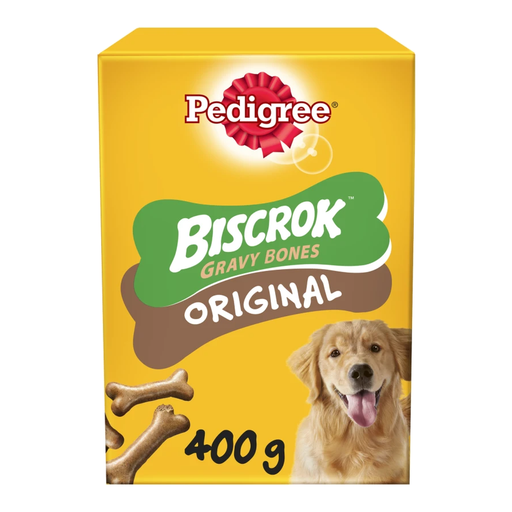
Why This Fits Their Persona: For the owner who wants a reliable, everyday crunchy biscuit from a well-known brand. These are a household staple in the UK, perfect for giving as a simple, satisfying reward.
It helps owners avoid the "unseen calories" trap by providing very clear daily feeding guidelines on the packaging for small, medium and large dogs, promoting responsible treating.
These popular Pedigree treats are fortified with Omega 3, vitamins and minerals, and their crunchy texture is something dogs consistently enjoy.
We have compiled a complete, real-time list of products that fully satisfy these strict selection criteria and UK safety regulations.
A good rule of thumb is the 10% rule: treats should make up no more than 10% of your dog's total daily calorie intake. Always check the feeding guide on the packaging and remember to reduce their main meal portion accordingly to maintain a healthy weight.
Not necessarily for every dog. While essential for dogs with a specific grain allergy or sensitivity, most dogs digest grains perfectly well, and they can be a good source of energy. If you suspect your dog has a food sensitivity, it is always best to consult with your vet.
Consistent use of an effective dental chew can lead to noticeable improvements. You might observe fresher breath, a visible reduction in tartar on the teeth (especially the molars) and healthier-looking pink gums. However, these chews are a supplement to, not a replacement for, professional dental care and vet check-ups.