
24/7 Customer Support

Free returns

Same-day & Next-day Delivery

Quality Guaranteed

Unlock Your Welcome Offers: FREE Delivery | Up to 80% OFF | Free 30-day JoyPlus trial
Download the APP
As a nation of dog lovers, we enjoy rewarding our four-legged friends. Yet, the sheer variety of dog treats on the shelves can be overwhelming. Navigating the marketing claims to find something that is both enjoyable for your dog and aligned with their dietary needs can feel like a chore. Many well-intentioned owners fall into common traps, purchasing treats that are less than ideal.
This guide, from your Joybuy Product Recommendation Officer, is designed to help you sidestep the confusion. We will highlight the key pitfalls to watch for and break down what really matters when selecting the right treat for your companion.
Before you add anything to your basket, be aware of these frequent issues that can lead to poor choices for your pet's health and your wallet.
To make an informed decision, focus on these three practical parameters. They provide a clear framework for analysing any packet of dog treats.
In the UK, ingredients must be listed in descending order of weight. This is the most important information on the pack.
This table on the back of the pack gives you a technical breakdown of the treat's nutritional profile. Here is what the key terms mean for you:
Consider why you are giving your dog a treat. The function dictates the ideal type.
Based on these practical criteria, here are a few options from our catalogue matched to specific types of dog owners.
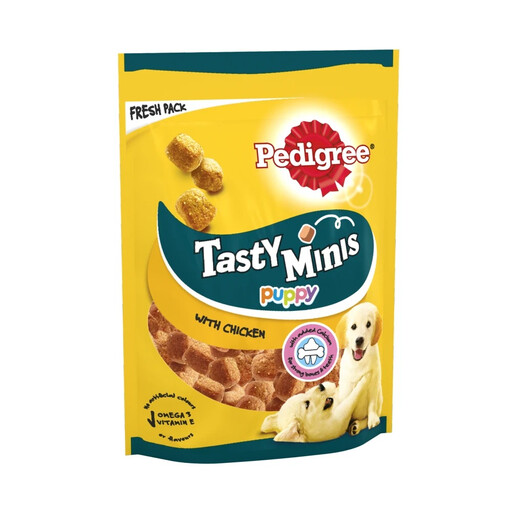
Why This Fits Their Persona: These are specifically designed for the needs of a growing puppy. The small, soft, chewy texture is ideal for young mouths, making them perfect for early-stage training and rewarding good behaviour without being too hard on developing teeth.
It directly avoids the 'one-size-fits-all' pitfall by being formulated for puppies aged 4 to 18 months, ensuring the size and nutritional content are appropriate for their life stage.
Enriched with Calcium to support the development of strong teeth and bones and Omega 3 for overall vitality. These are key nutrients for a growing pup.
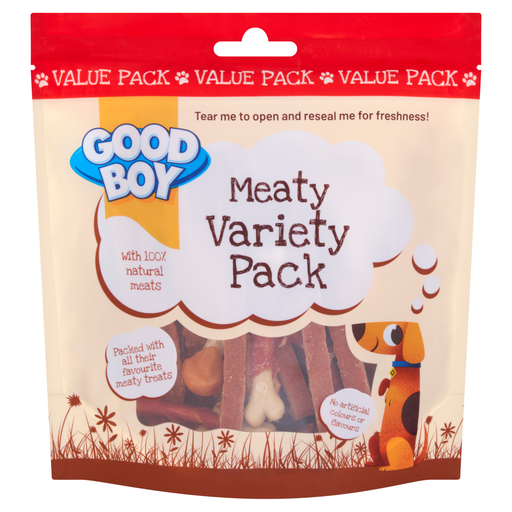
Why This Fits Their Persona: This pack is ideal for owners who prioritise meat content. The various treats in the pack, such as the Chewy Chicken Strips, list chicken breast as the primary ingredient (78%), appealing to those looking for high-protein, meaty rewards.
It counters the 'hidden fats' pitfall by being explicitly low in fat (most varieties are 1-4% fat) and high in protein. It also avoids the 'natural illusion' by backing it up with a high percentage of named meat.
Made with 100% natural meats (chicken, beef and duck) and contains no artificial colours or flavours. The variety of textures keeps dogs engaged.
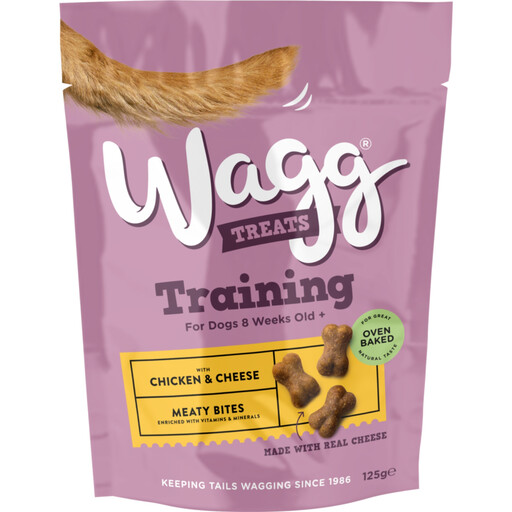
Why This Fits Their Persona: For owners who do a lot of training, the cost of treats can add up. This multi-pack offers excellent value for money, providing a large quantity of small, bone-shaped treats perfect for frequent rewarding during training sessions.
This product directly addresses the 'hidden sugars' pitfall by having no added sugar. It is also suitable for puppies from 8 weeks old, making it a versatile choice that avoids the age-appropriateness trap.
Oven-baked for a satisfying texture and enriched with vitamins and minerals. The bulk pack format is convenient and cost-effective for daily use.
We have compiled a complete, real-time list of products that fully satisfy these strict selection criteria and UK safety regulations.
A good rule of thumb is the 10% rule. Treats should not make up more than 10% of your dog's total daily calorie intake. If you are using a lot of training treats for dogs, you should reduce the portion size of their main meal accordingly to prevent weight gain and maintain a balanced diet.
Not necessarily. Grain-free diets became popular for humans and the trend crossed over to pet food. While essential for dogs with a diagnosed grain allergy or sensitivity, most dogs digest grains perfectly well. High-quality whole grains can provide useful nutrients. It is more important to focus on the overall quality of the ingredients rather than simply whether a treat is grain-free.
This depends entirely on the specific product. Some puppy treats, like the Wagg treats mentioned above, are suitable from 8 weeks of age. Others, particularly harder dog chews, are only recommended for puppies over 4 months old once their adult teeth have started to come in. Always check the feeding guide on the packaging for the minimum age.