
24/7 Customer Support

Free returns

Same-day & Next-day Delivery

Quality Guaranteed

Unlock Your Welcome Offers: FREE Delivery | Up to 80% OFF | Free 30-day JoyPlus trial
Download the APP
Dog treats can make training easier, support everyday bonding and give puppies an appropriate chewing activity. However, attractive packaging does not always tell you whether a product suits your dog’s age, size, diet or routine. The right choice depends on practical details such as texture, calorie intake, ingredients, feeding guidance and supervision requirements.
Most dog treats are labelled complementary dog food, which means they are intended to sit alongside a complete, balanced diet rather than replace meals. Feeding too many can contribute unnecessary calories, even when each individual piece looks small. As a general guide, many products recommend keeping treats to no more than 10% of daily calorie intake, while reducing the main meal accordingly.
A chewy treat that suits a large adult dog may be unsuitable for a young puppy or small breed. Puppies have developing teeth and gums, while smaller dogs may struggle with large pieces. Soft dog treats and easily breakable puppy treats are often more practical for training, but every dog should still be supervised when eating.
Words such as “natural”, “grain-free” and “with chicken” need to be checked against the composition and analytical constituents. A grain-free recipe is not automatically suitable for every sensitive dog, and a flavour named on the front of a pack may only represent a specified percentage of the recipe. Read the ingredient list, age recommendation, fat content and feeding instructions before buying.
Look for a clear minimum age. Some puppy products are suitable from 8 weeks, while others begin at 3 or 4 months. For example, certain puppy dental chews are specifically intended for puppies aged 4–12 months and may not suit dogs under a stated weight.
Consider breed size, too. Bite-sized treats can make portion control simpler for small dogs, but a large dog may need a larger chew or several small rewards during training. Never assume that “for all sizes” means one piece is appropriate for every dog.
Match texture to the activity:
Treat toys are not edible treats themselves, so inspect them regularly for deep bite marks, cracks or loose fragments. Select a size suited to your dog; the product information for the dumbbell-style toys below recommends them for small to medium-sized dogs.
Compare the composition rather than relying only on front-of-pack claims. Chicken dog treats vary considerably: one product may contain chicken meal as a principal ingredient, while another may contain a smaller percentage within a cereal-based recipe.
For dogs requiring careful portion management, check the declared fat and energy values. Good Boy Chicken with Rice Sticks list 1.5% fat content and 354 kcal per 100g, while Pedigree Tasty Bites Chewy Cubes list 11% fat content and 333 kcal per 100g. These figures are not interchangeable, and the quantity fed still matters.
Owners considering natural dog treats or dog treats for sensitive stomachs should also check for cereals, wheat, dairy, specific proteins and other ingredients their dog has previously reacted to. If your dog has a diagnosed condition or persistent digestive symptoms, ask a veterinary professional for individual dietary advice.
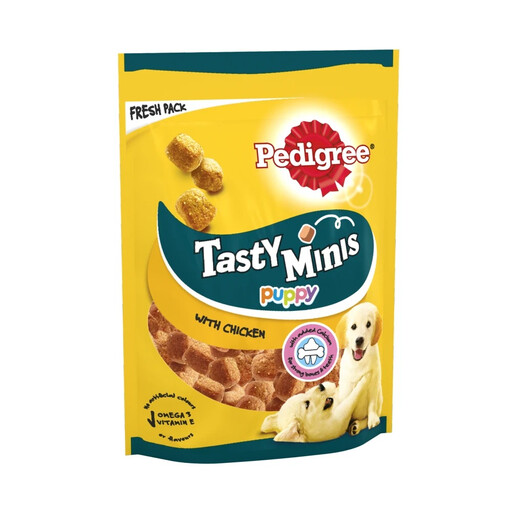
Why This Fits Their Persona: A straightforward option for new puppy owners who want small, soft rewards for early training and everyday bonding. It is listed for puppies aged 4 to 18 months.
The age guidance and bite-sized chewy cube format make it easier to avoid choosing an adult-sized or overly hard reward for a young dog. The label also states no added artificial colours or flavours.
Soft texture, chicken content of 13%, 20.3% protein and 10.3% fat; includes declared calcium and Omega 3 values.
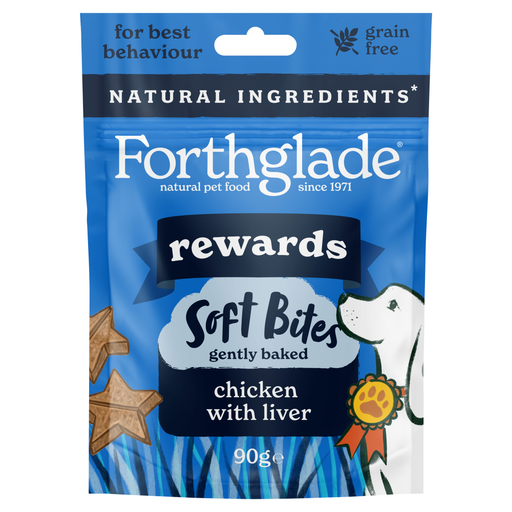
Why This Fits Their Persona: Suitable for owners who prefer a grain-free, soft-bite recipe with a clearly stated chicken composition for training at home, in the park or while travelling.
The product information identifies chicken at 34% and gives a 10% daily calorie limit. Treats can be broken into smaller pieces, helping prevent oversized rewards during repeated exercises.
Grain-free composition, 28% protein, soft texture, resealable 90g pouch and suitability for dogs aged 2 months and older.
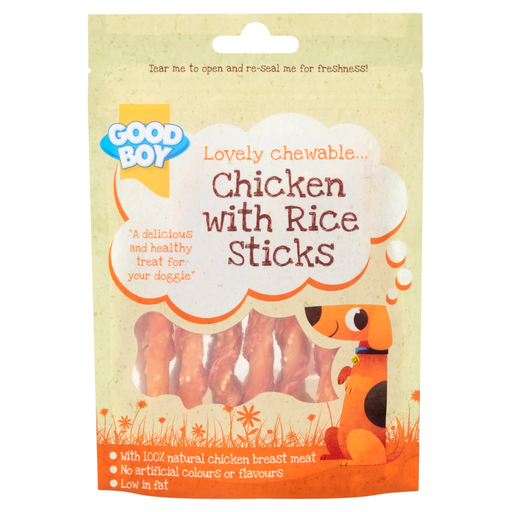
Why This Fits Their Persona: A practical match for adult dogs that prefer a longer chew, and for owners seeking a lower-fat chicken reward for occasional use or controlled training.
The pack gives a minimum age of 4 months and a stated feeding direction. Checking the stick format and supervising the dog helps avoid problems caused by unsuitable chew size or swallowed fragments.
Lists 77% chicken breast, 32% protein, 1.5% fat and a resealable pack. It contains rice and has no added artificial colours or flavours.
We have compiled a complete, real-time list of products that fully satisfy these strict selection criteria and UK safety regulations.
There is no single amount for every dog. Check the product feeding guide, account for your dog’s size and activity, and keep treats within the recommended proportion of daily calories. Reduce the main meal when necessary. Small pieces can be useful during frequent training sessions.
Some are, but check the minimum age and size guidance first. Products listed for puppies from 2 months, 4 months or 8 weeks have different suitability. Break treats into manageable pieces, supervise feeding and ensure fresh water is available.
No. Dental chews may provide a chewing activity, but they should not be treated as a replacement for a suitable oral-care routine or veterinary advice. Choose a chew designed for your dog’s age and size, and remove fragments that could present a choking risk.