
24/7 Customer Support

Free returns

Same-day & Next-day Delivery

Quality Guaranteed

Unlock Your Welcome Offers: FREE Delivery | Up to 80% OFF | Free 30-day JoyPlus trial
Download the APP
A good doormat is the first line of defence for a clean home, yet it's an item many of us purchase without much thought. This often leads to disappointment when the mat fails to perform, creating more problems than it solves. As a Joybuy Product Recommendation Officer, my role is to help you navigate the market and find a doormat that is functional, durable and suits your home. Before you buy, let's look at the common traps to avoid.
Many doormats on the market come with appealing claims that don't hold up in a typical UK household. Here are the most frequent issues we see:
To ensure your new doormat is an asset, not a liability, focus on these core features.
The material dictates a mat's primary function—scraping, absorbing or both.
The backing is arguably the most important feature for safety and longevity.
Where you place your mat determines what you need from it.
To help you make a confident choice, we've matched some well-constructed doormats to different household needs.

Why This Fits Their Persona: This mat is ideal for those who value sustainability without sacrificing function. Its absorbent cotton fibres and minimalist grey design fit perfectly into modern, environmentally aware UK homes.
It directly counters the "washable mat that disintegrates" pitfall. Its high-quality cotton and durable non-slip backing are designed to withstand machine washing, ensuring longevity.
Eco-friendly construction combined with excellent absorbency and a secure, non-slip base for safety.
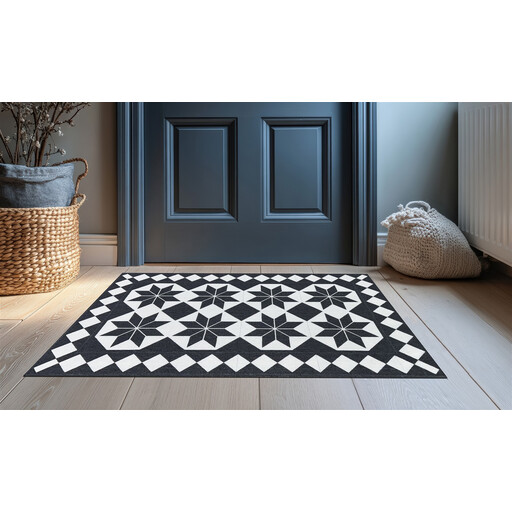
Why This Fits Their Persona: For those who see their entrance as an extension of their home's style, this mat's elegant Victorian pattern adds a touch of class. It's perfect for hallways in period properties or modern homes wanting a vintage accent.
This mat avoids the "non-slip mat that travels" problem by using a TPR (Thermo Plastic Rubber) backing, which offers a superior and more durable grip on hard floors than cheaper alternatives.
Made from 100% PET fibre from recycled bottles, it's an eco-friendly choice that is also machine washable and highly durable.
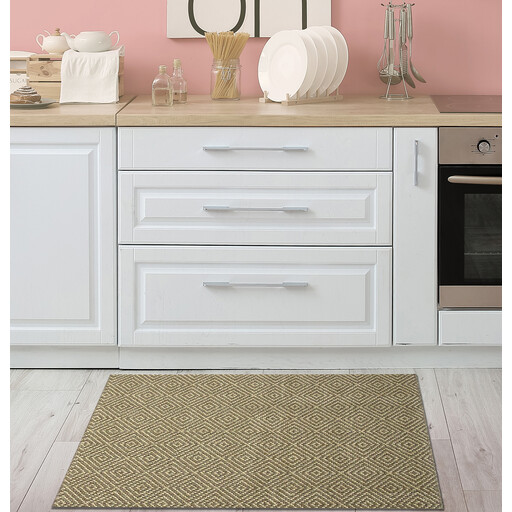
Why This Fits Their Persona: For homes with constant foot traffic from kids, pets and guests, a larger, more robust mat is essential. This mat's generous size and stain-resistant properties make it a practical workhorse for busy hallways and kitchens.
Its synthetic composition is specifically designed for durability, stain resistance and machine washing, ensuring it won't break down under the demands of a busy household.
A large entrance mat (57x90cm) that is both machine washable and stain-resistant, offering maximum floor protection and easy maintenance.
We have compiled a complete, real-time list of products that fully satisfy these strict selection criteria and UK safety regulations.
For a busy household, washing your indoor mat every 2-4 weeks is a good rule of thumb to maintain its absorbency and appearance. For outdoor mats, a regular shake or brush-down once a week should suffice to remove trapped debris. Always ensure the mat is completely dry before placing it back on the floor to protect your flooring and ensure the non-slip backing works effectively.
It's generally not recommended. Outdoor mats, like those made from coir, are designed for scraping coarse dirt and can be too abrasive for indoor flooring like wood or vinyl. They also tend to shed more than indoor mats and are less effective at absorbing moisture. It's better to use a two-mat system: a scraper mat outside and an absorbent mat inside.
The key is the material and weight of the backing. A heavy, flexible backing made from natural rubber or TPR (Thermo Plastic Rubber) provides the best grip on typical UK flooring such as LVT, laminate and tiles. These materials create friction and are less likely to slide, even when wet, compared to lightweight PVC backings.