
24/7 Customer Support

Free returns

Same-day & Next-day Delivery

Quality Guaranteed

Unlock Your Welcome Offers: FREE Delivery | Up to 80% OFF | Free 30-day JoyPlus trial
Download the APP
As a Product Recommendation Officer at Joybuy, I often see how a simple kitchen tool can make a world of difference. For health-conscious home cooks in the UK, the chopping board is ground zero for food safety. A double sided chopping board seems like the perfect solution for separating raw meat from fresh vegetables, but not all are created equal.
Many shoppers are drawn in by clever marketing, only to find their new board is a hygiene risk or a safety hazard. Before you make a purchase, let’s look at the common pitfalls that can lead to a disappointing and potentially unsafe addition to your kitchen.
To ensure you get a durable and safe tool, focus on these key parameters. They are the difference between a board that lasts for years and one that you'll want to replace in months.
The most effective dual-sided boards combine two distinct materials. One side is typically a stainless steel chopping board, which is ideal for handling raw meat, poultry and fish. Its non-porous surface does not harbour bacteria, absorb odours, or stain. It can be easily wiped down and sanitised.
The other side is often made from a food-grade composite, such as a wheat straw chopping board. This material is gentler on your knife blades, making it perfect for chopping vegetables, fruits and bread. This combination gives you a dedicated chopping board for meat and vegetables in one streamlined tool.
A genuinely hygienic cutting board is defined by its material and ease of cleaning. Look for non-porous surfaces that resist deep scratches. The ultimate convenience is a dishwasher safe chopping board, as the high temperatures and detergents provide a level of sanitation that is difficult to achieve by hand washing alone. Always check the manufacturer's instructions, as some materials hold up better than others.
A reliable non-slip cutting board is crucial for safety. This is usually achieved in two ways:
Instead of providing a generic list, we've matched specific products to different kitchen needs and user profiles.
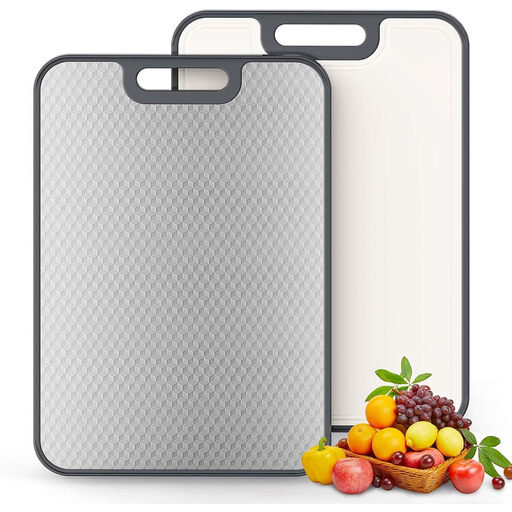
Why This Fits Their Persona: This user prioritises food safety for their family and needs a practical, no-fuss solution. The large 17x12 inch surface provides ample space for preparing family-sized meals, while the dual-sided design directly addresses the need to separate raw meats from vegetables.
Its food-grade stainless steel and wheat straw PP materials are dishwasher safe, resisting the warping and staining common in cheaper boards. The substantial weight provides natural non-slip stability.
Features a non-porous stainless steel side for meat and a knife-friendly wheat straw side for vegetables. It is fully dishwasher safe for easy and effective sanitation.

Why This Fits Their Persona: Ideal for those with smaller kitchens or who prefer more compact tools. This user values efficiency and organisation but refuses to compromise on hygiene. The 25x36cm size is perfect for daily prep without cluttering the countertop.
Constructed from high-grade 304 stainless steel and wheat straw, it offers the same hygienic, non-warping benefits as larger models. Its solid build and quality materials ensure it stays put during use.
Combines professional-grade materials in a space-efficient design. Features a convenient handle for easy storage and handling.
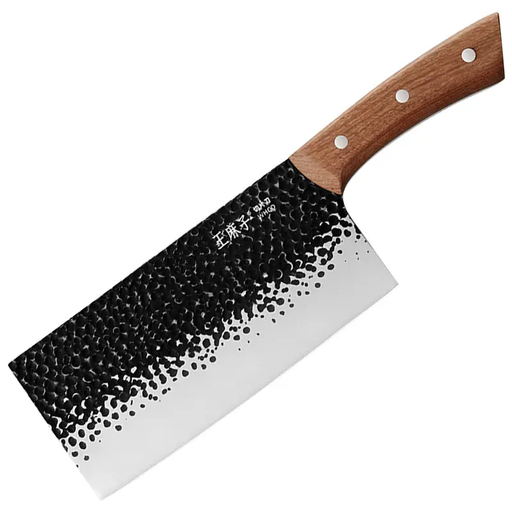
Why This Fits Their Persona: This user has already invested in a quality chopping board and now seeks the right tools to complete their setup. They appreciate precision and craftsmanship, and understand that a good knife is essential for both performance and safety.
A quality board deserves a quality knife. This cleaver's sharp, durable blade works efficiently on both steel and composite surfaces, preventing the need for excessive force that can damage boards or cause slips.
Forged for exceptional sharpness and durability, it provides superior control for clean, professional slices. The ergonomic handle ensures a comfortable and secure grip.
We have compiled a complete, real-time list of products that fully satisfy these strict selection criteria and UK safety regulations.
1. How do you properly clean and sanitise a double sided chopping board? For the stainless steel side, you can wash it with hot, soapy water or place it in the dishwasher. For tough stains or after handling raw meat, you can wipe it with a food-safe sanitiser or white vinegar. The wheat straw or plastic side should also be washed thoroughly. If the board is dishwasher safe, this is an effective way to clean both sides. Always allow the board to dry completely before storing it.
2. Will a stainless steel chopping board dull my knives? This is a common concern. While stainless steel is harder than wood or plastic, food-grade stainless steel used in chopping boards is generally softer than the high-carbon steel used in quality kitchen knives. It will cause more wear on a knife edge over time compared to a composite surface. That's why the dual-surface design is so practical: use the steel side for tasks that prioritise hygiene (like resting or slicing raw meat) and the gentler composite side for extensive chopping.
3. What is the advantage of a wheat straw chopping board side? Wheat straw composite is a durable, food-safe material made from a natural by-product. It is valued for being non-porous and dense, which means it resists the deep scratches that can harbour bacteria in wooden or soft plastic boards. It provides a firm cutting surface that is more forgiving on your knife's blade than stone or steel, making it an excellent all-purpose choice for fruits and vegetables.