One-cake birthday hosts
If the coffee cake is your main oven task, concentrate on whether a single cavity fits your tin and offers the fan function you want. A second cavity need not drive the decision.


For one birthday coffee cake, a single built-in fan oven is the more direct choice if its cavity fits your tin and its installation requirements suit your kitchen. Consider a double oven when the cake must share preparation time with dishes needing a separate cavity or temperature; before choosing either format, check the housing, electrical connection and evidence of baking consistency for the exact model.
If the coffee cake is your main oven task, concentrate on whether a single cavity fits your tin and offers the fan function you want. A second cavity need not drive the decision.
If the cake overlaps with other party food, decide whether those dishes can share one oven setting or need separately usable cavities. The answer changes whether multi-level cooking or a double oven is useful.
If you are replacing a built-in oven, check the cabinet opening and electrical connection before comparing baking features. Similar front widths do not establish that two appliances use the same housing.
Start with the cake and any dishes competing for oven time, then rule out models that do not fit the kitchen or its electrical setup. Which? assesses temperature accuracy and heat distribution in its built-in oven testing, so a fan-system name alone should not settle a decision about baking consistency.
| Concern | What to check | Who this matters to |
|---|---|---|
| Even cake baking | Check the exact model’s fan function and, if cake consistency is decisive, a model-specific assessment of temperature accuracy and heat distribution. | I want the birthday cake to bake evenly rather than choosing by a fan label alone; roughly 39% of consumers put baking consistency first. |
| Party cooking space | Compare cavity sizes and functions; decide whether other dishes need a separate temperature or can share the cake’s oven setting. | When I am preparing the cake alongside other party food, avoiding an oven-time clash is my priority; around 23% of consumers place cooking space first. |
| Installation fit | Compare the cabinet opening with the model’s installation dimensions, then check its plug and electrical-connection requirements. | Before replacing my oven, I need to know it will fit and can be connected appropriately; roughly 23% of consumers make installation compatibility their primary concern. |
| Cleaning and energy use | Check the exact cleaning system and compare energy information on a like-for-like label basis. | If I use the oven often, routine cleaning and energy information affect my choice after the basic baking and fit requirements are met; around 15% of consumers put these ongoing considerations first. |
A double oven can need a substantially taller opening than a single oven. Bosch lists its HHF113BR0B single oven at 595 × 594 × 548 mm and its MBA533BB3B double oven at 888 × 594 × 550 mm.
Measure the opening’s height, width and depth, identify whether it is built-in or built-under, and compare it with the exact model’s installation instructions.
A mismatch may mean altering the cabinet before installation.
A manufacturer’s description of its fan system does not establish how accurately every oven holds temperature. Which? assesses temperature accuracy and heat distribution when testing built-in ovens.
If consistent cake baking is a priority, look for an independent assessment of the exact model as well as checking its stated cooking functions.
Connection requirements differ by model: Bosch specifies a GB plug for the HHF113BR0B, while Bosch and Neff specify electrician connection for several other cited ovens.
Read the chosen model’s installation instructions and power requirements before ordering. Electrical Safety First advises consulting a qualified electrician if you are unsure.
A second cavity is useful when dishes need separate oven space or settings, but it does not solve a scheduling problem you do not have.
Map out when the cake and other party food need cooking. Choose a double oven for that overlap only if its installation format also suits your kitchen.
Bosch offers cited examples of single and double built-in ovens, including a single model with added steam.
Neff is relevant if you are comparing stated multi-level fan cooking in a single oven with a double-oven format.
AEG’s cited DUE731110M is a built-under double oven for kitchens and cooking plans that call for two cavities.
These choices include single built-in ovens for a one-cake plan and a double oven for preparing the cake alongside other dishes. Compare each model’s installation instructions and baking functions before choosing.
 No image available
This single-oven format suits a plan centred on one cake. Check the exact model’s fan settings and housing requirements; confirm the required electrical connection before ordering.
 No image available
Consider this double oven if the cake and other dishes need separate cooking space. Bosch specifies an appliance size of 888 × 594 × 550 mm, 3D Hotair and electrician connection for this model; confirm the required cabinet opening and supply before ordering.
 No image available
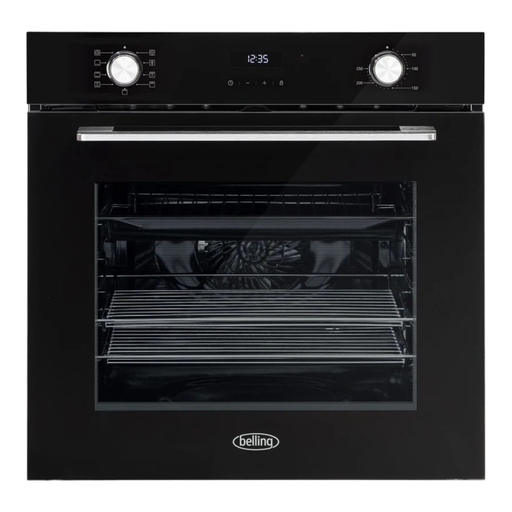
A single built-in oven keeps the choice focused on one cake rather than separate cooking zones. Check this model’s fan functions and installation dimensions against your baking plans and cabinet.
 No image available
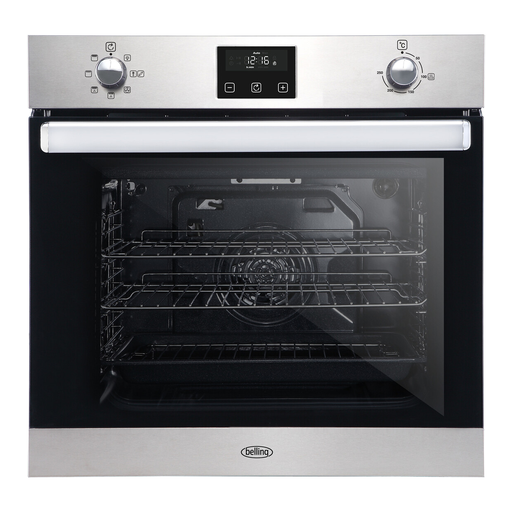
This single-oven format is relevant when the birthday cake is the main oven task. Confirm that its cooking functions suit your recipe and that the cavity and required cut-out fit your tin and kitchen.
 No image available
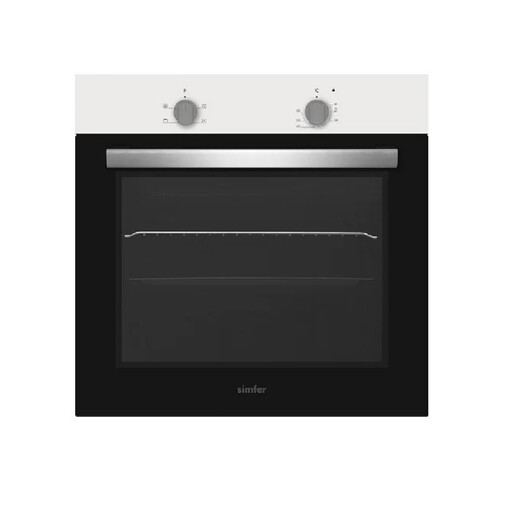
For one cake, a single oven may be sufficient without adding a second cavity. Check the FO60W’s fan settings, cavity fit and exact installation cut-out before deciding whether it suits your kitchen.
Usually not if the cake is the main oven task and a single oven fits your tin. A double oven becomes useful when other party dishes need separate cooking space or settings at the same time.
Measure the cabinet opening’s height, width and depth, then check the exact model’s installation instructions. A similar front width does not make single, double and built-under ovens interchangeable: Bosch lists its HHF113BR0B single oven at 595 × 594 × 548 mm and its MBA533BB3B double oven at 888 × 594 × 550 mm.
No; the connection depends on the exact model. Bosch specifies a GB plug for the HHF113BR0B, while several cited Bosch and Neff ovens specify electrician connection. Check the manufacturer’s instructions and power requirements, and consult a qualified electrician if you are unsure, as Electrical Safety First advises.
Do not assume the regulatory requirements are identical throughout the UK. GOV.UK’s Office for Product Safety & Standards identifies the Electrical Equipment (Safety) Regulations 2016 guidance cited here as applying to equipment supplied in or into Great Britain; Northern Ireland has different provisions under the Windsor Framework. Confirm the applicable requirements for where the oven will be supplied.