Choose a pen display if placing ink directly on the visible comic panel matters most, provided you can position its screen at a stable angle on your standing desk. Choose a non-display pen tablet if you would rather position the monitor independently, accepting that your hand moves on one surface while you watch another. For either route, check the drawing position and the exact device’s connections; a standalone Android tablet also needs the right drawing app and pen.
Who each setup suits
Direct-on-screen comic inkers
If placing borders, lettering and ink lines where the pen touches the image matters to you, investigate a pen display. Wacom describes this type as a pen-enabled monitor; at a standing desk, its drawing angle and footprint still need to suit your setup.
Standing-desk setup planners
If screen position, shoulder comfort, desk depth and cable reach drive your decision, plan the workstation before settling on a tablet. The Health and Safety Executive advises a position that lets you keep your shoulders relaxed.
Space-conscious shortcut users
If you want a compact input surface and a separately positioned monitor, consider a non-display pen tablet with controls that suit your drawing software. Wacom’s Intuos Pro Medium, for example, offers programmable controls and USB or Bluetooth connectivity, but drawing requires indirect hand-to-screen coordination.
What matters when choosing
Start with a standing position you can work in comfortably, then decide whether drawing on the visible image or positioning the monitor separately matters more.
Pen display
Choose it when: You want to ink and arrange panels directly on the screen and have room to support it at a usable angle.
Accept: The screen takes up drawing space, needs a computer connection and may require an optional stand for more adjustment.
Non-display pen tablet
Choose it when: You want to position your main monitor independently of the surface you draw on.
Accept: The image is not beneath your pen, so you must coordinate strokes while looking at the separate screen.
| Concern |
What to check |
Who this matters to |
| Standing position and drawing angle |
Check the included angle against your desk height and whether a stand or mount offers the adjustment you need. |
I need to draw without hunching over a screen or raising my shoulders to reach it. Around 36% of consumers put standing-workstation fit first. |
| Direct line placement |
Decide between a pen display and a non-display tablet; for a display, consider whether pen-to-image alignment matters to you. |
When placing panel borders and ink strokes, I want to see the line beneath my pen. For around 29% of consumers, direct drawing is the primary concern. |
| Desk space and monitor position |
Measure the usable surface and decide where the drawing device, monitor and reference material will sit. |
My desk also has to hold a keyboard and references, so I need flexibility in where the main screen goes. Roughly 21% of consumers prioritise space and monitor layout. |
| Controls and connections |
Check shortcut configuration and the exact computer port, display-data and power requirements. |
I switch tools often and need the device to connect to my existing computer without an awkward cable path. Around 14% of consumers place controls and connection fit first. |
Mistakes to avoid
-
Assuming included feet provide enough adjustment
Wacom’s Cintiq 16 has built-in feet that set a 20° working angle; its adjustable stand is optional. That fixed angle may not suit your desk height or the space left for a keyboard.
Measure your clear desk depth and assess the drawing position before choosing between the included feet, a compatible mount and an adjustable stand.
More adjustment may mean accommodating a separate stand or mount on the desk.
-
Assuming every USB-C port carries video
A matching connector shape does not establish that a pen display will receive the data, video and power it needs. Huion specifies USB 3.1 Gen 1 data transfer and DisplayPort 1.2 support for the USB-C connection on its Kamvas 16 (2021).
Compare the exact display’s connection instructions with your computer’s port specification, including any separate power or cable requirements.
-
Expecting a pen tablet to feel like drawing on a screen
A non-display pen tablet controls the cursor on a separate monitor. For comic inking, that distinction matters more to the initial drawing method than a pressure-level figure alone.
Choose between direct pen-to-image placement and independent monitor positioning before comparing pen specifications.
-
Assuming similar model names mean identical bundles
Huion’s Kamvas 16 (2021) and Kamvas 16 (Gen 3) have different stated specifications. Accessories and connection requirements also need to be checked for the particular model and seller bundle.
Compare the full model name, included stand and cables, computer compatibility and the seller’s warranty and return terms for the listing you intend to buy.
Brands to consider
Wacom
Its Cintiq 16 pen display and Intuos Pro Medium non-display tablet illustrate the two drawing methods relevant to this standing-desk decision.
- Wacom’s Cintiq 16 listing specifies a 2.5K display, built-in 20° feet and VESA compatibility; the Intuos Pro Medium offers programmable controls and USB or Bluetooth connectivity.
- The Cintiq 16 adjustable stand is optional, while the Intuos Pro Medium requires drawing while looking at a separate screen.
Huion
Its Kamvas 16 models are pen displays to compare when you want to work directly on a screen.
- Huion specifies a 15.8-inch 2.5K display for the Kamvas 16 (Gen 3); its Kamvas 16 (2021) documentation describes programmable keys and connection options.
- Check the generation and exact bundle: specifications, connection conditions and included accessories should not be assumed to match.
XPPen
The Artist 16 (2nd Gen) is another screen-based option to consider for direct comic-panel drawing.
- Its compact display format is relevant when a larger drawing screen would take up too much of the desk.
- Check the exact listing’s screen finish, controls, stand and connection requirements before deciding whether it suits your workstation.
Joybuy products for screen-based drawing
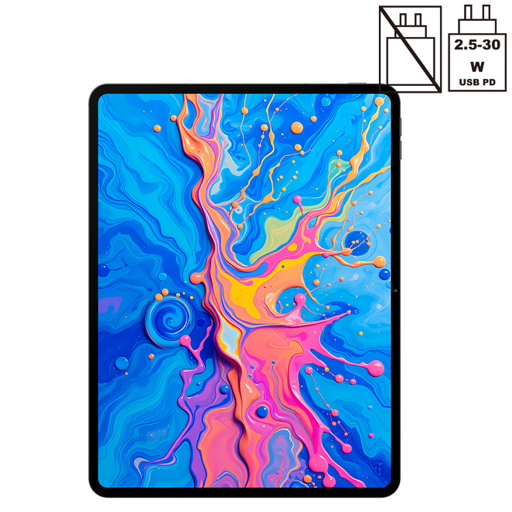
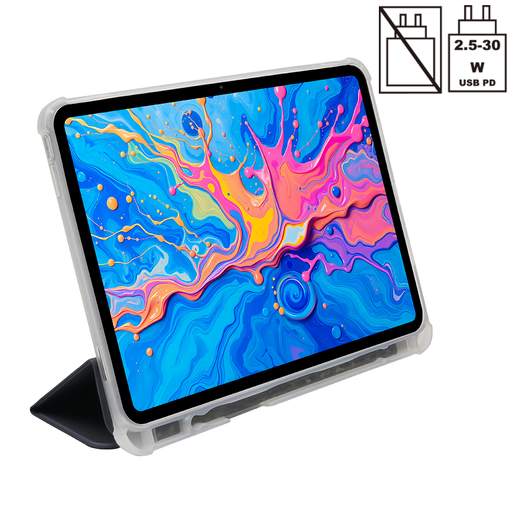
These TECLAST ArtPad Pro options are standalone Android tablets for drawing on their own screens, rather than the computer-connected pen displays or non-display tablets discussed above. Before choosing either listing for comic panels at a standing desk, check your drawing app, the pen supplied and how you will support the tablet at a comfortable angle.
 No image available
TECLAST ArtPad Pro 12.7-inch 2K tablet (2025 Edition)
Consider this standalone screen tablet if you want to draw without connecting a pen display to a computer. Its listing specifies Android 15 and support for T-Pen drawing with 4,096 pressure levels. Confirm that the supplied stylus provides that pressure sensitivity, that your comic-drawing app works with it and that you can position the tablet comfortably while standing.
View on Joybuy
 No image available
TECLAST ArtPad Pro 12.7-inch 2K tablet with case
Consider this standalone screen tablet if an included case matters to your setup. The listing specifies T-Pen compatibility and 4,096-level pressure support, but check whether a compatible pressure-sensitive pen is included. Also confirm your comic-drawing app and a suitable standing-desk support arrangement.
View on Joybuy
Common questions
Do I need a pen display to draw comic panels?
No: a non-display pen tablet also lets you draw comic panels, but you watch a separate monitor while moving the pen. Choose a pen display if seeing the stroke beneath your hand is more important to you; Wacom describes the two devices as a pen-enabled monitor and a cursor-control surface respectively.
How should I position a drawing tablet at a standing desk?
Arrange the tablet and screen so you can draw without shrugging your shoulders or twisting to see your work. The Health and Safety Executive advises relaxed shoulders for display-screen work; check the drawing angle, keyboard position and available desk depth as part of the whole setup.
Will one USB-C cable connect a pen display to my computer?
Not necessarily: the display and computer port must support the required connection. For its Kamvas 16 (2021), Huion specifies USB 3.1 Gen 1 data transfer and DisplayPort 1.2 support for USB-C use; check both devices’ specifications and any separate power requirement.
What should I check if I draw at home for work?
Check whether your home drawing position remains comfortable during your usual work sessions, rather than judging the tablet in isolation. The Health and Safety Executive’s home-working guidance calls for a comfortable, sustainable posture; screen position, drawing angle and room for the keyboard all affect that setup.


