Desktop album-art illustrators
If you build covers at a Windows or Mac workstation, a separate pen tablet can sit alongside your keyboard and monitor while you work with layers, shortcuts and retouching tools.


Choose a screenless pen tablet if you already work at a computer with a suitable monitor and want the drawing surface separate from the screen. A connected pen display suits you if placing marks directly on the image matters more than a simpler desk setup; a standalone Android tablet suits sketches and revisions away from a computer, provided its apps and export options fit your final artwork workflow. Whichever route you take, a display's stated colour coverage does not replace checking colour profiles for release or print.
If you build covers at a Windows or Mac workstation, a separate pen tablet can sit alongside your keyboard and monitor while you work with layers, shortcuts and retouching tools.
If you want to place illustration, lettering or texture marks where you see them, a computer-connected pen display offers that working arrangement. Allow for its connection requirements and space on the desk.
If you sketch covers or revise ideas away from a computer, a standalone tablet may suit that stage of the work. Check its apps and file exports against the process you use to deliver finished artwork.
Decide where you need to draw first: at a computer on a separate surface, directly on a connected screen, or on a device you can take away from the desk. Then check the connections, creative software and colour workflow needed to finish the cover.
Choose it when: You already design on a computer and want pen input without adding another display.
Trade-off: You draw on the tablet while watching a separate monitor, so hand–eye coordination matters.
Choose it when: Seeing your pen strokes on the artwork helps with illustration, lettering or detailed paint-overs.
Trade-off: It still needs a compatible host device and connection; its screen does not, by itself, settle final colour accuracy.
Choose it when: Sketching and revising cover concepts away from a computer is the priority.
Trade-off: Check the art apps, typography tools and file exports you need before relying on it for final production.
| Concern | What to check | Who this matters to |
|---|---|---|
| Drawing on the image | Whether you want a pen display or a separate drawing surface; for a display, check its construction and pen setup. | If I draw lettering or fine textures, I want to see where each stroke lands. Around 29% of consumers put direct line placement first. |
| Colour for release or print | Check the display's stated colour coverage alongside your software's document profile and the monitor used for final colour decisions. | When a cover will be shared digitally or printed, I care about how its colours carry through to delivery; colour control is the primary concern for roughly 29% of consumers. |
| Desktop workflow | Compare assignable controls, active area and compatibility with your computer and creative software. | I spend time switching between layers, selections and brush settings, so I want controls that fit my desk workflow. For about 21% of consumers, that workflow is the leading need. |
| Working away from the desk | Check whether the device works without a computer and whether its apps can export the files you need. | For concepts and revisions away from my workstation, carrying a separate computer changes what I would choose; portability comes first for around 21% of consumers. |
A stated display gamut describes one characteristic of the screen. Adobe explains that document, monitor and output profiles affect how colours are interpreted, so the image you edit on-screen may not match the intended output if those settings are unsuitable.
Check the document profile and the monitor used for final colour decisions. For physical copies, confirm file and profile requirements with the print provider before export.
A colour mismatch can mean revising artwork or checking another proof.
Huion and Wacom describe connection requirements for their pen displays; the presence of a USB-C socket alone does not establish that a particular computer can use the desired cable setup.
Check your host device's display-capable connection, the display maker's compatibility guidance and the cable required for the exact model.
A different cable, adapter or connection arrangement may be needed.
Huion lists the ST300 stand for Kamvas 13 as optional, while Wacom distinguishes its One 13 touch bundle from other configurations. Product images alone do not identify an individual package's contents.
Read the box-contents list for the variant you intend to order, including its pen, cables, power accessories and stand.
An accessory needed for your desk setup may have to be obtained separately.
A standalone tablet can serve portable drawing, but its hardware specifications do not establish that the apps you need will handle your lettering, layers and delivery files.
Confirm your required art apps, font handling, layered-file support, export formats and transfer process before making it your main album-art device.
You may still need a computer or conversion tool to finish a file that your chosen apps cannot deliver.
Compare Wacom's Intuos Pro (2025) if you want a screenless desktop setup, or Wacom One 13 touch if you want to draw on a connected display.
Kamvas 13 is a computer-connected pen display to consider if you want to draw directly on a 13.3-inch screen.
Deco 01 V3 is a screenless option for drawing at a computer with a separate monitor.
ArtPad Pro is relevant to portable, standalone Android sketching rather than a computer-connected pen-tablet workflow.
These TECLAST ArtPad Pro variants are options for drawing and revising ideas on an Android tablet away from a computer. Compare their stated accessories, then check that your required apps and file exports can carry the artwork through to delivery.
 No image available
For sketching album-cover ideas on a standalone Android device away from your computer.
The listing specifies a 12.7-inch 2K display, Android 15, 256GB storage and a 10,000mAh battery. Check that your preferred art apps and export formats support the files you need to deliver.
 No image available
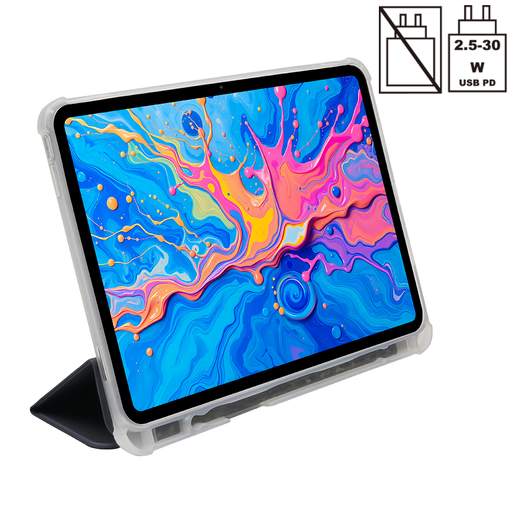
For portable cover concepts when you want to draw on a standalone Android tablet.
The listing specifies a 12.7-inch 2K display, 256GB storage, 4,096 pressure levels with a compatible T-Pen and an included case. Confirm whether a pen is in the box, and check the apps and export formats needed for your finished files.
A screenless pen tablet or connected pen display needs a compatible host device; a standalone Android tablet can be used away from a computer. If you choose the standalone route, check that its apps can produce and export the files your album-art workflow requires.
No. A display's stated coverage does not describe the whole colour workflow. Adobe explains the roles of document, monitor and output profiles; check your file and monitor settings, and ask the print provider for its requirements if you plan physical copies.
Those stated pressure levels alone do not establish which tablet will suit your artwork better. Compare whether you want to draw on a screen or separate surface, then check active area, controls and compatibility with the software you use.