Who each setup suits

Standing-desk slide annotators

If you draw labels and worked examples while watching an existing monitor, a screenless tablet can leave more freedom to position your hands and keyboard as the desk moves. Check where its cable will run, or whether its wireless mode works with your computer.

Direct-on-screen diagram drawers

If placing arrows, shapes and labels directly on the visible image is the priority, consider a pen display or a tablet with its own drawing screen. Allow space for the device and check how you will support it at a usable angle while standing.

Chromebook and mixed-device educators

If teaching moves between computers, establish which operating systems, ports and connection modes the exact tablet supports. Driver requirements and wireless compatibility can differ even within a product range.

What matters when choosing

Screenless pen tablet

Choose it when: You annotate diagrams on an existing monitor and want to move the drawing surface as your standing desk changes height. Wireless and wired models offer different connection choices.

Allow for: Your hand moves on the tablet while you watch a separate screen, which can take practice.

Pen display

Choose it when: Direct pen placement on visible labels, shapes and diagrams is more important than keeping the desktop clear.

Allow for: Space for the display, its cable route and support that positions it appropriately alongside your monitor and keyboard.

Concern What to check Who this matters to
Desk positioning Check cable reach at both desk heights, or confirm that the wireless mode works with your computer. Plan the tablet and monitor positions together. If I change desk height during diagram work, I need the tablet to stay within comfortable reach without an awkward cable run. Around 31% of consumers put positioning and cable freedom first.
Drawing on the image Decide whether to draw on a separate tablet or directly on a screen; for a pen display, check its footprint and the selected stand bundle. When I place small labels and arrows, I would rather put the pen on the visible diagram than coordinate with a separate monitor. Direct-on-screen drawing comes first for around 25% of consumers.
Repeated tool changes Check the available keys or dials and whether your diagram or whiteboard software accepts the shortcuts you intend to assign. If I repeatedly switch between drawing, undoing and zooming during an explanation, accessible controls matter more to me than an unused feature list. Around 25% of consumers prioritise that shortcut workflow.
Computer compatibility Confirm support for your operating system, chosen connection mode, available ports and intended teaching apps. When I teach from different computers, I need the tablet and pen workflow to work on the device I will actually use. Compatibility is the leading concern for around 19% of consumers.

Buying pitfalls

  • Assuming a pen display includes a stand

    Huion lists a 'With Stand' version of the Kamvas Pro 16, so the support you need for standing-desk positioning depends on the selected bundle.

    Check the exact variant and box contents rather than relying on a product image showing the display at an angle.

    If support is not included, you may need a separate suitable stand.

  • Choosing by the word Bluetooth alone

    XPPen limits Bluetooth use on the Deco Pro SW/MW to Windows 10 and macOS 10.10 or later; the connection method affects which of its stated platform options applies.

    Check your computer's operating system and whether you plan to use Bluetooth, a receiver or a cable.

  • Treating the tablet as the whole workstation

    A tablet that fits on the desk still needs to sit sensibly alongside the monitor and keyboard. Health and Safety Executive guidance considers equipment, furniture and the work being done together.

    Check the arrangement at the desk heights you use, including reach, screen position and cable paths.

  • Judging diagram work by pressure levels alone

    A pressure-level specification does not establish how well a tablet will work with your diagram software or repeated annotation tasks.

    Choose the drawing arrangement you can use, then check pen compatibility, connection and shortcut behaviour in your intended app.

Relevant brands to consider

Wacom

Its range includes screenless pen tablets with different approaches to connection and setup.

  • Wacom specifies USB and Bluetooth connections for Intuos Pro, with controls for shortcut-led work.
  • One by Wacom uses a USB connection in Wacom's Windows and Mac setup instructions. Check the exact model and teaching computer rather than assuming that connection features carry across the range.

XPPen

Deco Pro SW/MW is a screenless option for consumers considering wireless placement and hardware controls.

  • XPPen specifies eight shortcut keys and two programmable dials for Deco Pro SW/MW.
  • XPPen limits Bluetooth use on these models to Windows 10 and macOS 10.10 or later; check the connection mode for your computer.

Huion

Kamvas Pro 16 is a pen-display option for drawing directly on a visible diagram.

  • Huion specifies a 15.6-inch display, anti-glare glass and a 3-in-1 cable for Kamvas Pro 16.
  • Its UK listing offers a stand-dependent bundle choice. Confirm the selected configuration and where the display will sit on your desk.

Joybuy tablets for on-device drawing

These ArtPad Pro configurations are tablets with built-in screens for drawing on the device itself. They are a different setup from a screenless pen tablet used with an existing monitor; check the pen bundle, teaching apps and standing-desk support for the configuration you choose.
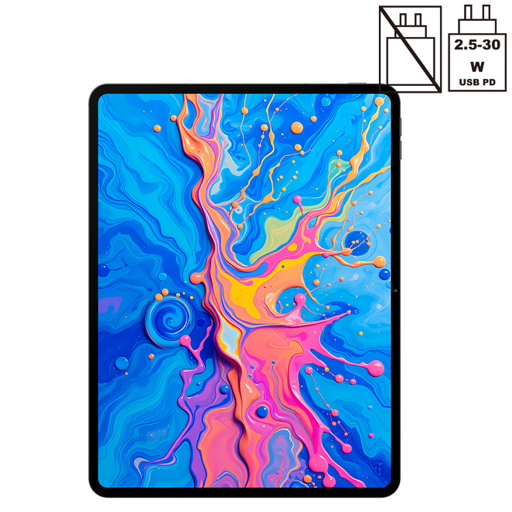
TECLAST ArtPad Pro 2025 Edition tablet with a 12.7-inch 2K display

TECLAST ArtPad Pro (2025 Edition), 12.7-inch 2K

Consider this built-in-screen configuration if you want to draw diagrams on the tablet rather than look at a separate monitor.

The title specifies T-Pen drawing support, 4096 pressure levels and Android 15. Confirm that your chosen diagram apps work with the pen, whether a pen is supplied and how you would support the tablet while standing.

View on Joybuy
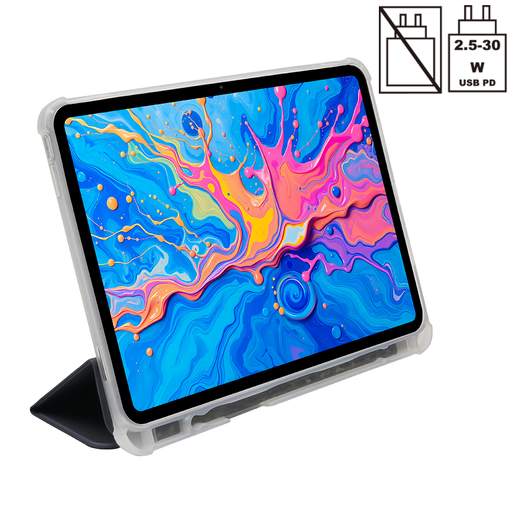
TECLAST ArtPad Pro tablet with a 12.7-inch 2K display and included case

TECLAST ArtPad Pro 12.7-inch 2K, case included

This built-in-screen configuration is worth checking if you want to draw directly on the device and need the listed case bundle.

The title specifies T-Pen compatibility and 4096 pressure levels, but compatibility does not establish that a T-Pen is included. Confirm the pen contents, support at your standing desk and compatibility with your intended apps.

View on Joybuy

Common questions

Should I use a screenless tablet or a pen display for educational diagrams?

Use a screenless pen tablet if you are comfortable watching an existing monitor and want more flexibility in where the drawing surface sits. A pen display suits direct drawing on the visible diagram, but requires space, cable planning and appropriate support at a standing desk.

How should I position a drawing tablet at a standing desk?

Arrange the tablet, monitor and keyboard as one workstation so drawing does not require awkward reaching or twisting. Health and Safety Executive guidance advises placing the screen directly in front of you, with its top around eye level and your shoulders relaxed; check the arrangement at the desk heights you use.

Will I need a driver for my teaching computer?

Driver requirements depend on the tablet and computer. Wacom's Windows and Mac instructions for One by Wacom include driver installation, while Wacom states that compatible Chromebooks can use that model without installing a driver. Confirm the exact model, connection method and operating system before buying.

What should I do with an old drawing tablet?

Check an electrical-equipment collection route rather than putting it in ordinary household waste. UK guidance on waste electrical and electronic equipment addresses recovery, reuse and recycling; ask the retailer about take-back arrangements or check your local authority's collection options.