What matters when choosing?
Choose the input method around your marking software first, then balance writing area against desk space. A standalone tablet needs a suitable app and an approved way to handle submissions; a screenless pen tablet uses the computer you already mark on.
Compact screenless pen tablet
Choose it when: You mark on a computer, have little clear desk space and mainly add short handwritten comments or corrections.
Trade-off: Your pen moves on the tablet while you look at a separate screen, and a small writing area may feel restrictive for detailed feedback.
Medium or large screenless pen tablet
Choose it when: Equations, diagrams or longer freehand comments are a regular part of marking and the desk has room for a larger active area.
Trade-off: It takes more space but still uses a separate screen; programmable controls are useful only where the driver and marking application support the actions you need.
Standalone stylus tablet
Choose it when: You prefer writing directly on screen and can use an appropriate marking app and institution-approved file workflow.
Trade-off: It is another computing device rather than an input accessory for your existing desktop software, so check how submissions are opened, saved and returned.
| Concern |
What to check |
Who this matters to |
| Freehand writing |
Check pen input in your annotation tool and compare active writing areas for the amount of handwriting you do. |
If corrections often include symbols and diagrams, I need room to write without making every stroke cramped; around 36% of consumers put freehand feedback first. |
| Workflow compatibility |
Check the exact operating system, driver, connection and PDF or browser marking tool; try saving and returning an annotated submission. |
Before changing how I mark a batch, I need the device to work with the submission and feedback process I already use. Compatibility is the primary concern for around 29% of consumers. |
| Desk fit |
Measure the space beside your computer and check the model’s footprint, connection method and package contents. |
When my desk must also hold a laptop and study materials, I want a tablet I can fit and put away; around 21% of consumers prioritise that compact setup. |
| Repeated actions |
Identify your most-used marking shortcuts and check whether the tablet’s controls can trigger them in your software. |
If I move repeatedly between writing, erasing and navigating submissions, accessible controls matter more to me than extra writing space. Around 14% of consumers put those repeated actions first. |
Joybuy products for direct-screen marking
These standalone TECLAST tablets are options for writing directly on a screen, rather than screenless pen tablets for a computer. Choose this route only if your marking app can handle pen annotations and your institution permits the way you will store and return student work.
 No image available
TECLAST ArtPad Pro 2025 Edition, 12.7-inch tablet with stylus
Consider this for direct-screen annotation if your marking app supports its pen input and your institution permits the file workflow. The listed configuration has a 12.7-inch 2K display, Android 15 and an included stylus; check that its physical size fits your desk.
View on Joybuy
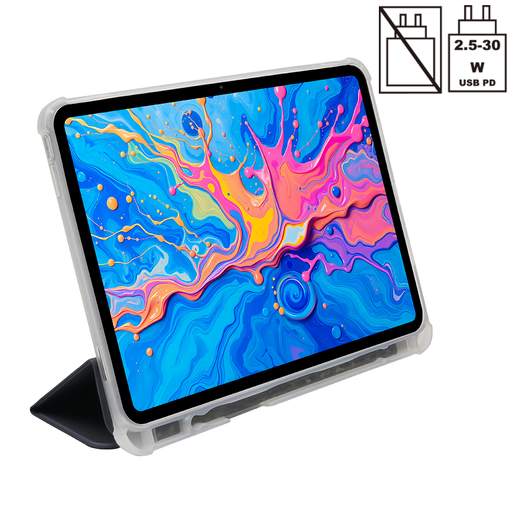 No image available
TECLAST ArtPad Pro, 12.7-inch T-Pen-compatible tablet with case
This is another direct-screen option if its pen works in your marking app and your student-work workflow is approved. Its title specifies a 12.7-inch 2K display, T-Pen compatibility, 4G LTE and an included case; confirm whether a compatible pen is in the package and whether the tablet fits your desk.
View on Joybuy
Common questions
Can I mark PDF submissions with a screenless pen tablet?
Yes, if your computer and PDF annotation program accept its pen input. The University of Oxford Mathematical Institute describes marking a copy of a PDF with a graphics-tablet stylus; check that your own platform also saves and returns feedback as required.
Is a larger writing area necessary for marking?
Not for every marking task: a compact tablet may suit short corrections on a crowded desk, while frequent equations, diagrams or longer handwritten comments give you more reason to consider a larger active area. Measure the available desk space as well as the writing area before choosing.
Will a pen tablet work with my Chromebook, Windows PC or Mac?
That depends on the exact model and operating-system version. Wacom identifies Chromebook support for specified models, while XPPen lists version-dependent support for several systems on the Deco 01 V3; also check the driver and your marking application.
Do I need a cable or driver?
Check the requirements for the model you choose. Huion instructs Inspiroy 2 users to connect by USB-C and install the correct driver, and says that series does not support Bluetooth; package contents and connection methods differ across other tablets.
Can I mark student work in a personal tablet app?
Only if the app, storage and sharing arrangement meet your institution’s rules. Confirm where submissions will be stored and how annotated files will be returned before transferring student work to a standalone tablet or personal cloud account.


