For portrait painting directly on the image beside a computer, start with a connected pen display that you can position comfortably at your standing desk. A screenless tablet suits a well-positioned separate monitor, while a standalone tablet suits drawing away from the desk; whichever format you choose, check its connections, software and drawing position before buying.
Who each setup suits
Standing-desk portrait painters
If you paint for long stretches while standing, the screen angle, reach and cable placement matter alongside the drawing surface. The Health and Safety Executive advises considering the position of the whole workstation, including whether you can keep your shoulders relaxed and avoid twisting.
Detail-led desktop illustrators
If you prefer to place the pen directly on facial details and tonal transitions, compare the active drawing area, reflections and available colour controls of connected displays. Manufacturer specifications can help you shortlist a screen, but they do not establish the accuracy of your finished output.
Portable app-based artists
If you also paint away from the desk, a standalone tablet lets you work without a connected computer. Check that your intended drawing app and the exact stylus work with the tablet, and decide whether its drawing area meets your needs.
What matters when choosing
Connected pen display
Choose it when: You want to draw on the image itself and normally paint beside a computer.
Allow for: A host device, suitable connections and enough desk space to position both screen and cables.
Screenless pen tablet
Choose it when: Your separate monitor is already comfortably positioned and you are happy to look at it while drawing below.
Allow for: Drawing on one surface while watching another, rather than placing the pen directly on the portrait.
Standalone tablet
Choose it when: You want to use tablet drawing apps at the standing desk and elsewhere without a tethered computer.
Allow for: A smaller canvas than a typical 15–16-inch pen display, plus model-specific stylus and app compatibility.
| Concern | What to check | Who this matters to |
|---|
| Drawing position |
Check the exact model's feet, stand or VESA mounting options against your desk depth and standing height. |
If a low screen makes me bend forward or a high drawing surface raises my shoulders, I need room to adjust both. Around 33% of consumers put drawing position first. |
| Portrait canvas and colour |
Compare active area, resolution, anti-glare treatment and available colour modes; plan your colour-managed workflow separately. |
When I work on facial details and colour, I want enough visible drawing space without distracting reflections. For around 27% of consumers, the canvas and its controls are the primary concern. |
| Computer and software fit |
Confirm host ports, video and data requirements, operating-system support and any shortcut-key mapping you intend to use. |
I need my display and shortcuts to work with the computer and painting software I already use, not just fit on my desk. Compatibility comes first for around 20% of consumers. |
| Drawing away from the desk |
Check tablet size, the intended drawing app and exact stylus compatibility, including how the stylus pairs and charges. |
If I move between the standing desk and other places, I want to keep painting without a computer connection. Around 20% of consumers make that flexibility their first priority. |
Buying pitfalls
-
Assuming a pen display fixes standing posture
A fixed screen angle can still leave you bending your neck or raising your shoulders. The Health and Safety Executive's posture guidance concerns the whole workstation, not the drawing tablet alone.
Measure your desk and intended drawing position, then check the exact model's feet, mounting pattern and compatible stands.
A suitable position may also require a separate arm or stand and space to route its cables.
-
Assuming every USB-C port supports a one-cable display
For the Kamvas 16 (2021), Huion specifies USB 3.1 Gen 1 data transfer and DisplayPort 1.2 support at the host USB-C port for the relevant connection.
Compare the computer's port specification with the display's requirements and check which cables come with the exact product.
A different connection may call for an additional cable, power supply or adapter.
-
Choosing a standalone tablet before matching its stylus
Stylus compatibility depends on the tablet generation. Apple lists Apple Pencil Pro support for the current iPad Air, but that does not establish compatibility with every iPad.
Match the exact tablet and stylus models, including their pairing and charging method.
Check whether the stylus is a separate accessory.
-
Treating a colour-gamut figure as a finished-image guarantee
A manufacturer's panel specification does not, by itself, establish how a portrait will look in print or in a client's viewing setup.
Check the available display modes and use an appropriate colour-managed workflow when the final output is colour-critical.
Brands to consider
Wacom
A connected pen-display reference for a compact desktop drawing setup.
- Wacom specifies a 2.5K anti-glare screen, integrated 20° feet and VESA compatibility for the Cintiq 16.
- It needs a connected host; an optional adjustable stand should not be mistaken for an included one.
Huion
Connected pen displays with model-specific screen and connection choices.
- Huion specifies a 15.8-inch 2.5K screen and selectable colour modes for the Kamvas 16 (Gen 3).
- For the Kamvas 16 (2021), check the stated USB-C and DisplayPort requirements and whether the stand and cables you need are included.
XPPen
A connected-display reference for drawing directly on a laminated screen.
- XPPen specifies a 15.4-inch laminated, anti-glare display and configurable shortcut keys for the Artist 16 (2nd Gen).
- Check the exact seller listing for its connection requirements, included accessories and terms that apply to your purchase.
Apple
A standalone, app-based route for artists who also draw away from the desk.
- Apple lists 11-inch and 13-inch iPad Air models with fully laminated, anti-reflective displays and Apple Pencil Pro support.
- Apple Pencil Pro is a separate accessory; check compatibility against the exact iPad model and generation.
Joybuy products for standalone drawing
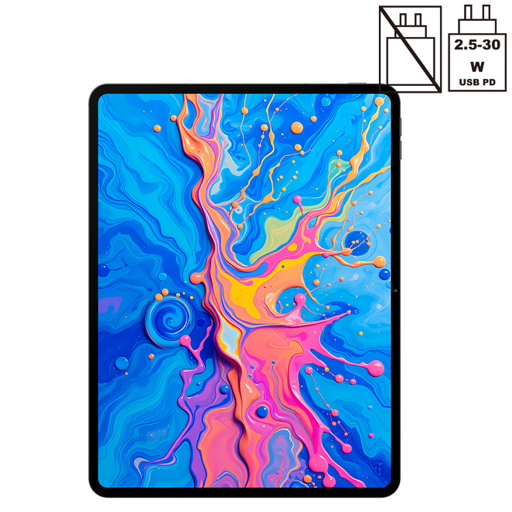
This standalone tablet is relevant if you want to draw on a screen without connecting a computer. Before choosing it for portraits at a standing desk, check your intended Android app, stylus and drawing position.
 No image available
TECLAST ArtPad Pro 12.7-inch 2K tablet, 2025 Edition
A standalone Android tablet to consider if drawing directly on a portable screen fits your workflow.
The product name states a 12.7-inch 2K display, T-Pen drawing support, 4096-level pressure sensitivity and Android 15.
Before buying for portrait work, confirm the included stylus and its drawing functions, compatibility with your intended app, and how you would position the tablet at standing height. Check the screen treatment and colour controls if those matter to your work.
Joybuy
Common questions
Do I need an adjustable stand or arm at a standing desk?
You need a way to position the drawing surface comfortably, but that does not always mean buying an arm. The Health and Safety Executive advises keeping the display in front of you and avoiding raised shoulders and twisting; check whether the supplied angle works at your standing height. Wacom specifies integrated 20° feet and VESA compatibility for the Cintiq 16, while Huion describes an adjustable ST300 stand for the Kamvas 16 (2021).
Will a USB-C drawing display work with any laptop USB-C port?
No: the port must meet the display's particular video and data requirements. For the Kamvas 16 (2021), Huion specifies USB 3.1 Gen 1 data transfer and DisplayPort 1.2 support for the relevant USB-C connection. Check both devices' specifications and the supplied cables before ordering.
Does a work standing-desk drawing setup need a workstation assessment?
For UK employees who use display screen equipment daily as part of normal work for continuous periods of an hour or more, the Health and Safety Executive says the employer must carry out a workstation assessment. It considers the equipment, furniture, work conditions and task, rather than the drawing tablet alone.
How should I dispose of an old drawing tablet in the UK?
Check your local authority's electrical-waste collection options and any take-back service offered by the retailer. GOV.UK describes the UK Waste Electrical and Electronic Equipment rules as intended to encourage recovery, reuse and recycling of electrical equipment rather than disposal through landfill or incineration.


