Who each setup suits

Direct-on-screen portrait painters

If placing facial features, hair edges and shading directly on the displayed image matters most, consider a pen display or a compatible standalone tablet. A connected pen display also needs space for its host device and cables.

Computer-based value painters

If you already have a suitable computer and monitor, a screenless pen tablet provides a separate drawing surface without adding another display. Allow time to get used to moving your hand on the tablet while watching the monitor.

Portable independent illustrators

If you want to paint away from a desk without connecting a drawing display to a computer, consider a standalone tablet and compatible stylus. Check the drawing app and what comes with the exact tablet.

What matters when choosing

Screenless pen tablet

Choose it when: you want to keep using your computer and monitor, with the tablet as a separate drawing surface.

Trade-off: your hand moves on the tablet while your eyes follow the portrait on another screen.

Connected pen display

Choose it when: drawing directly over the displayed portrait is your priority and you have a compatible host device.

Trade-off: the display is not necessarily a self-contained tablet; connections and power depend on the model.

Standalone tablet

Choose it when: you want a screen you can use for portrait painting without attaching a drawing display to a computer.

Trade-off: confirm that the stylus and painting app you intend to use work with the exact tablet; the stylus may be a separate purchase.

Concern What to check Who this matters to
Drawing on the image Compare usable screen size and, where relevant, lamination and anti-glare treatment on the exact pen display or standalone tablet. If I want to place eyes, hair edges and shading directly beneath my pen, a screen is my deciding need. Around 40% of consumers put direct-on-image drawing first.
Using an existing computer For a screenless tablet, check active area, operating-system support and the driver needed for your computer. I have a monitor and would rather use a compact, separate drawing surface, even if it takes practice to coordinate my hand and cursor. Around 30% of consumers prioritise this computer-based setup.
Painting away from a desk Confirm the standalone tablet’s exact stylus compatibility, drawing-app support and included accessories. Being able to take my portrait work elsewhere without a connected computer matters more to me than keeping my current desk setup. Roughly 20% of consumers make independent use their primary concern.
Repeated editing actions Check whether the model’s keys, dial or scroller can be assigned to actions in your drawing software. I repeatedly zoom, change brush size and undo strokes, so accessible controls matter once the basic drawing setup suits me. About 10% of consumers put shortcut-led work first.

Buying pitfalls

  • Expecting a pen display to work on its own

    A connected drawing screen may need a host device with specific video and data support. For a USB-C Kamvas 13 connection, Huion specifies USB 3.1 Gen 1 data transfer and DisplayPort 1.2 support; its Android connection also needs extra power.

    Compare your computer or mobile device, ports and operating system with the connection instructions for the exact display, and check which cables are included.

    A compatible host device, cable, power supply or adapter may be needed for the connection you choose.

  • Assuming a standalone tablet includes its stylus

    A compatible active stylus is central to the intended portrait-painting setup, but it may not be bundled. Apple’s UK iPad Air buying page, for example, presents compatible Apple Pencil options as add-ons.

    Check the exact tablet generation, supported stylus and package contents together, along with the painting app you plan to use.

  • Using pressure levels as a quality score

    A pressure-sensitivity figure does not tell you whether you will prefer drawing on a separate surface or directly on a screen. Tilt behaviour, workspace, controls and software support also depend on the model and app.

    Choose the drawing setup first, then compare relevant pen and workspace specifications between models that suit it.

  • Applying Great Britain guidance to every UK delivery

    GOV.UK’s Department for Business and Trade product-marking guidance addresses Great Britain and notes different arrangements for Northern Ireland.

    For the delivery destination and exact product, check current applicable guidance and ask the seller for the relevant product documentation rather than relying on a listing title.

Brands to consider

Wacom

Wacom’s Intuos pen tablets and Cintiq pen displays represent separate-surface and direct-on-screen routes.

  • The two ranges let you start by choosing whether the drawing surface itself should be a display.
  • Do not assume an Intuos has a screen. Check registration and operating-system conditions for any software offer on the exact model.

Huion

Huion’s Kamvas pen displays and Inspiroy screenless tablets cover both connected drawing setups.

  • Huion documents configurable controls on the Inspiroy 2 M and a 980 g display for the Kamvas 13.
  • Connection and power requirements differ by model and connection method; check the exact host-device requirements.

XPPen

XPPen’s Artist displays and Deco screenless tablets offer direct-on-image and separate-surface options.

  • The Artist 13.3 Pro has documented tilt support and custom controls; the Deco 01 V3 has a specified active area and eight keys.
  • Those specifications apply to the named models. Confirm software and device compatibility for the one you choose.

Apple

The iPad Air is a standalone-screen route for painting without a connected pen display.

  • Apple lists support for Apple Pencil Pro and Apple Pencil (USB-C) on the iPad Air covered by its UK specifications.
  • Apple’s UK buying page presents Pencil options as add-ons; verify compatibility and package contents for the exact iPad generation and listing.

Standalone tablets on Joybuy

These TECLAST ArtPad Pro listings relate to the standalone-screen route for painting digital portraits. Compare the exact stylus bundle and confirm that your preferred drawing app works with the tablet and pen before choosing between listings.

TECLAST ArtPad Pro 12.7-inch 2K tablet, 2025 edition with stylus

TECLAST ArtPad Pro 12.7-inch 2K, 2025 edition with stylus

Consider this standalone tablet if drawing on a portable screen with a listed stylus suits your setup. The product name specifies a 12.7-inch 2K display, T-Pen drawing, 4,096 pressure levels and an included stylus. Confirm that your preferred portrait-painting app works with the tablet and pen; check display colour characteristics and tilt support if you need them.

View on Joybuy

TECLAST ArtPad Pro 12.7-inch 2K tablet, 2025 stylus, case and keyboard listing

TECLAST ArtPad Pro 12.7-inch 2K, 2025 accessory-bundle listing

Consider this standalone-screen listing if a keyboard and case would be useful alongside portrait painting. Its name specifies a 12.7-inch 2K display and Android 15, and names a stylus, case and keyboard; confirm the exact included accessories because the listing descriptions differ. Check compatibility with your painting app before ordering.

View on Joybuy
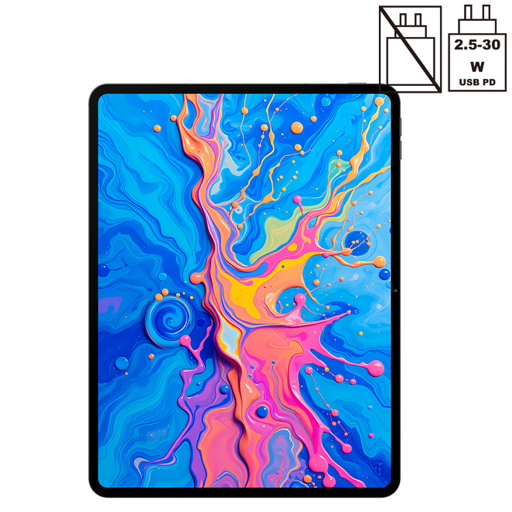
TECLAST ArtPad Pro 12.7-inch 2K tablet, 2025 edition, SKU 10371474

TECLAST ArtPad Pro 12.7-inch 2K, 2025 edition, SKU 10371474

This standalone tablet is another listing to compare for drawing directly on a portable screen. Its name specifies T-Pen drawing, 4,096 pressure levels, a 12.7-inch 2K display and Android 15. Check the exact stylus contents and whether your intended drawing app supports this tablet and pen.

View on Joybuy
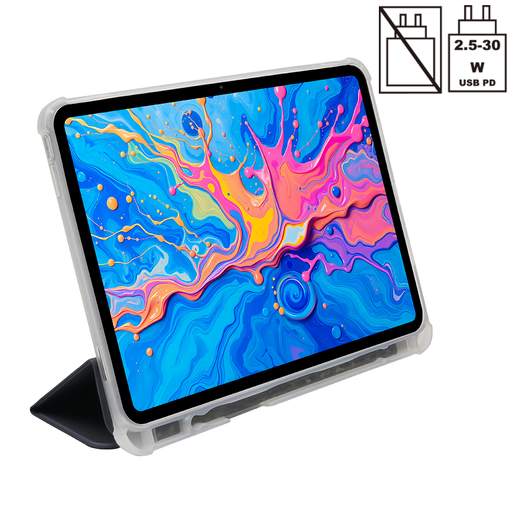
TECLAST ArtPad Pro 12.7-inch 2K tablet, T-Pen compatible with case included

TECLAST ArtPad Pro 12.7-inch 2K, T-Pen compatible, case included

Consider this standalone listing if you can confirm the pen needed for your portrait workflow. Its name specifies a 12.7-inch 2K display, 4,096 pressure levels, T-Pen compatibility and an included case. Confirm the compatible T-Pen model, whether a stylus comes with this listing and whether your drawing app supports it.

View on Joybuy

Questions about portrait-painting tablets

Is a pen display the same as a standalone drawing tablet?

No: a pen display generally needs a host device, while a standalone tablet runs independently. Huion documents host connections for its Kamvas 13; Apple lists the iPad Air as a tablet supporting specified Apple Pencil models.

Will a USB-C pen display work with my laptop or phone?

The connector shape alone cannot establish compatibility. For its Kamvas 13 USB-C connection, Huion specifies USB 3.1 Gen 1 data transfer and DisplayPort 1.2 support, with extra power needed for Android use; compare your device and cables with the exact display’s requirements.

Are more pressure levels enough reason to choose one tablet?

No. Pressure levels are model specifications, not a universal measure of portrait quality. Decide whether you want a separate drawing surface, a connected screen or a standalone tablet, then check the active area, pen behaviour, software and controls relevant to your work.

Does an iPad Air come with an Apple Pencil?

Do not assume a Pencil is included. Apple’s UK iPad Air buying page presents Apple Pencil Pro and Apple Pencil (USB-C) as add-ons; confirm both the bundle contents and Pencil compatibility for the exact iPad listing.

What product-marking information should I check for UK delivery?

Check the actual product and seller documentation for your delivery destination. GOV.UK’s Department for Business and Trade guidance dated 21 August 2026 addresses UKCA and CE marking for Great Britain—England, Scotland and Wales—and notes that Northern Ireland has different arrangements; a marketplace title does not establish an individual product’s compliance.