Direct-on-screen comic inkers
If you want the pen tip and visible line together on the drawing surface, a pen display is the route to examine. Allow desk space for the display and check how you will position it for longer drawing sessions.


Choose a pen display if placing ink lines directly beneath the pen matters more to you than keeping a separate, flexible drawing surface. Choose a screenless pen tablet if you are comfortable looking at a monitor while drawing and value a keyboard-led setup. With either route, check your drawing app, pen behaviour and working position: pressure specifications alone will not settle how a line feels to draw.
If you want the pen tip and visible line together on the drawing surface, a pen display is the route to examine. Allow desk space for the display and check how you will position it for longer drawing sessions.
If you already work beside a monitor and keyboard, a screenless tablet keeps the drawing surface separate from the image. Consider whether its programmable controls fit the tools you use most often.
If long, clean strokes are your main difficulty, assess pen feel and your drawing app’s settings together. Krita Documentation describes both arm movement for longer strokes and software smoothing; neither turns a pressure-level figure into a measure of line quality.
Decide whether you want to draw on the image or look at a separate monitor first. Then check the pen and software behaviour that matters for your comic-inking brush.
Choose it when: You want to place lines directly on the displayed page and can give the screen a regular place on your desk.
Allow for: A screen connection to the host device and a working angle that may call for a separate stand.
Choose it when: A separate monitor and keyboard-led controls suit the way you ink.
Allow for: Learning to move the pen on one surface while watching the line on another.
| Concern | What to check | Who this matters to |
|---|---|---|
| Line placement and page workspace | Check whether you draw on the screen or a separate surface. For a pen display, compare its active area, resolution, surface and working angle. | I want to see a comic line appear beneath my pen while moving between the whole page and small details. Around 45% of consumers put that direct workspace need first. |
| Line control and comfort | Check that your brush uses the pen’s pressure or tilt input, then try the pressure curve and stabilisation settings in your app. | When I draw long contours, controllable line weight and a comfortable movement matter more to me than the screen arrangement. Roughly 33% of consumers make line control their primary concern. |
| Shortcuts and device compatibility | Check driver support, ports and any display-output requirements for your exact device; assess whether the available controls suit your usual tools. | I move between a computer and a keyboard-heavy inking workflow, so I need the tablet to connect properly and keep useful controls close. About 22% of consumers prioritise that setup. |
Krita Documentation says smoothing can help with difficult or shaky lines, but stabiliser mode draws the line behind the cursor. That delay may be distracting when you work on small details.
Try your usual inking brush at several smoothing settings. Adjust its pressure curve and your working position before deciding whether different hardware would address the problem.
XPPen specifies USB 3.1 DP 1.2 as an Android requirement for Artist 16 (2nd Generation). A matching connector shape alone does not establish that the host device can provide the required display output.
Check the exact tablet model against your device’s operating-system version, ports and display-output specification before ordering.
Wacom’s UK Cintiq 16 listing distinguishes its integrated feet from an optional adjustable stand. The included positioning may not give you the angle you want for sustained drawing.
Check whether the supplied feet suit your desk and posture, or whether you would need a compatible stand or arm.
An optional stand or mounting hardware adds another item to your setup.
Wacom specifies 8,192 pressure levels for Intuos Pro, while Huion specifies 16,384 for Kamvas 16 (Gen 3). Those different figures do not establish which pen will feel more controllable with your hand, brush and app.
Check the exact pen and model, then assess grip, nib feel and pressure-curve behaviour where you can. Keep the pressure count in context rather than using it as the deciding comparison.
These product lines illustrate different ways to build a comic-inking setup; their specifications are not an independent comparison of drawing performance.
Consider Cintiq 16 for drawing on a display, or Intuos Pro for pen input alongside a separate monitor.
Kamvas 16 (Gen 3) is a display option, while Inspiroy 2 L offers a screenless surface with grouped shortcut controls.
Artist 16 (2nd Generation) is a pen display to consider if its screen format and host-device requirements suit your desk.
These TECLAST ArtPad Pro options offer a built-in screen rather than the separate computer-and-monitor arrangement of the pen tablets discussed above. Before choosing either for comic inking, confirm that your intended Android drawing app works with its stylus and uses the pen input you need.
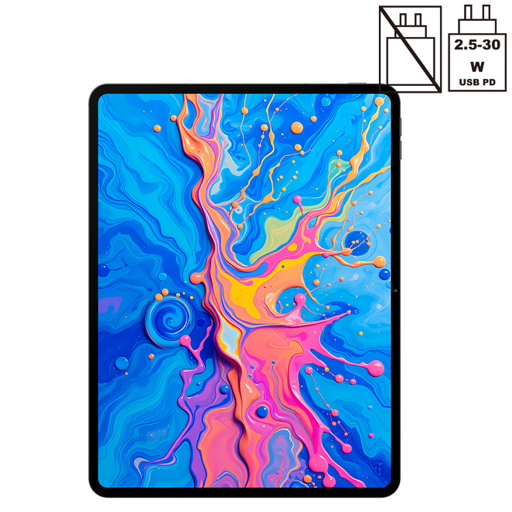 Image unavailable
Consider this direct-screen tablet if you want to draw on a built-in display and can confirm that your comic-inking app supports its pen input.
The product name specifies Android 15, a 12.7-inch 2K display and support for 4,096-level pressure-sensitive T-Pen drawing. Check the active drawing area and whether the T-Pen is included with this particular offer.
 Image unavailable
Consider this bundle if you want a built-in drawing screen alongside a keyboard and case, provided your chosen inking app supports the stylus input you require.
The product name specifies Android 15, a 12.7-inch 2K display and a stylus, case and keyboard. Check the active drawing area and the exact stylus behaviour in your app before relying on it for finished lines.
No: a screenless pen tablet is also an option if you are comfortable drawing on one surface while watching a separate monitor. Choose a pen display when seeing the line beneath your pen is more important to your workflow; the form factor alone does not establish better finished lines.
Not automatically. Your drawing app and brush must use pressure input, and the pen’s feel and pressure-curve settings still matter. Krita Documentation also advises using more of your arm for longer strokes, rather than relying on a hardware figure to control them.
Start with little smoothing when you need an immediate response for fine details, then try more for difficult long curves. Krita Documentation explains that its stabiliser draws the line behind the cursor, so weigh a smoother stroke against that visible delay.
Check the exact model against your host device’s operating system, ports and required drivers, as well as the drawing app you plan to use. A display tablet may have a further video-output requirement: XPPen, for example, specifies USB 3.1 DP 1.2 for Android use with Artist 16 (2nd Generation).