Direct-on-screen motif illustrators
If you sketch, trace or refine motifs by hand, a pen display lets you work on the image itself. Check the connection requirements and available desk space as well as the drawing surface.


Choose a pen display if drawing directly over motifs and placing details on screen matter most; choose a screenless pen tablet if you prefer your existing monitor and a compact, shortcut-friendly desk setup. For either route, check computer and software compatibility, connections and drawing space. A display’s stated colour gamut cannot establish how a motif will look on printed fabric, so agree a proofing process with your production partner.
If you sketch, trace or refine motifs by hand, a pen display lets you work on the image itself. Check the connection requirements and available desk space as well as the drawing surface.
If you build repeats in desktop software and use shortcuts frequently, a screenless tablet keeps your existing monitor in the workflow. Wacom lists controls on Intuos Pro, while the Xencelabs Medium Bundle includes a separate Quick Keys controller.
If a motif’s colours need to translate to fabric, use display specifications to assess the screen, not to predict the print. Ask your printer or manufacturer about file requirements, colour profiles and physical proofs.
Choose it when: You want the pen tip on the artwork while sketching or placing motif details.
Allow for: Screen space, a suitable working position and the exact model’s power and computer connections.
Choose it when: You prefer drawing while looking at your existing monitor and using desktop shortcuts.
Allow for: Coordinating pen movement with a separate screen rather than drawing on the image.
| Concern | What to check | Who this matters to |
|---|---|---|
| Drawing directly on motifs | Compare the usable drawing space and surface of the exact pen-display model; check desk depth and required connections. | If I trace outlines and place small details by hand, I want the pen tip on the image rather than on a separate tablet. Around 40% of consumers put direct drawing and placement first. |
| Repeat-pattern workflow | Check driver support for your computer and design software, plus the shortcut controls available on the exact tablet. | When I move between drawing, editing and arranging repeats, I want controls that fit my desktop workflow. Shortcut-led working is the primary concern for around 30% of consumers. |
| Colour and production | Read display resolution and gamut claims in their stated colour spaces; ask your production partner about profiles and proofs. | Before sending a palette to print, I need a way to check how the design translates to fabric. Around 30% of consumers place colour review and production preparation first. |
Manufacturers list different pen specifications, but those figures do not settle whether a tablet’s size, controls and drawing arrangement suit your motif work. XPPen notes that some of its stated performance figures come from laboratory simulations and may vary by operating environment.
Compare the complete drawing setup, including the active area or screen, controls and supported software, rather than treating one pen figure as a result you will necessarily feel.
Huion and Wacom state display-gamut figures using different colour spaces. Neither figure establishes the colour your chosen printer or manufacturer will reproduce on fabric.
Ask the production partner for its file and colour-profile requirements, then check a physical proof before a larger run where colour matching matters.
A pen display may require separate power and display or data connections. Stands and mounting arrangements also vary by model.
Compare your computer’s ports with the exact model’s connection instructions, and check what comes in the box before ordering.
Wacom offers Cintiq pen displays and screenless Intuos Pro tablets, giving desktop motif designers two different drawing arrangements to compare.
Huion’s Kamvas Pro 16 (2.5K) is a pen-display option for drawing directly on a screen.
XPPen’s Artist Pro 16 (Gen 2) is another screen-based option for placing and refining motif details.
The Xencelabs Pen Tablet Medium Bundle is a screenless option for designers working with a separate monitor.
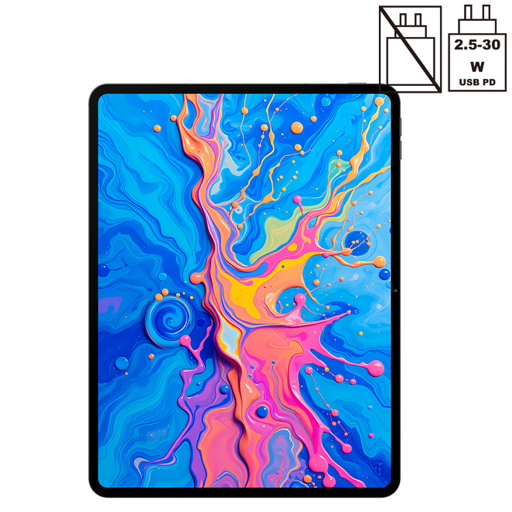
This standalone Android tablet offers an on-screen sketching option for motifs. It is a different setup from a computer-connected pen display or a screenless pen tablet: check whether your intended design and repeat-pattern apps support the device and stylus before choosing it for your workflow.
 No image available
The integrated screen and included T-Pen offer a way to sketch motifs directly on the tablet.
The listing specifies a 12.7-inch 2K display, 4,096-level pen-pressure sensitivity and Android 15.
Check support for your chosen motif-design and repeat-pattern apps, including stylus features. For fabric colour decisions, follow your printer’s profile and proofing requirements rather than relying on the tablet screen alone.
No. A screenless pen tablet is an option if you are comfortable drawing while looking at a separate monitor; a pen display suits you when working directly on the image matters more. Check that either model supports your computer and software.
Illustrator provides pattern and swatch tools, according to Adobe. Before buying a tablet for that workflow, check the exact model’s current driver and operating-system support for your computer; a standalone Android tablet also needs the specific apps you intend to use.
Check the exact model’s video, data and power requirements against your computer’s ports. A USB-C-shaped port alone does not establish that it supplies the functions needed by a particular display; Huion, for example, specifies power and a full-featured USB-C display connection for Kamvas Pro 16 (2.5K).
For a standard UK distance-sales contract, the Consumer Contracts Regulations 2013 normally end the change-of-mind cancellation period 14 days after you, or a person you nominate other than the carrier, receive the goods. Check whether an exception applies and follow the seller’s cancellation procedure; change-of-mind cancellation is distinct from remedies for faulty or misdescribed goods.