For sketching floor plans at a shared desk, start with a compact screenless pen tablet if you already have a suitable computer and can draw while looking at its screen. A computer-connected pen display lets you draw directly on the visible plan but takes more room; consider a standalone Android tablet when you need to work without a connected computer, after checking the exact app, stylus and file hand-off workflow.
Who each setup suits
Shared-desk computer users
If you already use a laptop or desktop monitor, a compact screenless pen tablet gives you a separate drawing surface that can be put away after a session. Check how it connects before choosing a place for it beside your keyboard.
Direct-on-plan sketchers
If you need to put the pen on the displayed plan itself, consider a computer-connected pen display. Allow room for the display and decide where it will go when someone else uses the desk.
Mobile floor-plan app users
If you need to sketch without a connected computer, a standalone tablet is a possible route. Confirm that your chosen Android app supports the pen input, drawing tools and export format your work requires.
What matters when choosing
Compact pen tablet
Choose it when: You have a suitable computer screen and need to clear the shared desk after drawing.
Trade-off: Your hand moves on the tablet while you watch the plan on a separate screen.
Computer-connected pen display
Choose it when: Placing the pen directly on the visible plan matters enough to reserve space for a display.
Trade-off: You still need a suitable computer connection, and the display needs a place on or away from the shared desk.
Standalone Android tablet
Choose it when: You need to sketch without a connected computer and have a suitable Android floor-plan app.
Trade-off: App tools, stylus behaviour and file exports need checking for the exact device and workflow.
| Concern |
What to check |
Who this matters to |
| Desk space and handover |
Compare full device dimensions with the clear desk area, then check the connection and where accessories will be stored. |
I need to move my drawing setup aside so the next person has room for their work. Around 45% of consumers put a clear desk and quick handover first. |
| Plan navigation and annotation |
Check whether the chosen app supports the line and snap tools you need, and whether any tablet keys or scroller can be mapped to it. |
When I repeatedly zoom, change tools and mark up plans, I want controls that fit those tasks. Roughly 33% of consumers prioritise that workflow. |
| Direct drawing or mobility |
For a pen display, check computer connections and positioning; for an Android tablet, check app, stylus and export support. |
I want to draw on the visible plan or work without a connected computer, even if that changes how I use the desk or share files. About 22% of consumers make one of those needs their priority. |
Buying pitfalls
-
Choosing a pen display for direct drawing without planning its place
Drawing on the visible plan may appeal, but the display also needs space during use and somewhere to go between shared-desk sessions. Wacom lists a 345 × 215 mm active area for the Cintiq 16; its full desk requirements need checking separately.
Measure the available desk surface and decide whether the display can remain in place or be stored safely.
-
Using pressure sensitivity as a measure of floor-plan accuracy
Pressure levels describe pen input, not whether an app provides the line, measurement or snapping tools needed for your plans. Surveyorpad describes snapping settings for its own straight-line tool, not for other apps.
Choose the software workflow first, then check its drawing tools, stylus support and export formats before selecting hardware.
-
Assuming every small-tablet variant has the same features
XPPen specifies tilt support for Deco Fun S and L, but not XS. Wacom's Wacom One configurator also says the main device does not include a USB-C cable.
Check the exact variant, required connection and box contents rather than relying on a range-wide feature list.
Depending on the Wacom One configuration and the connection you intend to use, you may need to obtain a cable separately.
-
Leaving the workstation setup unchanged between users
A portable tablet does not remove the need to position the screen and input devices for the person using them. The Health and Safety Executive advises a basic risk assessment for workers who change desks regularly.
Check the monitor, chair, lighting and tablet position when the desk changes hands, and avoid staying in one drawing posture for long periods.
Brands to consider
Wacom
Wacom offers both compact computer-connected pen tablets and pen displays relevant to this choice.
- Wacom lists the Wacom One Small pen tablet at 188 × 141 × 8 mm; its Wacom One S listing also describes Bluetooth connectivity.
- The Cintiq 16 provides a larger direct-drawing area, so plan where it will sit. Check the chosen Wacom One configuration for its required cable and box contents.
Huion
Huion's Inspiroy 2 S is a small screenless pen tablet with physical controls.
- Huion lists a 6.3 × 3.9 inch active area, a battery-free pen, six press keys and a scroller.
- Check whether its driver lets you assign those controls to useful functions in your floor-plan software.
XPPen
XPPen's Deco Fun range offers screenless pen tablets in XS, S and L sizes.
- XPPen specifies a 6.3 × 4 inch active area and battery-free stylus for Deco Fun S.
- XPPen states that 60° tilt applies to the S and L, not the XS; check the exact variant and your software needs.
TECLAST
The ArtPad Pro is relevant to the standalone Android-tablet route rather than the computer-connected tablet routes.
- A Joybuy listing describes a 12.7-inch 2K display, Android 15 and T-Pen support.
- Confirm that the exact floor-plan app provides the drawing and export workflow you need on the device.
Standalone tablets on Joybuy
These Android tablets relate to the standalone route for sketching without a connected computer. Before choosing either one for floor plans, check your app's pen input, drawing tools and file exports, as well as how the device will fit on the shared desk.
 No image available
TECLAST ArtPad Pro 12.7-inch tablet, 2025 edition
Consider this standalone Android option if you want to sketch without a connected computer and your chosen floor-plan app supports the required workflow.
The product name specifies a 12.7-inch 2K display, Android 15, 4,096-level T-Pen pressure support and an included stylus. Check app compatibility, drawing tools and exports, along with the tablet's full dimensions for the shared desk.
View on Joybuy
 No image available
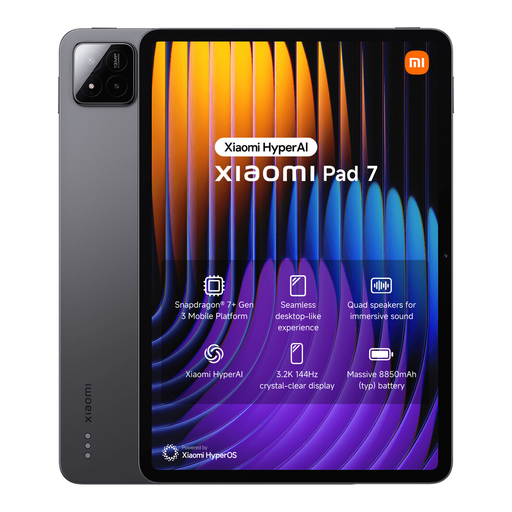
Xiaomi Pad 7 Grey, 8GB/128GB with Focus Pen
Consider this tablet for the standalone route only after confirming that its Focus Pen works as needed in your floor-plan app.
The product name specifies 8GB RAM, 128GB storage and an included Focus Pen. Check the app's drawing and export tools and the tablet's full dimensions before planning to use it at a shared desk.
View on Joybuy
Questions about floor-plan sketching
Do I need a pen display to sketch floor plans?
No: a compact screenless pen tablet is an option if you have a suitable computer screen and need to clear the shared desk. Choose a pen display when drawing directly on the visible plan matters enough to accommodate and connect a larger device.
Will a drawing tablet make a floor plan accurate to scale?
Not by itself: check your measurement method and the floor-plan app's line, scale and snapping tools. Surveyorpad describes grid, endpoint and 90-degree snapping for its own straight-line tool; equivalent features in another app need checking separately.
Do pens for small drawing tablets need charging?
Not always. Huion lists a battery-free pen for the Inspiroy 2 S, and XPPen describes a battery-free stylus for the Deco Fun range. Check the pen supplied with the exact model you intend to buy.
What should change when several people use the same drawing desk?
Check the screen, chair, input-device position and lighting for each user rather than assuming one arrangement suits everyone. The Health and Safety Executive advises a basic risk assessment for workers who regularly change desks.


