Who each setup suits

Shared-desk layout sketchers

If your plans are already open on an office computer, a screenless pen tablet adds pen input without taking up a second display position. Wacom describes its Intuos as a computer-based pen tablet; check that your software and operating system are compatible.

Direct-on-plan annotators

If you prefer to mark planting zones, paths and freehand lines beneath the pen tip, a connected pen display offers that drawing arrangement. Allow space for the display and its connections; Wacom, Huion and XPPen describe 13–14-inch models in this category.

Meeting-to-site visual planners

If sketches need to move between discussions and other locations, a standalone screen-and-stylus setup avoids relying on a work computer for drawing. For an iPad Air, check that your garden-layout app, file workflow and chosen Apple Pencil match the exact model.

What matters when choosing

Screenless pen tablet

Choose it when: Your plans are open on an existing computer screen and you can draw on a separate input surface.

Trade-off: Your hand moves on the tablet while you watch the monitor; Wacom also says Intuos software compatibility depends on the operating system.

Connected pen display

Choose it when: Drawing directly over the visible garden plan matters more than minimising equipment on the desk.

Trade-off: It needs room and a suitable host connection; Huion describes its earlier Kamvas 13 as a drawing monitor that requires a connected device.

Standalone tablet and stylus

Choose it when: You need to carry a screen for sketching between shared desks or meetings without connecting it to an office computer.

Trade-off: The required app and files must work on the tablet’s operating system, and stylus compatibility depends on the exact device and bundle.

Concern What to check Who this matters to
Shared-desk space and portability Check the space needed to use and store the device, and which connections you would have to set up each time. If I change desks or take plans into meetings, I want a setup I can carry and put away easily. Around 42% of consumers put a portable, uncluttered setup first.
Drawing directly on the plan Decide whether you need the pen on the visible plan; for a pen display, check screen size and a workable viewing angle. Marking paths and planting areas beneath the pen tip matters more to me than keeping equipment to a minimum. Around 33% of consumers prioritise direct-on-plan drawing.
Workflow and work comfort Confirm the app, file format, operating system, ports and any driver permissions. For regular work use, discuss the workstation arrangement with your employer. I need my plans to open in the right software and a setup I can use comfortably through the working day. Around 25% of consumers place workflow compatibility and work comfort first.

Mistakes to avoid

  • Assuming a drawing display works on its own

    Huion describes the Kamvas 13 models in its 2021 guidance as drawing monitors that need a computer, laptop or supported Android device. A screen does not, by itself, make a pen display a standalone tablet.

    Check the exact model’s host, port, cable and driver requirements against your office equipment and IT policy. Choose a standalone route only if its apps and files suit the work.

    A connected setup also means arranging and packing away its host device and cables at a shared desk.

  • Choosing a stylus before checking the tablet

    Apple lists Apple Pencil Pro and Apple Pencil (USB-C) support for current iPad Air models, but Pencil compatibility varies by iPad model.

    Identify the exact tablet generation and check its manufacturer’s stylus compatibility information before choosing a Pencil or another pen.

  • Using pressure levels as a shortcut for plan accuracy

    Pressure and tilt are model features, not a measure of how accurately you will lay out a garden plan. Their usefulness also depends on how you draw and whether your chosen software uses them.

    Settle the screenless-versus-on-screen workflow and confirm app support before comparing pen specifications.

  • Adding a display without reviewing the workstation

    The Health and Safety Executive says UK display screen equipment rules apply to workers who use it daily for continuous periods of an hour or more. An added display can change the space, screen position and lighting you need to consider.

    Agree a workable shared-desk arrangement with your employer, including screen position, chair and desk setup, and control of reflections and glare.

Relevant brands to consider

Wacom

Wacom offers the screenless Intuos pen-tablet line and the Wacom One 14 connected pen display.

  • The Wacom One 14 is specified with a 14-inch Full HD, bonded anti-glare display and USB-C connectivity for drawing on-screen.
  • For Intuos, Wacom says software compatibility depends on the operating system. Check your office computer and software; for Wacom One 14, check the host connection too.

Huion

Huion’s Kamvas line includes connected pen displays for sketching directly on a screen.

  • Huion specifies a 13.3-inch, 1920 × 1080 screen and an 865 g weight for the Kamvas 13 (Gen 3).
  • Huion describes earlier Kamvas 13 models as drawing monitors requiring a host device. Check the connection requirements for the exact generation you are considering.

XPPen

The Artist 13.3 Pro is a connected pen display with controls beside its drawing screen.

  • XPPen specifies a laminated 13.3-inch Full HD display, eight customisable shortcut keys and a 3-in-1 cable for this model.
  • Those features do not establish compatibility with a particular garden-layout application or office computer; check both before choosing it.

Apple

An iPad Air with a compatible Apple Pencil is a standalone route for carrying sketches between work areas.

  • Apple lists Apple Pencil Pro and Apple Pencil (USB-C) support for current iPad Air models.
  • Check the exact iPad and Pencil pairing, as well as whether your garden-layout apps, files and collaboration workflow work on iPadOS.

Joybuy product choices

These Android tablets offer a self-contained screen for sketching with a suitable stylus when moving between shared desks. Check your garden-layout apps and file workflow, and confirm what comes with each bundle; they are not connected pen displays or iPads.

TECLAST ArtPad Pro 2025 Edition tablet with included stylus

TECLAST ArtPad Pro 12.7-inch 2K, 2025 Edition with stylus

This Android 15 tablet is a self-contained option if your sketching app and plan files work on Android.

The listed configuration has a 12.7-inch 2K display, 4096-level pressure sensitivity and an included stylus.

Check its dimensions and how you would store or carry it between shared desks.

View on Joybuy
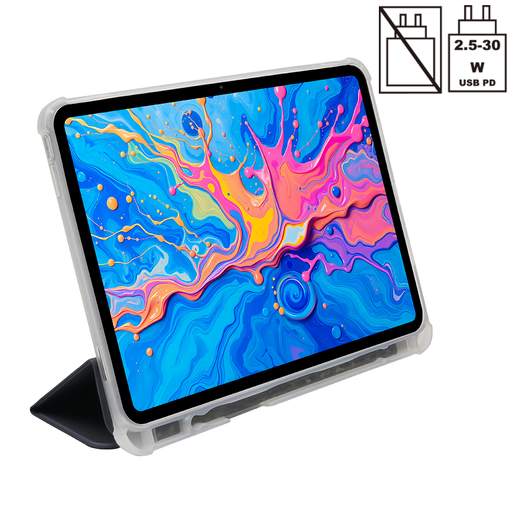
TECLAST ArtPad Pro 12.7-inch 2K tablet with case

TECLAST ArtPad Pro 12.7-inch 2K with case

This standalone tablet is worth considering for moving sketches between work areas if your apps and files work on its Android setup.

The listed configuration has a 12.7-inch 2K display, 4096-level pressure sensitivity, T-Pen compatibility and an included case.

Check whether a compatible T-Pen comes with this bundle, and whether the tablet’s dimensions suit your desk and storage space.

View on Joybuy

Common questions

Does a drawing tablet with a screen need a computer?

A connected pen display does: Huion describes its Kamvas 12, 13 and 16 models in 2021 guidance as drawing monitors requiring a computer, laptop or supported Android device. Check the exact model’s host, ports, cables and driver requirements rather than assuming that its built-in screen makes it standalone.

Can I sketch garden layouts on an iPad instead?

An iPad is an option if your drawing app, plan files and sharing process work on iPadOS. Apple lists Apple Pencil Pro and Apple Pencil (USB-C) support for current iPad Air models; check the exact iPad generation and Pencil pairing before buying.

Do UK workplace display-screen rules matter for regular sketching?

Yes, when a worker uses display screen equipment daily for continuous periods of an hour or more, the Health and Safety Executive says the UK display screen equipment rules apply. HSE guidance calls for employers to assess workstations and reduce risks; discuss how an added tablet or display fits your working arrangement.

How should I arrange a drawing tablet at a shared desk?

Position the tablet and main screen so you can work without awkward reach or persistent reflections, and adjust the chair, desk space and lighting for the desk you are using. The Health and Safety Executive’s display-screen guidance identifies arranging desk space and avoiding screen glare as workstation considerations.