Who each setup suits

Lecturers who want to write on the slide they can see

A pen display puts the writing surface on a screen. If you mark diagrams or equations while presenting, start by checking where that screen will sit, whether its stand is secure and how its surface handles reflections.

Presenters who move between standing desks

A setup that is quick to reconnect matters when teaching spaces change. Check the host computer’s ports, the required cables, stand inclusion and access to the controls you use during a presentation.

Annotators who already use a main monitor

A screenless pen tablet provides an input surface without adding a display. It is worth considering if the existing screen is positioned comfortably and you are willing to practise writing while looking away from your hand.

What matters when choosing

Pen display

Choose it when: You want to write on the screen showing your slides.

Accept: It needs desk space, a stable position and a suitable connection to a host device.

Screenless pen tablet

Choose it when: Your main monitor is already positioned well and you want a separate pen input surface.

Accept: Your hand moves on the tablet while your eyes follow the slide on another screen.

Standalone stylus tablet

Consider it when: You want to work on a tablet rather than add an accessory to your computer.

Check: Your exact lecture files, annotation app and external-display arrangement must suit the tablet workflow.

Concern What to check when buying Who this matters to
Writing directly on slides Check the pen-input route and rehearse inking with your PowerPoint version and presenter-display arrangement. When marking equations during a lecture, I want to see the pen meet the slide instead of watching a separate screen; around 36% of consumers put direct inking first.
Standing-desk position Confirm stand inclusion, a usable screen angle and placement clear of the keyboard and main display. If I write while standing, I need the surface to stay put without forcing an awkward position; roughly 29% of consumers prioritise the workstation arrangement.
Connections between rooms Check the laptop’s video-capable ports and the required cable and power arrangement; for Huion’s cited one-cable connection, check USB 3.1 Gen 1 data and DisplayPort 1.2 Alt Mode. Moving between teaching spaces, I need a setup I can reconnect with the equipment I have; about 21% of consumers make dependable setup their main concern.
Monitor-first controls Look for controls you can configure for the commands you use, and practise pen-to-monitor mapping before teaching. With my slides already visible on a well-positioned monitor, I would rather keep a compact input surface within reach; around 14% of consumers put this control-led workflow first.

Checks that are easy to miss

  • Assuming any USB-C port supports a one-cable pen display

    Huion specifies USB 3.1 Gen 1 data transfer and DisplayPort 1.2 Alt Mode for its cited USB-C display connection. A port that only charges devices will not meet those requirements.

    Check the exact host model’s USB-C video specification, then confirm the required cable and power arrangement for the display you choose.

    A compatible cable, adapter or separate power arrangement may add to what you need to carry and connect.

  • Assuming the stand comes with every pen display

    Huion lists the ST300 stand as optional for Kamvas 13, whereas XPPen says a portable stand is included with Artist 13.3 Pro. At a standing desk, the available angle and space also affect where you can write.

    Confirm the contents of the exact bundle and plan where the display, keyboard and main monitor will sit.

    An optional stand is another item to obtain and transport if your desk has no suitable support.

  • Choosing by pressure-level figures alone

    A pressure specification does not establish whether the pen, presentation software and display arrangement will work together for a lecture.

    Decide whether direct or indirect writing suits you, check connections and controls, and rehearse with the presentation file you intend to use.

  • Treating a portable tablet as a complete workstation setup

    Standing to annotate still leaves you with a screen to position and a work routine to manage. The UK Health and Safety Executive links poorly designed display-screen workstations and incorrect use with discomfort and eye strain.

    For regular work use, adjust the desk and display positions, take breaks from screen work and use your employer’s workstation-assessment process where applicable.

Relevant brands for reference

Wacom

The cited Wacom models illustrate two different routes: Wacom One 13 touch is a 13.3-inch pen display, while Intuos Pro Medium is a screenless pen tablet.

  • Wacom lists 10-finger touch and Windows, Mac, Android and ChromeOS compatibility for Wacom One 13 touch. It lists programmable controls and wireless connectivity for Intuos Pro Medium.
  • Intuos Pro Medium requires you to write on the tablet while looking at a separate display; check the exact device and software arrangement for either model.

Huion

Kamvas 13 is a compact pen-display reference for direct annotation at a standing desk.

  • Huion specifies a 13.3-inch laminated display, 980 g weight and eight programmable keys for Kamvas 13.
  • Huion lists its ST300 stand as optional. Its cited USB-C display connection requires a host and cable supporting USB 3.1 Gen 1 data and DisplayPort 1.2 Alt Mode.

XPPen

The Artist 13.3 Pro models are pen-display references for buyers considering a stand and controls beside the writing surface.

  • XPPen says Artist 13.3 Pro includes a portable stand and has a dial and eight customisable shortcut keys. Its Artist 13.3 Pro V2 page describes a foldable stand and full-featured USB-C cable.
  • Confirm the exact model and bundle: features described for Artist 13.3 Pro and Artist 13.3 Pro V2 should not be assumed to be interchangeable.

Standalone tablets on Joybuy

These tablets represent the standalone, direct-screen option for annotating lecture material. Before choosing one for a standing desk, check that its pen works in your intended app, your lecture files behave as needed and you have a secure way to position the tablet.

TECLAST ArtPad Pro tablet, 2025 Edition

TECLAST ArtPad Pro (2025 Edition), 20GB RAM, 256GB, with stylus, case and keyboard

Consider this Android tablet if you want to write on a self-contained screen rather than connect a pen display to a laptop. Its listed configuration includes a 12.7-inch 2K display, Android 15 and a stylus. Check the stylus in your chosen annotation app, confirm the lecture-file workflow and plan how to support the tablet securely while standing.

View on Joybuy
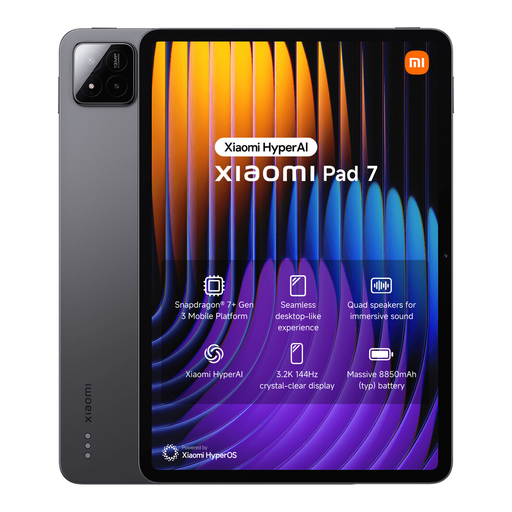
Xiaomi Pad 7 Gray tablet with Focus Pen

Xiaomi Pad 7 Gray, 8GB RAM, 128GB, with Focus Pen

Consider this standalone tablet if you want pen input directly on its screen. The listed variant includes a Focus Pen; check that the pen works in your intended presentation or annotation app and that your files and display arrangement suit the tablet. Confirm how you will position it securely at the standing desk.

View on Joybuy

Frequently asked questions

Can I annotate PowerPoint slides while presenting?

Yes, supported desktop versions of PowerPoint let you draw onscreen during a slide show. Microsoft Support also describes pen controls in Presenter View; rehearse with your exact version, tablet and projected-display arrangement before teaching.

Will a USB-C pen display work with one cable?

Only if the host, cable and chosen display support the required connection. For Huion’s cited USB-C display route, Huion specifies USB 3.1 Gen 1 data transfer and DisplayPort 1.2 Alt Mode; the USB-C connector shape alone does not establish compatibility.

Should I choose a screenless tablet instead of a pen display?

A screenless pen tablet can suit you if your main display is already well positioned and you are comfortable writing on one surface while looking at another. A pen display is the more direct input route when seeing the pen tip meet the slide is your priority.

Does a pen display need a stand at a standing desk?

Check how you will keep the display stable and at a usable angle, whether with a stand or another suitable desk arrangement. Bundle contents differ: Huion lists the ST300 stand as optional for Kamvas 13, while XPPen says a portable stand is included with Artist 13.3 Pro.

What UK workstation guidance applies when I use a tablet for teaching work?

The UK Health and Safety Executive says the display screen equipment rules apply to workers who use such equipment daily for continuous periods of an hour or more. Where they apply, the employer’s workstation-assessment process is relevant to the whole setup, including screen position and work routine; it is not a certification for a particular tablet.