Direct-on-screen portrait painters
If placing the pen on facial features and shading directly on an image matters most, a display-based setup is worth considering. Allow room for the display and its connections.


Choose a screenless pen tablet if you already have a monitor, need to preserve desk space and are comfortable drawing on one surface while watching another. Choose a connected pen display if placing strokes directly on the portrait matters more, provided its connections and physical footprint suit your computer and workspace. Pressure-level figures alone cannot tell you how a brush will behave in your painting software.
If placing the pen on facial features and shading directly on an image matters most, a display-based setup is worth considering. Allow room for the display and its connections.
If you already use a monitor and need room for a keyboard and reference material, a compact screenless pen tablet can sit alongside your existing equipment.
If your choice depends on a particular computer and painting app, check the model’s operating-system version, ports and driver requirements before deciding on screen size.
Choose it when: Your existing monitor works for painting and keeping the desk compact matters more than drawing directly on the image.
Trade-off: You draw on the tablet while looking at the monitor, which takes hand–eye coordination.
Choose it when: You want to place portrait strokes directly on the displayed image and have room for another screen.
Trade-off: It needs a suitable position on the desk and compatible video, data and power connections for the exact model.
| Concern | What to check | Who this matters to |
|---|---|---|
| Direct visual control | Decide whether you need to draw on the image itself; for a pen display, check its screen size and surface details for the exact model. | If I make frequent adjustments to facial details, I may prefer to see each stroke beneath the pen. Around 27% of consumers put that direct visual control first. |
| Desk and workstation fit | Measure usable depth and width with your keyboard and monitor in place; account for a display stand if needed. | When my desk also holds a keyboard and reference screen, I need drawing equipment that fits without crowding my working position. For around 27% of consumers, workstation fit is the primary concern. |
| Computer compatibility | Match the model’s operating-system and driver requirements to your computer; check video, data and power connections for a pen display. | I need the device to work with my computer and painting app before its other features matter. That compatibility need comes first for around 20% of consumers. |
| Pen and shortcut workflow | Check pressure and tilt support in your intended app, along with the exact model’s pen and programmable controls. | If I repeatedly vary strokes and switch tools while painting, I care most about how the pen and controls fit that workflow. Around 26% of consumers make it their first priority. |
The connector shape does not establish video and data support. For its USB-C-to-USB-C connection, Huion specifies USB 3.1 Gen 1 data transfer and DisplayPort 1.2 support for the Kamvas 13.
Compare your computer’s port specification with the connection diagram for the exact display before ordering.
A different supported connection may require an additional cable, adapter or power supply; check the model’s required and supplied parts.
A drawing display must fit alongside the keyboard and other screens. The Health and Safety Executive notes that poorly designed display-screen workstations can contribute to discomfort, fatigue and eye strain.
Measure the full setup and plan the display angle, keyboard reach and cable route before choosing a size.
A stand or a change to the desk layout may be needed to position the display comfortably.
Wacom explains that pressure behaviour also depends on the software, brush and settings. A higher advertised count alone does not establish a better result for portrait shading.
Check pressure support in the painting app and brush you intend to use, and try the pen workflow if you have the opportunity.
Compatibility varies by model. Wacom lists specific operating-system requirements for Intuos Pro (2025), and its macOS setup guidance says required permissions affect pen and touch operation.
Match the exact model to your operating-system version and complete the manufacturer’s driver setup.
Driver installation and permissions can add setup time before drawing.
Relevant if you want a screenless pen tablet for a computer-based home-office setup, from Wacom One and Intuos devices to Intuos Pro.
Relevant if you are considering a connected pen display for drawing directly on a portrait.
Relevant for comparing screenless Deco tablets with Artist pen displays when pen input and shortcut controls matter to your workflow.
These ArtPad Pro options are tablets with built-in screens, rather than screenless pen tablets or pen displays that connect to a computer. If you plan to paint portraits in an Android app, confirm that the app supports your intended pen and pressure workflow; check colour information if your work depends on it.
 No image available
Consider this version if you want to draw on a tablet screen and need a stylus included with the device.
Its listed features include a 12.7-inch 2K display, 4,096-level pressure support, Android 15 and 256GB storage.
Before buying for portraits, check pressure input in your chosen Android app and the display’s colour information if colour-critical work matters to you.
 No image available
Consider this bundle if you want an on-screen drawing tablet and would also use the listed case and keyboard.
The product name specifies a 12.7-inch 2K display, Android 15 and 256GB storage.
Check your painting app’s stylus and pressure support, and confirm the display’s colour characteristics if they matter to your portraits.
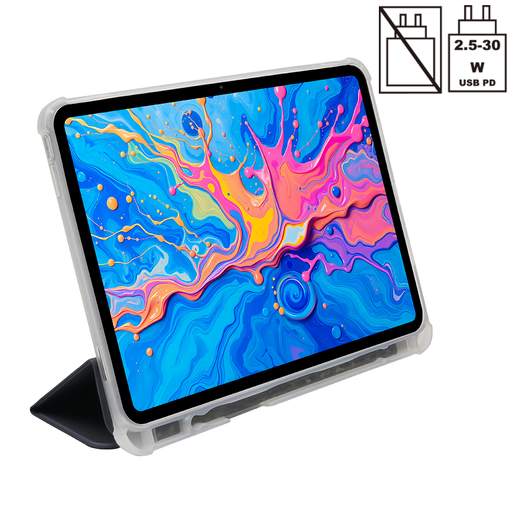 No image available
Consider this version if you want an on-screen tablet with T-Pen compatibility, but confirm the pen is in the bundle before relying on it for drawing.
The product name specifies a 2K display, 4,096-level pressure support for T-Pen drawing, 256GB storage and an included case.
Check pen inclusion, pressure support in your chosen app and display colour information before buying for portrait work.
Choose a pen display if drawing directly on the image is your priority and your computer and desk can accommodate it. A screenless tablet makes more sense if you already like your monitor, want a compact input device and are comfortable drawing while looking at a separate screen.
Match the exact display’s video, data and power requirements to your computer, then check its cables and driver support. For example, Huion specifies USB 3.1 Gen 1 data transfer and DisplayPort 1.2 support for the Kamvas 13 USB-C-to-USB-C connection.
More advertised pressure levels do not, by themselves, establish better shading. Wacom explains that the result also depends on the hardware, driver, painting software, brush and settings; check how your intended app uses pressure input.
Position the display, keyboard and chair so you can work comfortably, and vary your activity or take breaks during extended sessions. The Health and Safety Executive notes that poor display-screen workstation design can contribute to discomfort, fatigue and eye strain.