Direct-on-screen concept sketchers
If you want to draw silhouettes and annotations on the image itself while continuing to use a connected computer workflow, compare pen displays. Check each model’s host and connection requirements.


Choose a connected pen display if drawing directly where your strokes appear matters most; choose a screenless pen tablet if you work at a computer and prefer physical shortcut controls. A standalone tablet suits sketching and showing concepts away from a desk. Check the exact host connection, stylus and sketching-app requirements before committing to a format.
If you want to draw silhouettes and annotations on the image itself while continuing to use a connected computer workflow, compare pen displays. Check each model’s host and connection requirements.
If your design work already happens at a computer, a screenless pen tablet puts configurable controls beside the drawing surface. You draw on the tablet while watching your separate monitor.
If you need to sketch, revise and show concepts away from a workstation, consider a standalone tablet. The compatible stylus and the features of your chosen app matter as much as the tablet format.
Choose it when: You want to put the pen directly on the visible sketch while using a compatible host device.
Allow for: The host, video connection and cables the exact display requires; the display is not itself a standalone computer.
Choose it when: You already sketch at a computer and value controls beside your drawing hand.
Allow for: Drawing on one surface while looking at another, which can take practice.
Choose it when: You need to capture or present concepts without connecting a drawing peripheral to a computer.
Allow for: Model-specific stylus compatibility and sketching-app features; the stylus may be a separate accessory.
| Concern | What to check | Who this matters to |
|---|---|---|
| Drawing on the image | Check the drawing area and whether the exact pen display supports finger touch if you use gestures. | I want to place rough outlines and callouts on the image I can see, rather than watch a separate monitor. Around 33% of consumers put direct pen-on-image sketching first. |
| Sketching away from a desk | Confirm the tablet generation, compatible stylus and sketching-app features you need. | When ideas come up in a meeting or on site, I need a device I can use without setting up a computer. For around 25% of consumers, self-contained sketching is the primary need. |
| Desktop controls | Compare control placement and wired or wireless options, then check computer and software compatibility. | I spend long sessions refining concepts at a workstation and want frequently used commands close to hand. Desktop workflow controls come first for around 25% of consumers. |
| Presentation and output | Check the exact display’s stated colour characteristics and your app’s export formats on your chosen platform. | My sketches need to be shown to others or passed into another workflow, so the way I view and export them matters most. Around 17% of consumers prioritise presentation and editable output. |
A matching connector does not establish video-output support. Huion specifies USB 3.1 Gen 1 and DisplayPort 1.2 Alt Mode for its stated one-cable arrangement; XPPen requires a full-featured USB-C computer port with video output for the Artist 13.3 Pro V2.
Check your host device’s port specifications and the display maker’s connection diagram before choosing a cable arrangement.
Depending on the setup, a different cable, adapter or powered connection may be needed.
A pressure specification does not tell you whether you will prefer drawing on a screen, using physical controls or carrying a standalone device.
Settle on the working format first, then compare the exact models’ connections, controls and compatibility with your sketching app.
A stylus must suit the exact tablet generation, and it may be offered separately. Apple lists compatible Pencil models for iPad Air and offers the Pencil as a separately selectable accessory.
Check which stylus works with the tablet you choose and what is included with that particular product.
Touch differs by model: Wacom states that Wacom One 13 touch supports 10-finger touch, while Huion says Kamvas 13 (Gen 3) does not support multi-touch.
If finger-based panning or zooming is important, confirm touch support for the exact display.
Its Wacom One 13 touch and Intuos Pro lines illustrate two different computer-based routes: drawing on a display and drawing on a screenless tablet.
Kamvas 13 (Gen 3) is a connected 13.3-inch drawing-display option with stated colour coverage and physical controls.
Artist 13.3 Pro V2 offers a connected drawing screen for sketchers who want a dial and physical shortcut keys.
iPad Air is a standalone-tablet option for sketching and showing concepts away from a workstation.
These tablets represent the standalone sketching route: each listing identifies a tablet and stylus or pen for drawing without a connected computer. Compare the included accessories and confirm your preferred sketching app’s compatibility before choosing.
 No image available
Consider this standalone Android tablet if you want to sketch on its screen with the listed included stylus. The product name specifies a 12.7-inch 2K display, Android 15, 256GB storage and support for 4096 pressure levels. Check that your chosen app works with the tablet and pen.
 No image available
Consider this version if you want a standalone tablet with the listed stylus, case and keyboard together. Its product name specifies a 12.7-inch 2K display, Android 15 and 256GB storage. Confirm that your preferred sketching app and stylus workflow suit the tablet.
 No image available
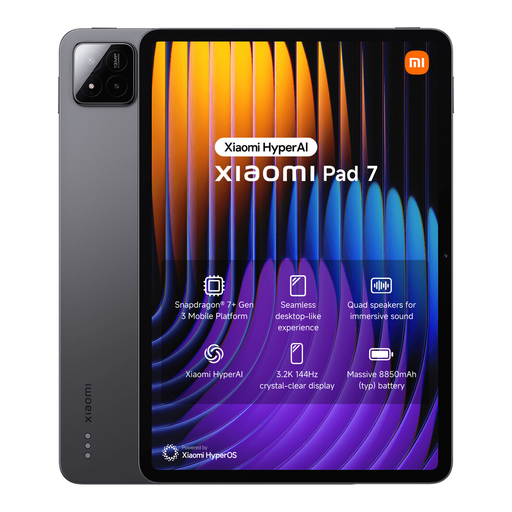
Consider this standalone tablet if the included Focus Pen matches the drawing workflow you want. The product name specifies 8GB RAM and 128GB storage. Check the pen functions and your preferred sketching app’s compatibility before buying.
No: a USB-C-shaped port alone does not establish video support. Huion specifies USB 3.1 Gen 1 and DisplayPort 1.2 Alt Mode for its stated one-cable arrangement, while XPPen requires a full-featured USB-C computer port with video output for Artist 13.3 Pro V2. Check the requirements for both your laptop and the exact display.
No. A screenless pen tablet needs a compatible host, and a connected pen display also depends on a suitable computer or an explicitly compatible mobile device. A standalone tablet such as iPad Air runs its own operating system, though you must still check stylus and app compatibility.
Not necessarily. Concepts offers apps across iOS, Android, Windows and ChromeOS, but indicates that some functions differ by platform. Check the tools and export formats on the platform you intend to use before choosing the tablet.
For most UK online goods orders, GOV.UK says consumers can cancel up to 14 days after delivery without giving a reason. Check the applicable exceptions and the seller’s return instructions. Remedies for faulty, damaged or misdescribed goods are separate from change-of-mind cancellation.
Check the retailer’s electrical-equipment take-back arrangements rather than putting the device in ordinary household waste. GOV.UK says retailers selling new electrical and electronic equipment must provide a way for customers to dispose of old household equipment.