Who each setup suits

High-volume digital markers

Teachers and tutors repeatedly annotating PDFs or online submissions may value pen input, accessible shortcuts and enough clear desk space to work while standing. Wacom and XPPen describe annotation and configurable controls among the uses and features of their pen tablets.

Direct-on-screen annotators

Markers reviewing diagrams or layout-heavy submissions may prefer to place comments on the displayed work itself. A pen display offers that interaction, but its position must also fit the rest of the desk.

Shared-workstation staff

Staff who move between or reconfigure standing desks need to consider the complete workstation, not just the tablet. The UK Health and Safety Executive advises considering the equipment, furniture and task together when assessing display-screen work.

What matters when choosing

Screenless pen tablet

Choose it when: You annotate documents on an existing screen and want a separate pen-input surface without another display.

Allow for: Your hand moves on the tablet while you look at the monitor, which can take practice.

Pen display

Choose it when: Placing handwritten feedback directly on the visible document is worth making room for another screen.

Allow for: Screen angle, stand and cable placement alongside your main display.

ConcernWhat to checkWho this matters to
Compact document marking Compare the active area with the space available beside your main screen; check whether shortcuts work in your marking application. If I mark many documents on an existing monitor, I want pen input without rearranging the desk for another screen. Around 42% of consumers put this compact marking workflow first.
Writing on the visible document Check display size, reflections, stand arrangement and how its angle fits beside the main monitor. For diagrams or layout-heavy work, I want to place feedback where I see it rather than coordinate a separate tablet and screen. Roughly 33% of consumers prioritise direct-on-screen marking.
Repeatable workstation setup Check screen placement and whether cables allow desk-height changes. For qualifying daily display-screen work, consider the whole workstation in the assessment described by the UK Health and Safety Executive. At a shared or employer-managed desk, I need a setup I can position consistently without blocking the screen or straining my shoulders. About 25% of consumers make workstation fit their primary concern.

Mistakes to avoid

  • Expecting a screenless tablet to feel like writing on paper immediately

    Your pen moves on the tablet while the mark appears on a separate screen. That difference matters if precise pen-to-document placement is central to your work.

    Consider a pen display if direct placement is essential; otherwise, allow time to get used to looking at the monitor while writing.

  • Choosing a pen display without planning its connections

    A display also needs a usable angle and a cable route that works as the standing desk moves.

    Check your computer’s port capabilities, the supplied cables and whether a stand is included. Wacom says one-cable use of its One DTC141 requires Thunderbolt 3 or later or DisplayPort Alt Mode.

    For the Wacom One DTC141, the stand is sold separately; a computer without DisplayPort Alt Mode requires Wacom’s separately sold Converter Kit.

  • Treating the tablet as the whole workstation

    The UK Health and Safety Executive’s guidance considers the screen, furniture, lighting and task as well as the input device. A different tablet will not by itself correct an awkward screen position or reflections.

    Keep the primary screen in front of you, arrange the input surface so your shoulders can relax, and seek the appropriate workstation assessment when your work meets the HSE’s daily-use criteria.

Relevant brands to consider

Wacom

Its range includes the screenless One by Wacom pen tablet and the Wacom One DTC141 pen display for direct screen work.

  • Wacom specifies a battery-free pen for One by Wacom and offers small and medium tablet sizes.
  • For the Wacom One DTC141 display, one-cable USB-C use depends on the computer’s port capability; its stand is sold separately.

Huion

The Kamvas 13 is a pen display for people who want to annotate directly on a screen.

  • Huion specifies a laminated Full HD display, anti-glare film and battery-free PW517 pen for the Kamvas 13.
  • Check which Kamvas 13 configuration includes a stand and whether its connections suit your desk and computer.

XPPen

Its screenless Deco range includes the Deco 01 V3, which provides a larger active area and configurable shortcuts.

  • XPPen specifies a 10 × 6.25-inch active area, eight customisable shortcut keys and a battery-free stylus for the Deco 01 V3.
  • Its listed operating-system support does not establish whether your school’s marking software or managed device permits the required workflow.

Joybuy products for on-screen marking

These TECLAST options are standalone Android tablets with screens and T-Pen drawing support, rather than pen displays connected to a computer. Consider one for marking directly on the tablet only if your marking application works on Android and your organisation permits its use.
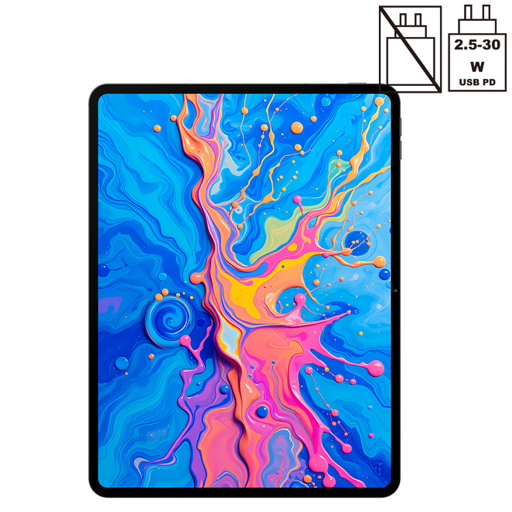
TECLAST ArtPad Pro 2025 tablet, SKU 10371474

TECLAST ArtPad Pro 2025, 12.7-inch, SKU 10371474

For marking on the tablet’s own screen, check that your Android marking app and institutional device rules allow the workflow.

12.7-inch 2K display; T-Pen drawing with 4096 pressure levels; Android 15.

Check how you would support and angle the tablet at your standing desk.

View on Joybuy

TECLAST ArtPad Pro 2025 tablet with stylus pen, SKU 10437781

TECLAST ArtPad Pro 2025 with stylus, 12.7-inch, SKU 10437781

For marking on the tablet’s own screen, confirm that your Android marking app and institutional device rules allow the workflow.

12.7-inch 2K display; T-Pen drawing with 4096 pressure levels; Android 15; stylus pen included.

Check how you would support and angle the tablet at your standing desk.

View on Joybuy

Questions about marking setups

Will a drawing tablet work with my school’s marking system?

Operating-system support alone does not establish that a tablet will work with your marking system. Check the specific PDF application or online platform, whether it accepts pen input, and any restrictions on installing drivers or using a personal device.

Does a standing-desk drawing-tablet setup need a workstation assessment?

For workers who use display-screen equipment daily as part of normal work for continuous periods of an hour or more, the UK Health and Safety Executive says employers must carry out a workstation assessment. It covers the whole workstation, the job and relevant individual requirements, not only the drawing tablet.

How should I position a tablet while marking standing up?

Position it as part of a setup that keeps the main screen in front of you and lets your shoulders relax. The UK Health and Safety Executive also advises arranging screens and lighting to avoid reflections and glare; check that the tablet and its cables still fit when you change desk height.

Will the Wacom One DTC141 use one cable with any USB-C laptop?

No. Wacom says its one-cable connection requires Thunderbolt 3 or later or DisplayPort Alt Mode; a computer without DisplayPort Alt Mode needs the separately sold Wacom Converter Kit. Check the laptop’s port specification rather than relying on the USB-C connector’s shape.