Choose a screenless pen tablet if you already use a separate monitor and keyboard comfortably and want a compact drawing setup. Choose a pen display if drawing directly over poster lettering and illustration matters more to you than the extra desk space and connections it requires. Either way, check the exact model’s computer, driver and port requirements before buying.
Who each setup suits
Direct-on-screen poster illustrators
If placing brushwork, hand lettering and other elements directly within a poster composition is your priority, consider a pen display and allow room for it on your desk. Huion and XPPen both describe computer-connected displays for this type of drawing.
Keyboard-led designers with limited desk space
If you already work on a computer monitor and use keyboard shortcuts for typography and layout, a screenless pen tablet lets you keep that display as your main workspace. Wacom describes its pen tablets as computer input devices, not standalone computers.
First-time digital poster makers
Before comparing pen or display specifications, decide whether you need an input device for an existing computer or a standalone tablet computer. That distinction determines which software, connections and accessories you need to check.
What matters when choosing
For theatre-poster work in a quiet study, settle the drawing setup before comparing pressure levels: where you want to see the artwork while drawing affects your desk layout and computer connections.
| Concern |
What to check |
Who this matters to |
| Drawing on-screen |
For a pen display, check the exact panel, host connections and space needed to position it. |
If I place lettering and illustration directly within a poster composition, I want my pen tip on the artwork rather than controlling a separate monitor; around 46% of consumers put direct-on-screen placement first. |
| Compact desk workflow |
Check the tablet’s active area, shortcut controls and USB or Bluetooth options for the exact model. |
When my keyboard and main monitor already occupy the study desk, I would rather add a compact input surface than another display; around 36% of consumers prioritise that desk workflow. |
| Device and software fit |
Decide whether you need a computer-connected device or a standalone tablet, then check operating-system, driver and port requirements. |
If I am starting digital poster work, I need to know whether the device can run my intended software or needs another computer; around 18% of consumers make setup clarity their primary concern. |
Buying pitfalls
-
Assuming every drawing tablet works on its own
A screenless pen tablet controls artwork on a separate computer display, while a computer-connected pen display also needs a suitable host. Neither should be mistaken for a standalone tablet computer.
Decide which device category you need before checking the exact operating-system support, driver and connections.
A computer-connected setup also needs access to a compatible computer; a screenless pen tablet needs a separate display.
-
Choosing by pressure levels alone
Wacom, Huion and XPPen list pressure levels for the cited models, but those figures do not tell you whether you would rather draw on a display or look at a separate monitor.
Choose the drawing setup first. Compare pressure, tilt and display specifications only between exact models that fit it.
-
Assuming the stand, pen and connections are covered
The Huion Kamvas Pro 16 (2.5K) and XPPen Artist Pro 16 (Gen 2) describe different connection and stand arrangements. A photograph or another variant’s contents list cannot establish what comes with yours.
Check the exact variant’s contents list and connection diagram against your computer and intended desk position.
Depending on the model and your setup, you may need a suitable stand, cable or adapter.
Relevant brands to consider
Wacom
Its Intuos Pro line is a reference point for designers considering a screenless input device alongside an existing computer monitor.
- Wacom lists 8,192 pressure levels, tilt detection and shortcut controls for Intuos Pro; its UK store describes USB and Bluetooth connection options.
- Intuos Pro is a computer input device, not a standalone poster-design computer or a drawing screen.
Huion
The Kamvas Pro 16 (2.5K) is a computer-connected pen display to examine if you want to draw directly on a roughly 16-inch workspace.
- Huion lists a 15.8-inch, 2560 × 1440 display with laminated, anti-glare glass for this model.
- Check the host connections for the exact 2.5K variant; its specifications do not apply to every Kamvas Pro 16 listing.
XPPen
The Artist Pro 16 (Gen 2) is another connected pen-display option for direct-on-screen poster work.
- XPPen lists a 2560 × 1600 display and a built-in foldable stand for this model.
- The stand does not resolve host compatibility or tell you whether the display fits your available desk depth; check both before choosing it.
Joybuy products for standalone drawing
These TECLAST ArtPad Pro listings concern drawing on an Android tablet rather than adding a screenless pen tablet or a computer-connected pen display. Check that your intended poster-design apps and workflow run on Android before treating either as an alternative to your computer setup.
 No image available
TECLAST ArtPad Pro 12.7-inch 2K tablet, 2025 edition
Consider this Android tablet if you want to draw on the device itself and your intended poster-design apps are compatible.
The listing states a 12.7-inch 2K display, 4,096 pressure levels, Android 15 and an included stylus. Check the pen and app requirements for your exact workflow; if quiet operation is essential, check model-specific information and the applicable return terms.
View on Joybuy
 No image available
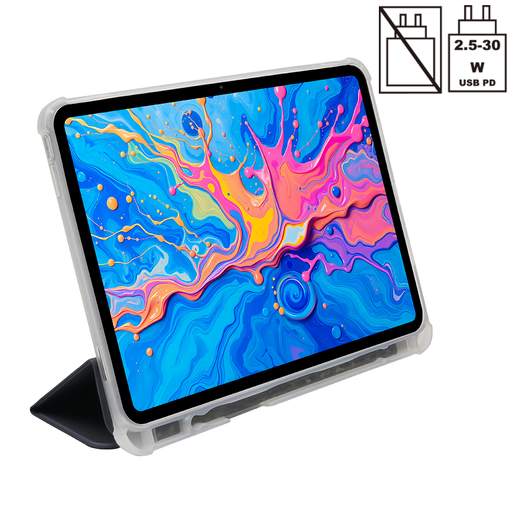
TECLAST ArtPad Pro 12.7-inch 2K tablet with case
Consider this Android tablet for drawing directly on a display if your poster-design apps are compatible and the pen arrangement suits you.
The listing states a 12.7-inch 2K display, support for 4,096-level T-Pen drawing and an included case. Confirm whether a compatible pen comes with this bundle; if quiet operation is essential, check model-specific information and the applicable return terms.
View on Joybuy
Frequently asked questions
Will a screenless pen tablet work without a computer?
A screenless pen tablet is not a standalone poster-design computer. Wacom describes its pen tablets as input devices for a computer, so plan to use a compatible computer and monitor with this type of device.
What should I check before connecting a pen display?
Check the exact display’s driver, supported operating systems, power arrangement and video or data connections against your computer. Huion’s documentation for the Kamvas Pro 16 (2.5K) describes its own USB-C connection requirements; do not assume another model uses the same arrangement.
Can I assume a drawing tablet will be quiet enough for my study?
Do not assume that any particular model will meet your tolerance for noise. If fan noise, moving cables or physical button clicks would disturb you, check the exact device’s operating details and applicable return terms before buying.
Does Great Britain product-marking guidance also cover Northern Ireland?
Do not apply the Great Britain position unchanged to Northern Ireland. GOV.UK’s guidance on UKCA and CE marking distinguishes the two markets; check the requirements applicable to the product and the market where it will be supplied.


