For diagram annotation when plug sockets are scarce, start with a screenless pen tablet that connects to your computer by USB, or consider a Bluetooth-capable model if reducing desk cables also matters. Choose a pen display when drawing directly on the image is important enough to justify checking its video, cable and power requirements: a USB-C connector alone does not establish that one cable will work.
Who each format suits
Diagram annotators with limited sockets
If you mark up worksheets, PDFs or slides at a desk with no convenient spare socket, a screenless pen tablet is a starting point. Wacom presents One by Wacom for writing, annotation and teaching; the connection still needs to suit your computer.
Direct-on-screen visual explainers
If seeing the pen touch the diagram helps you explain it live, a pen display may suit your workflow. Wacom and Huion both describe display connections whose cable and host-port requirements need checking before you rely on a one-cable setup.
People switching teaching devices
If you move between a PC, Mac, Chromebook or Android device, check support for each device and its operating-system version. Compatibility varies by model and connection method, even within a brand’s range.
What matters when choosing
Screenless USB pen tablet
Choose it when: Your computer screen is where you want to view the diagram, and avoiding a separate display-power arrangement takes priority.
Trade-off: You draw on the tablet while looking at another screen, which takes some adjustment.
Bluetooth-capable pen tablet
Choose it when: You want screenless drawing with fewer desk cables, and the selected tablet and computer support the intended Bluetooth connection.
Trade-off: Check the selected bundle and charging arrangement rather than assuming wireless connection means no cable is ever needed.
Pen display
Choose it when: Drawing directly on the visible diagram matters more to you than having the simplest connection.
Trade-off: One-cable operation depends on the display and computer port; another connection path may need separate video, data and power leads.
| Concern |
What to check |
Who this matters to |
| Socket and cable demands |
Check how the exact model connects and receives power, and which cables or adaptor come with it. |
With no convenient spare socket, I need a connection arrangement that fits my desk without relying on an extra mains adaptor. Around 36% of consumers put socket and cable demands first. |
| Drawing on the display |
For a pen display, confirm the computer port’s required video and data support and whether another power lead is needed. |
If I explain diagrams live, I want the drawing to appear beneath my pen rather than on a separate monitor. Direct-on-screen drawing comes first for around 29% of consumers. |
| Teaching-device compatibility |
Confirm the model’s operating-system support and any driver, port or Android-device conditions. |
When I switch between teaching devices, I need the tablet to work with the ones I use for diagrams. Around 21% of consumers prioritise device compatibility. |
| Drawing space and controls |
Compare the active area with your desk space and check whether shortcuts work with your chosen software. |
For longer diagram sessions, I want enough room for labels and shapes, with useful controls for repeated actions. Workspace and shortcuts are the primary concern for around 14% of consumers. |
Buying mistakes to avoid
-
Assuming every pen display needs just one cable
Huion describes a three-in-one connection for Kamvas 13 (Gen 3) using HDMI, USB data and USB power. Huion says its power adaptor and USB-C-to-USB-C cable are not included, so this route may complicate a desk with limited sockets.
Check the exact display’s connection diagram against your computer’s ports, then confirm the selected package contents.
-
Buying a display just to annotate diagrams
A screenless tablet may cover writing and annotation while you view the diagram on your computer. A pen display is worth considering when placing the pen directly on the visible diagram changes how you explain or draw.
Decide whether you are comfortable drawing while looking at your computer screen before choosing the display format.
-
Judging USB-C video support by the connector
Wacom qualifies one-cable use of Wacom One 12 by the computer’s USB-C port. Huion specifies USB 3.1 Gen 1 data transfer and DisplayPort 1.2 support for the USB-C connection described for Kamvas 13.
Compare the computer manufacturer’s port specification with the requirements for the exact display and cable you intend to use.
-
Overlooking the bundle and software setup
Wacom’s UK Wacom One pen-tablet configurator says the main device does not include a USB-C cable. XPPen’s Deco 01 V3 manual also calls for a driver to be installed for proper operation.
Check the selected bundle’s pen and cable contents, and confirm that you can complete any required driver setup before a teaching session.
Relevant drawing-tablet brands
Wacom
Wacom offers screenless pen tablets and pen displays relevant to annotation and educational diagrams; One by Wacom is presented by Wacom for writing, collaboration and teaching.
- Wacom lists PC, Mac, Chromebook and compatible Android connections across its Wacom One range, subject to the particular model and device. Wacom says Wacom One 12 can use one cable when the computer’s USB-C port supports that arrangement.
- Check the host port and the selected package: Wacom’s UK Wacom One pen-tablet configurator says the main device does not include a USB-C cable.
Huion
Huion’s Kamvas 13 displays are relevant when direct-on-screen drawing takes priority and the available computer ports and power connections can be checked in advance.
- Huion describes both USB-C and multi-cable connection paths for Kamvas 13 models, giving buyers arrangements to compare with their computer.
- Huion specifies USB 3.1 Gen 1 data and DisplayPort 1.2 support for the Kamvas 13 USB-C path. Its Kamvas 13 (Gen 3) support instructions describe a three-in-one route and say the power adaptor is not included.
XPPen
XPPen’s screenless Deco 01 V3 is relevant to consumers comparing drawing area, configurable controls and device support for diagram work.
- XPPen lists a 10 × 6.25-inch active area, eight customisable shortcut keys and a battery-free stylus for Deco 01 V3.
- XPPen documents a USB-C-to-USB-A computer connection and model-specific operating-system requirements. Check the device port, Android support where relevant and driver setup.
Joybuy products for diagram drawing
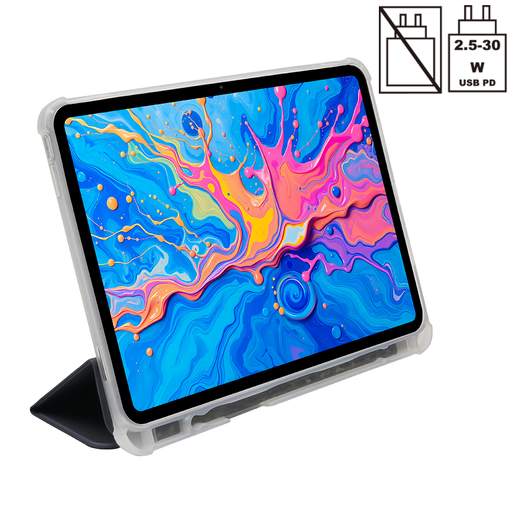
This Joybuy choice is a standalone, battery-equipped tablet for consumers considering drawing on its own screen. Before treating it as a substitute for a computer-connected pen tablet or display, check the pen bundle, drawing-app compatibility and usable battery time for your sessions.
 No image available
TECLAST ArtPad Pro 12.7-inch 2K tablet, 256GB, 4G LTE
Consider this for diagrams drawn directly on a standalone tablet, provided your drawing or teaching apps and selected pen meet your needs.
The listed configuration has a 12.7-inch 2K display, T-Pen compatibility with 4096 pressure levels, a 10,000mAh battery and an included case. Confirm whether the T-Pen is in the selected bundle; compatibility does not establish that it is included.
If you need to work away from a socket for a long session, check drawing-use battery time rather than treating battery capacity as a runtime figure.
View on Joybuy
Common questions
Will a screenless drawing tablet need a wall socket?
Not necessarily: a computer-connected screenless model can draw power through its host connection. XPPen’s Deco 01 V3 manual, for example, describes connecting the tablet’s USB-C port to a computer USB-A port. Check the cable and host-port requirements for the model you choose.
Does a USB-C port mean a pen display will work with one cable?
No. Wacom says one-cable use of Wacom One 12 depends on the computer’s USB-C port, while Huion specifies USB 3.1 Gen 1 data and DisplayPort 1.2 support for the Kamvas 13 USB-C path. Check the requirements for both the display and your computer port.
What should I check for a Chromebook or Android device?
Check the exact tablet model, operating-system version and connection requirements before buying. XPPen lists Android 10.0 or later and Chrome OS 88 or later for Deco 01 V3; Huion’s Kamvas 13 has additional USB-C data and video conditions, and Huion says Android use needs extra power.


