Socket-limited mobile landscape painters
If you want to paint without carrying a computer or occupying a socket during the session, a standalone tablet may suit you. Check that its Android art apps support the brushes, files and exports you use.


Choose a charged standalone tablet if you need to paint landscapes away from a live socket and its Android apps suit your workflow. If you need desktop software and want to draw directly on the image, a one-cable pen display is an option only when your computer port and cable meet its video, data and power requirements. A screenless pen tablet uses your existing monitor instead, but the computer and monitor still need power.
If you want to paint without carrying a computer or occupying a socket during the session, a standalone tablet may suit you. Check that its Android art apps support the brushes, files and exports you use.
If you use desktop art software and want to paint directly on a display, check your laptop’s USB-C video, data and power capabilities against the exact pen display and cable before relying on one connection.
If your computer and monitor are already part of the setup, a screenless pen tablet avoids adding a drawing display. You will draw on the tablet while looking at the monitor.
Start with where the artwork must run: on a standalone Android tablet, in desktop software viewed on a pen display, or on your existing monitor with a screenless tablet.
Choose it when: You need to paint without a connected computer or live socket during the session.
Accept that: You must recharge it later, and Android app and file workflows may differ from your desktop setup.
Choose it when: You need desktop software and prefer to place brush strokes directly on the displayed artwork.
Accept that: One-cable use depends on the exact host, cable and display; some connections need additional power.
Choose it when: You already have a computer display and can draw on a separate surface.
Accept that: You must coordinate your hand with the cursor on another screen, while the computer and monitor still need power.
| Concern | What to check | Who this matters to |
|---|---|---|
| Painting without a live socket | Confirm standalone operation, suitable Android art apps and the stated battery details; capacity alone does not establish session length. | If I paint away from my desk, I need to keep working without a connected computer or occupied socket. Around 42% of consumers put socket-free painting first. |
| Drawing directly on-screen | Match the exact display’s video, data and power requirements to your computer’s USB-C port and cable; check whether your connection needs extra power. | When placing landscape brush strokes, I want to draw on the image while keeping my desktop software. Direct-on-screen painting is the primary need for around 33% of consumers. |
| Using an existing monitor | Check the tablet’s active area, host compatibility and pressure or tilt support in your art software; consider whether indirect drawing feels comfortable. | With a monitor already on my desk, I would rather add a drawing surface than another display. Around 25% of consumers prioritise that screenless setup. |
For Huion’s stated one-cable display connection, the host must support USB 3.1 Gen 1 data and DisplayPort 1.2 Alt Mode. The connector’s shape does not establish those capabilities.
Compare your device manual and cable specification with the requirements for the exact display model before ordering.
A different compatible cable, adapter or power connection may be necessary for the intended setup.
Huion says its original Kamvas 13 needs extra power when connected to an Android device, even though its stated laptop setup can use one cable.
Check power requirements for the complete combination of display, host and connection method, especially if no socket will be free.
A standalone Android tablet removes the need for a connected computer while painting, but your desktop applications and plug-ins may not be part of that workflow.
Check your required brushes, file formats, cloud services and export steps in the Android apps you plan to use.
A pen’s stated pressure and tilt features depend on support from the selected art software and brush settings; the specification alone does not establish how strokes will feel.
Confirm app compatibility, then assess the drawing area and pen behaviour in the workflow you intend to use.
Its Wacom One pen displays are relevant if you want to draw on-screen using a computer.
The Kamvas 13 family is relevant to artists considering a compact, computer-connected pen display.
Its Magic Drawing Pad and Deco 01 V3 illustrate two different ways to work when sockets are limited: standalone painting and screenless drawing with an existing computer.
These TECLAST ArtPad Pro listings are standalone Android tablet choices for painting without a connected computer. Check the pen supplied with the exact listing and your preferred art apps before choosing between them.
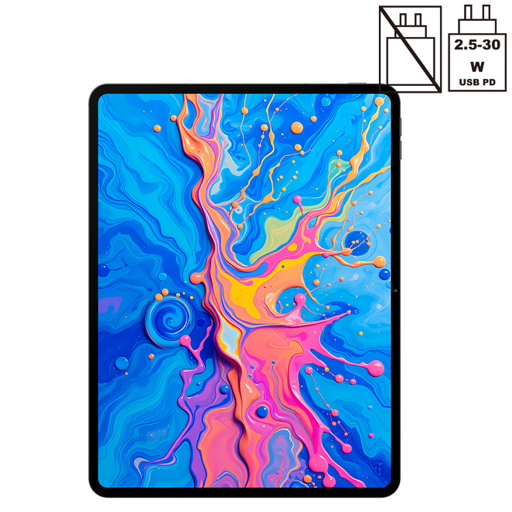 Image unavailable
For painting away from a computer, this Android tablet can be used during a session without a continuous computer connection.
The listing describes a 12.7-inch 2K display, Android 15, a 10,000 mAh battery and 4,096-level pressure-sensitive T-Pen drawing. Confirm that the supplied stylus is the compatible T-Pen, that your apps support the brushes and exports you need, and that the expected runtime suits your sessions.
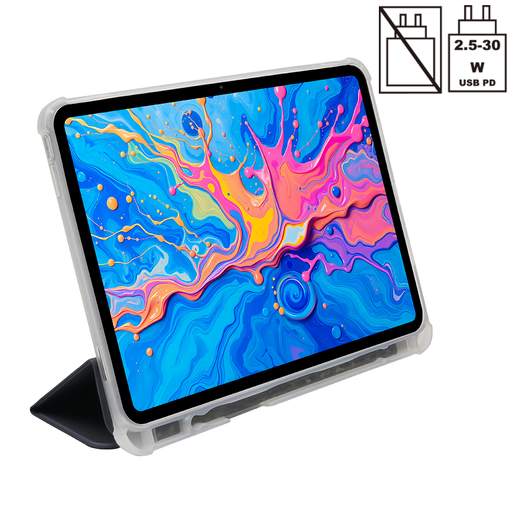 Image unavailable
For a socket-limited painting session, this Android tablet offers a standalone option if your chosen art apps meet your needs.
The listing specifies a 12.7-inch 2K display, a 10,000 mAh battery, compatibility with a T-Pen for 4,096-level pressure input, and an included case. Check whether a compatible T-Pen is supplied, whether your apps support your brush and export workflow, and what runtime to expect.
No. For Huion’s stated one-cable display connection, the host and cable need the required data and video capabilities, including USB 3.1 Gen 1 and DisplayPort 1.2 Alt Mode. Check your computer’s port specification against the exact display model rather than relying on the connector shape.
It can let you paint without a live socket during a session if it is charged, but you will need to recharge it later. XPPen describes the Magic Drawing Pad as a standalone Android tablet with an 8000 mAh battery; check that its apps and file workflow suit your landscape painting.
No. Power requirements depend on the display, host and connection method. Huion says its original Kamvas 13 can use a stated laptop-powered setup but needs extra power when connected to an Android device, so check the requirements for the exact combination you plan to use.