Parents of a child with a food allergy
Start with the allergen the child needs to avoid, then check both the ingredients and any precautionary warning on the exact pack. A broad dietary claim cannot answer that product-specific question.


Choose dried fruit against the child’s particular allergen requirement, using the current pack’s ingredients and any precautionary allergen warning; a vegan or no-added-sugar claim is not an allergy check. Plain fruit can be a simpler starting point than coated fruit or fruit-and-nut mixes, but neither format is automatically suitable. Check the holiday club’s or school’s lunchbox instructions before packing it.
Start with the allergen the child needs to avoid, then check both the ingredients and any precautionary warning on the exact pack. A broad dietary claim cannot answer that product-specific question.
Individual portions may be convenient to pack. Even a short ingredient list still needs to be checked against the child’s allergen requirements and the club’s instructions.
Chocolate-coated fruit and fruit-and-nut mixes may have different ingredients and allergen warnings from plain dried fruit, including products sold by the same brand.
Start with the child’s named allergen and the exact pack; once those checks are complete, compare formats that work for the lunchbox.
| Priority | What to check | Your needs |
|---|---|---|
| Allergen information | Read the current ingredients and any precautionary allergen warning for the named allergen. The Food Standards Agency says a vegan label alone is not a substitute for allergen labelling. | I need to know whether this exact pack fits the child’s allergy requirements, rather than relying on a vegan or other broad claim. |
| Recipe | Compare plain fruit with coatings, nuts and other additions. Whitworths lists soya and sulphur dioxide in its Raisin & Chocolate snack, alongside several may-contain warnings. | A familiar dried-fruit name is not enough: I want to check every ingredient and warning when the recipe includes other foods. |
| Pack format | Check the stated pack size and whether it contains individual portions or needs dividing for lunch. Portion format does not establish allergen suitability. | Individual boxes would be convenient to pack, or I can portion a larger bag after checking its label. |
| Lunch setting | Check the holiday club’s or school’s current lunchbox and allergy instructions before packing food. Department for Education guidance says food brought from home should be considered in school allergy-safety arrangements. | I want the packed lunch to follow the setting’s instructions for known allergens. |
| Eating occasion | For toddlers, the NHS advises offering dried fruit such as raisins with meals, rather than between meals. | If I am packing for a toddler, I can include dried fruit with lunch rather than as a separate grazing snack. |
These descriptions do not establish whether a child’s named allergen could be present. The Food Standards Agency specifically advises against using vegan labelling alone as a proxy for allergen labelling.
Read the current pack’s ingredients, allergen information and any precautionary warning.
Whitworths lists soya and sulphur dioxide in its Raisin & Chocolate snack and warns that it may contain several other allergens. Its Sunny Raisins have a different listed recipe.
Check each product and flavour separately, especially coated fruit and fruit-and-nut mixes.
Tesco warns that food ingredients and allergen information can change with reformulation. A previous listing may therefore differ from the pack being served.
Use listings to narrow your choices, then check the current physical pack and the lunch setting’s instructions.
The NHS advises giving toddlers dried fruit such as raisins with meals rather than as a between-meal snack.
If dried fruit is included for a toddler, pack it as part of lunch and still complete the relevant allergen checks.
These examples show why the exact product matters more than the brand name when checking an allergen requirement.
Its range includes portioned raisins as well as coated and mixed dried-fruit snacks.
Its dried-fruit category includes raisin multipacks and larger packs alongside other fruits.
Its allergen-specific own-brand lists can help narrow a search for a named allergen.
Its dried-fruit products illustrate why a fruit or no-added-sugar description does not settle an allergen question.
These raisin and sultana packs offer a choice between individual lunchbox portions and larger bags to portion yourself. Check each physical pack against the child’s allergen requirements before serving.
 No image available
The 12 x 14g format provides individual portions for a lunchbox. The product name specifies 12+ months; check the current pack’s ingredients and allergen information for the child.
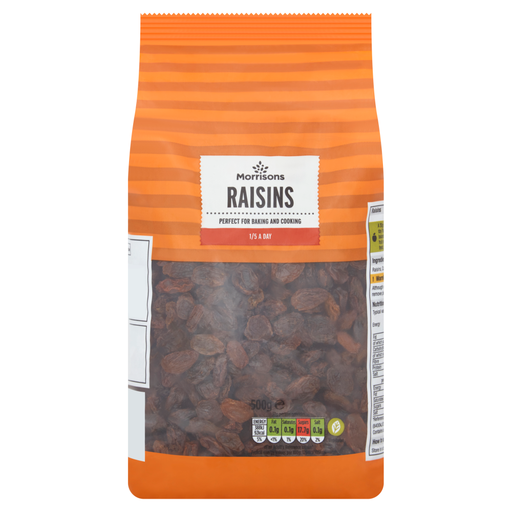 No image available
This 500g bag can be portioned for lunches rather than packed as individual mini boxes. Check the bag’s current ingredients and any precautionary allergen warning before serving.
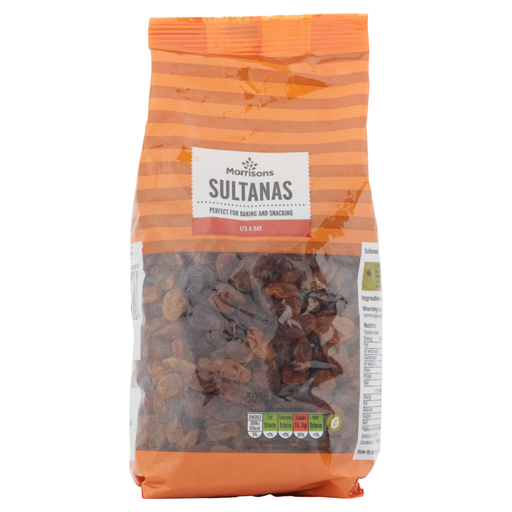 No image available
This 500g bag is another option to portion for lunch. Read the physical pack’s full ingredients and any precautionary allergen wording for the child’s named allergen.
No. The Food Standards Agency says vegan labelling alone should not be used in place of allergen labelling. Check the product’s ingredients and any precautionary warning against the child’s particular allergy requirements.
No. The descriptions address different things: M&S describes its Dried Pineapple as free from added sugars, while its ingredient information lists sulphur dioxide (sulphites). Check the exact pack for the allergen you need to avoid.
It is a precautionary warning that an allergen could be unintentionally present, rather than an ingredient declaration, as explained by the Food Standards Agency. Check whether the warning names the child’s allergen and follow the child’s allergy advice.
Yes. Check the setting’s current instructions before packing dried fruit. Department for Education allergy-safety guidance for schools in England says arrangements should consider food brought from home, including packed lunches.
The NHS advises offering toddlers dried fruit such as raisins with meals rather than as a between-meal snack. That advice does not establish whether a particular raisin product is suitable for a child with an allergy.